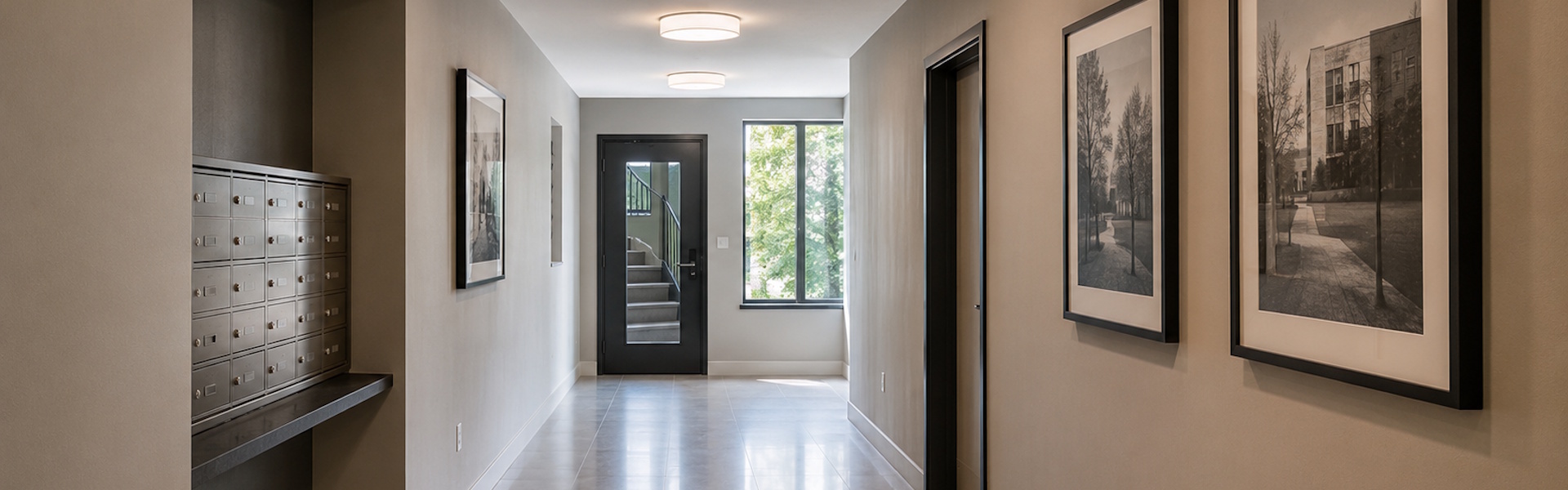
A lighting retrofit is one of the few upgrades on a multi-family property that pays back on three fronts at once: fewer maintenance calls, lower utility bills, and fewer code citations at inspection. This guide breaks down fixture selection room by room, then covers corridors, common areas, and exterior site lighting, with the installation and compliance details that matter once you're the one pulling permits or fielding the punch list.
Interior Lighting by Room
Every room in a unit has different lighting needs, and what works in a kitchen won't work in a bedroom or bathroom. Getting the mix of ambient, task, and accent light right in each space cuts down on tenant complaints and callbacks.
Kitchen Lighting
Kitchens need layered lighting: bright, even ambient coverage for the room plus dedicated task light at the countertop. Recessed can lights and downlights are the standard for kitchen ceilings in both single-family and multi-unit builds. CCT-selectable fixtures in the 2700K to 5000K range cut SKU count for a property manager stocking multiple units, since one fixture covers whatever color temperature a unit's other finishes call for.
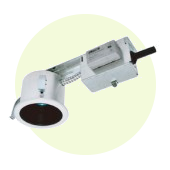
On any retrofit where the kitchen ceiling backs into an insulated attic or a floor above, confirm the housing is IC-rated (insulation contact) before it goes in. A non-IC can crammed against batt or blown insulation is a fire code problem and an inspection failure, not just a spec detail. If the existing can is already IC-rated, a recessed can retrofit kit lets you upgrade the trim and LED module without touching the housing at all.
If tenants are asking for dimming, which is increasingly a baseline expectation rather than an upgrade, pair the fixture with a dimmer rated for the actual LED driver going in. Not every dimmer on the shelf plays well with every LED driver, and mismatched pairs show up as flicker or buzz at the panel, not as a fixture warranty claim.
Living Areas and Common Interior Spaces
Living rooms, dining areas, and shared lounges handle the widest range of uses in a unit. Reading, entertaining, and watching TV each want a different light level, so a single ceiling fixture rarely covers the room on its own. A mix of decorative ceiling fixtures, wall sconces, and switched outlets for floor and table lamps covers the range without a full rewire. For unit interiors, flush-mount and semi-flush fixtures in brushed nickel or white finish install cleanly and hold up across tenant turnovers, which matters more than finish trends when the same unit gets refreshed every year or two.
Common rooms and amenity lounges benefit from dimming so staff can adjust the space for different events. Where a room already has a ceiling fan, a combination fan-light switch keeps the wall plate to one gang instead of two, which simplifies both the rough-in and the finish work on a retrofit where the existing box and wiring are fixed.

Decorative Ceiling Lights for Multi-Family Spaces
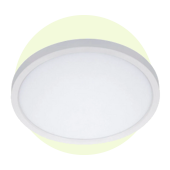
Flush-mount, semi-flush, and disc-style ceiling fixtures sized for bedrooms, living rooms, and low-clearance retrofit installs.
835
Browse all Decorative Ceiling Lights
Bathroom Lighting
Bathroom fixtures have to satisfy code before they satisfy anyone's taste. Fixtures installed inside the tub or shower zone itself need a wet-location rating; damp-location fixtures are fine for the rest of the room but not inside that zone. NEC 410.10(D) governs the clearance and rating requirements, and it's worth confirming against whichever NEC edition the local jurisdiction has adopted, since enforcement varies by AHJ. For vanity fixtures, a CRI of 80 or higher renders skin tones accurately enough that residents stop calling about the lighting in their own bathroom. Disc lights and wafer lights are the practical fix for low-ceiling bathrooms where a standard recessed can won't clear the joist bay, and they go in with a single hole saw cut instead of a full housing swap.
Home Office and Study Areas
Home office and flex spaces are now a standard feature in newer builds and a common add-on in retrofits, since remote and hybrid work aren't going away. The complaint that shows up in these rooms is glare on a monitor, not dim light, so even coverage without a hot spot over the desk matters more than raw output. A CRI of 90 or higher and a CCT in the 3500K to 4000K range keep the room close to daylight without tipping cool or yellow. Recessed downlights on a dimmer, paired with an under-cabinet task strip at the desk, cover both the room and the work surface without adding a second ceiling fixture.
Bedroom Lighting
A dimmable overhead fixture in the 2700K to 3000K range covers a bedroom from morning dressing to evening wind-down without swapping bulbs. Slim wafer downlights are an easy add to a bedroom retrofit scope for a reason that has nothing to do with looks: they mount to an adapter plate over the existing junction box, so there's no attic access and no new ceiling rough-in. On a unit-by-unit retrofit across a building, that's the difference between a fixture swap and a half-day job. Switched outlets at each bedside position handle reading lamps without adding a ceiling box at all.
Closets and Storage Spaces
Closets are consistently underlit in older multi-family stock, and fixing them is one of the cheapest improvements on a punch list. A single LED surface-mount or recessed downlight over the rod-and-shelf area is usually enough. NEC 410.16 restricts incandescent pendants and open lamps in clothes closets and sets clearance requirements from stored material; an LED surface-mount clears that restriction outright. Adding an occupancy sensor switch at the closet is a five-minute add during any unit refresh and cuts wasted run time in units that are individually metered.
Hallways, Corridors, and Common Area Lighting
Corridors and common hallways are high-traffic, low-attention areas: nobody notices good lighting there, but everybody notices a burned-out fixture or a dark stairwell. Occupancy sensors on corridor fixtures cut energy costs substantially, and depending on which energy code path the project falls under, they may be required to reduce corridor lighting power during unoccupied periods rather than being optional; confirm which code (ASHRAE 90.1 or the local energy code) actually governs the project rather than assuming 90.1 applies wholesale to a multifamily corridor. Wall sconces at stairwells, elevator lobbies, and mail areas add some visual continuity while still providing the illumination egress paths require. Exit signs and emergency lighting are required in multi-family common areas under the applicable life safety code and local amendments; get the specific code section from the local AHJ before finalizing a common-area retrofit scope, and budget for the monthly and annual testing those fixtures need once they're in.

Wall Sconces for Residential Common Areas
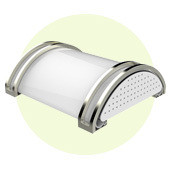
Sconces sized for stairwells, corridors, and elevator lobbies, the applications covered above.
951
Browse all Wall Sconces
Exterior Residential Lighting
Exterior lighting on a residential or multi-family property is a liability question before it's a curb-appeal question. Dark parking areas, entries, and walkways are where slip-and-fall claims and security incidents originate, and insurers notice. Exterior lighting has to clear local municipal code, and in most jurisdictions the design references IES RP-33 for parking and pedestrian illumination levels.
Building-mounted wall packs and exterior sconces cover building perimeters, entrances, and breezeways. Motion-activation and photocell controls cut operating hours without cutting safety, since the fixture only runs at full output when something's actually there to see it. Pathway lighting along walkways is the cheapest liability reduction on the list: a few well-placed low-level fixtures do more for trip-and-fall exposure than upgrading the building-mounted fixtures ever will.
Parking and Site Lighting
Parking areas need consistent, glare-controlled illumination, not just bright illumination; a fixture that blasts the lot but blinds anyone walking toward the building fails the actual safety goal. LED wall packs at the building face and pole-mounted area fixtures typically deliver the most uniform coverage for the cost. For landscaped entries and driveways, bollards and area and site lighting mark the path from the street to the building entrance without the glare a full-height pole fixture throws at that scale.
Utility rebate programs and most green-building frameworks key off DLC listings rather than a blanket ENERGY STAR checklist for the site lighting itself; check the specific utility's program before promising a client a rebate number, since qualifying wattage thresholds and rebate amounts vary by territory. Fixtures carrying a DLC Standard or Premium listing are the ones worth checking against the local program first.
Outdoor and Site Lighting for Multi-Family Properties
For a deeper look at site and area lighting layouts, uniformity ratios, and pole spacing beyond what's covered here, see the Outdoor & Site Lighting guide.
745
Browse all Outdoor Lighting
Why Switch to LEDs
LED is the default for new construction and retrofits across residential and multi-family work at this point; the conversation with an owner is about scope and budget, not whether to convert. LEDs cut electricity use by roughly 75 to 80 percent compared to incandescent sources, with somewhat less of a gap against halogen, and last on the order of 15 to 25 times longer than either. On a property running enough units that lamp replacement is a standing line item, the drop in maintenance labor and material is usually what actually moves the ROI conversation, more than the utility bill does.
LEDs don't throw heat the way incandescent and halogen sources do, which takes some load off cooling in the summer months. They also contain no mercury, so there's no hazardous-material handling or disposal step when a fixture eventually gets replaced, the way there is with fluorescent tubes.
Warranty terms vary by manufacturer and by product line, and they typically cover the driver and the light engine separately; check the specific spec sheet for the fixture you're quoting rather than assuming a standard term. Replacing lamps one at a time across a large property is the expensive way to do this. Standardizing on one LED retrofit kit family across similar units cuts down on what the maintenance team has to stock and keeps future swaps simple.
Understanding Lumens and Light Levels
Specify by lumens, not watts. Wattage is what the fixture draws; lumens are what it actually puts out, and an LED pulling less power can easily out-light an older fixture pulling more. A 10W LED at 900 lumens is brighter than a 15W LED at 700 lumens, full stop.
For task areas like a kitchen countertop, general residential task-illuminance ranges run higher than living areas and bedrooms, with bathrooms landing in between for grooming tasks at the mirror. Treat these as a starting range, not a code requirement, and confirm against whatever illuminance target the specific project's code path or client spec actually calls for. Corridor lighting is different: that's a life-safety and egress question, and the controlling minimum comes from the applicable life safety code and the local building code, not from the exterior-lighting practice (IES RP-33) some checklists mistakenly cite for interior corridors. When reviewing a fixture spec, check delivered lumens at the actual mounting height for the space, not the wattage on the box.

Shop Residential and Multi-Family Lighting
RelightDepot stocks a full range of LED fixtures for residential and multi-family applications, from individual unit interiors to exterior site lighting. Browse by category below, or contact our team for help specifying a complete property lighting package.
Browse All Light Fixtures | Decorative Ceiling Lights | Wall Sconces | Outdoor Lighting
Have a multi-family project? Contact our team for a quote: Contact Us | 888-548-6387 | [email protected]