Products List
- Product
- Qty in Cart
- Quantity
- Price
- Subtotal
-
 Featured$179.85MSRP: $199.78SKU: WM-WLF-24-40W-MCTP-SRK-224BRAND: Westgate Manufacturing
Quick Overview
12" Dome Light with Flat Lens, Dual Dimming, 24W/32W/40W, 100LM/W, 30K/40K/50K, 24" or 48" Swivel Rod Kit (wattage: 24W/32W/40W; lumens: 4000; efficacy: 100LM/W; CCT: 30K/40K/50K; voltage: 120~277V)
FeaturedFeatured12" Dome Light with Flat Lens, Dual Dimming, 24W/32W/40W, 100LM/W, 30K/40K/50K, 24" or 48" Swivel Rod Kit
WM-WLF-24-40W-MCTP-SRK-224$179.85MSRP: $199.78The 12" Dome Light with Flat Lens is a versatile lighting solution designed for both residential and commercial applications. Part of the WM-WLF Series, this fixture offers dual dimming... -


Modern 4.5W LED Tree Light with Adjustable Color Temperature
WM-TL-118-MCT$55.55 - $57.00MSRP: $61.78 - $63.78Introducing the Modern 4.5W LED Tree Light Experience the perfect blend of functionality and style with our Modern 4.5W LED Tree Light, part of our contemporary outdoor lighting collection. This... -


Vintage Inspired Open Cage Pendant Light, Hexagon Fixture, Industrial Style, Medium Base Socket (E26), 3-Foot Braided Cord, Iron Rust Finish
SU-07011-SU$41.45This vintage-style open birdcage pendant fixture will bring a nostalgic feel to any space. It features an iron rust finish and a 3.5-foot braided cord and chain for authenticity. Get creative... -


Vintage-Inspired Caged Canopy Pendant, Industrial Style, Farmhouse Country-Chic Decor, Single Medium Base Socket (E26), 68-inch Braided Woven Cord, Satin Black Finish
SU-07005-SU$50.65This vintage style pendant features a satin black finish and a glass jar enclosure. Metal cage and flared canopy add an industrial design feel. This versatile indoor fixture can be used in a... -


Vintage Designed Open Cage Pendant Light, Metal Industrial Style Fixture, Medium Base Socket, 42-Inch Woven Braided Cord, Antique Brass & Oil Rubbed Bronze Finish
SU-07006-SU$32.20This vintage-style open cage pendant fixture will bring a nostalgic feel to any space. It features an oil-rubbed bronze cage and base with an antique bronze socket, and classic details like a... -
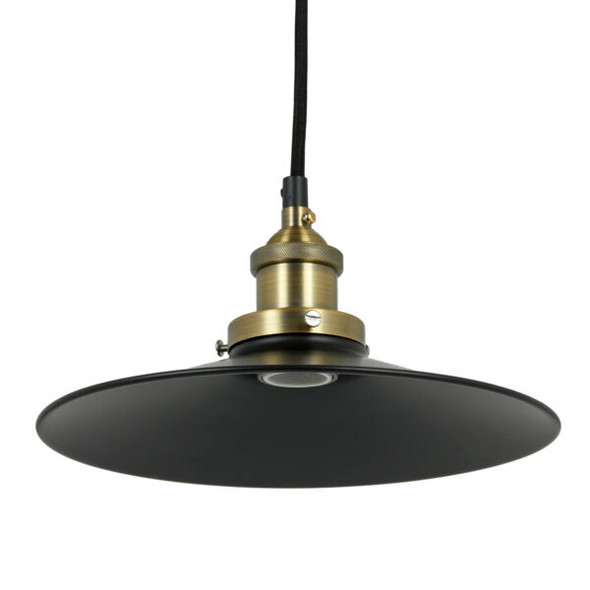

Antique Oil Rubbed Bronze Shallow Dish Shade Pendant, Farmhouse Country-Chic Style Fixture, 10-Inch Wide Canopy Cage
SU-07009-SU$43.00This 10-inch antique brass pendant with a shallow oil-rubbed bronze canopy will bring a nostalgic feel to any space. It features machined details and a 72-inch braided cord for authenticity. Get... -


Vintage-Inspired Glass Cloche Dome Pendant, Farmhouse Light Fixture, Medium (E26), 49-Inch Braided Woven Cord, 12”, Black Canopy
SU-07046-SU$76.85This vintage-style glass dome pendant fixture will bring a nostalgic feel to any space. Evoke the early 20th century when you pair it with a medium base incandescent or LED Edison Style bulb of... -


Vintage-Inspired Mirror Glass Pendant Fixture, Schoolhouse Shade, Farmhouse Décor, Medium (E26), Black Base & Canopy
SU-07022-SU$39.90This vintage-style mirror glass sphere pendant fixture will bring a nostalgic feel to any space. Bulb shows through the mirrored glass when lit creating an interesting effect. Pair it with a... -


Vintage-Inspired Mirror Glass Pendant Fixture, Schoolhouse Shade, Farmhouse Décor, Medium (E26), 72-Inch Cord, 60 Watts Max, 9" Tinted Glass Sphere, Black Base & Canopy
SU-07020-SU$61.45This vintage-style mirror glass sphere pendant fixture will bring a nostalgic feel to any space. Bulb shows through the mirrored glass when lit, creating an interesting effect. Pair it with a... -

Sunpark Electronics, 3-6001D-PD-E, Outdoor Pendant with Photo Cell, Die-cast Aluminum, GU24 LED Bulb
SP-3-6001D-PD-E$53.05The Sunpark Electronics 3-6001D-PD-E is a stylish and functional outdoor pendant light, perfect for enhancing the ambiance and safety of any outdoor space. This fixture is designed with... -


17-Inch 24 Watt LED Ceiling and Pendant Light, Acrylic/Linen Shade
SP-DC614D-A$96.90The Sunpark Electronics DC6 Series LED Ceiling Fixture is a sleek and modern lighting solution designed for various indoor settings. With its elegant acrylic and linen shade, it offers a stylish... -

3-6001D Die-cast Aluminum Outdoor Pendant with Powder Coated Finish
SP-3-6001D-A-PD-E$62.90This Sunpark Electronics 3-6001D outdoor pendant light combines modern design with functionality, suitable for enhancing exterior spaces with its elegant die-cast aluminum construction and powder...