Lighting is one of the most critical systems in any manufacturing or industrial facility. It affects worker safety, production quality, energy costs, and code compliance. On new construction, a designer or engineer specifies the fixtures and layout. On a retrofit or MRO job, that call often sits with the facility manager or owner, and the contractor bids, sources, and installs. Either way, the fixture has to match the environment, the work task, and the maintenance reality. This guide covers what to look for by area, and the mistakes that show up most often on industrial retrofits.
Why Lighting Matters in Industrial Environments
Industrial and manufacturing spaces run long hours, often under harsh conditions. Switching to LED high bay lighting delivers measurable benefits across every industrial environment:
- Improved visibility and safety: bright, uniform light helps prevent accidents around machinery and moving equipment.
- Better quality control: high color accuracy makes it easier to spot defects during production or inspection.
- Lower operating costs: LED fixtures can cut energy use by 50 to 70% compared to older high-intensity discharge (HID) systems.
- Reduced maintenance: longer lifespans mean fewer relamps and less downtime for service lifts or scissor lifts.
- Increased productivity: proper lighting supports worker comfort and focus, especially on multi-shift operations.
Pro Tip
HID-to-LED high bay retrofits often pay back in two to four years once rebates and reduced maintenance are factored in. The exact number depends on your current wattage, utility rate, and hours of operation, so run it against your own bill before quoting a payback figure to a customer.
Key Factors to Consider Before Upgrading
Before a fixture schedule gets finalized, work through these questions:
- What type of work happens in each area? Assembly lines, machining cells, and inspection areas all have different lighting needs.
- How harsh is the environment? Heat, moisture, vibration, or chemicals determine what fixture ratings are required.
- Are maintenance and access a challenge? Fixtures over production lines or equipment should have long lifespans and field-replaceable drivers to minimize downtime.
- Are there specific safety or compliance requirements? Certain areas may require UL844, NSF, or hazardous location listings to meet code.
- What energy-saving goals or rebates are available? Many utilities offer rebates for DLC-listed LED fixtures and advanced controls.
Documenting these before the fixture schedule is locked helps avoid a re-order mid-project and keeps the job eligible for available rebates.

Common Areas in Industrial Facilities
Each area in a manufacturing plant has its own lighting challenges. Below are the most common environments and the fixtures that work best in each.
Production Areas
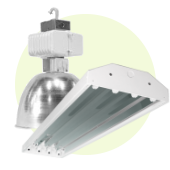
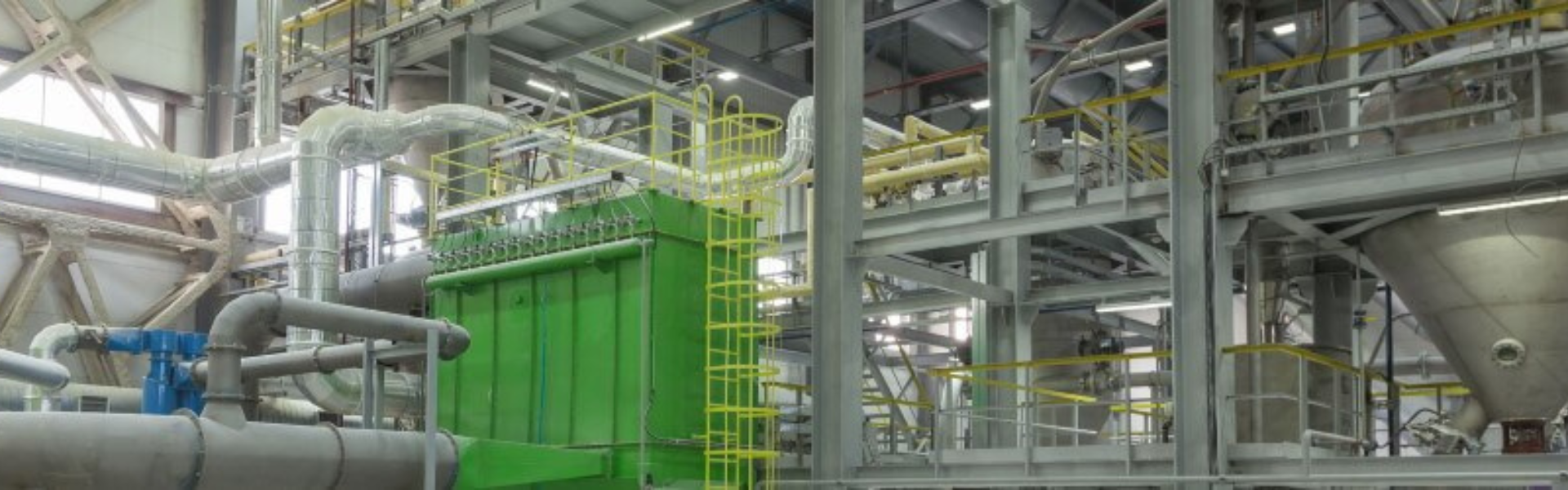
Manufacturing and assembly floors need bright, uniform lighting with minimal glare. Fixtures have to handle long operating hours at elevated mounting heights and tolerate vibration from active machinery. For most production bays with ceiling heights of 15 feet or above, LED high bays are the standard call: Linear LED High Bays or Round LED High Bays, in 4000K to 5000K for bright, neutral output. IES RP-7 puts general industrial work in the 30 to 50 foot-candle range, with precision tasks like metalworking, finishing, or inspection running higher, up to 100 foot-candles, and calling for 80+ CRI so color and defects read accurately on the floor.
800
Browse all High Bay Lighting
Maintenance and Utility Rooms
Smaller rooms for maintenance, compressors, electrical panels, or utilities don't need much: surface-mount vapor-tight fixtures or LED strip lights work fine in these lower-ceiling spaces. Add occupancy sensors and these rooms are close to set-it-and-forget-it, since they often sit dark for hours between visits. Go IP65 or higher wherever moisture, steam, or dust is present.
Washdown and Sanitation Areas
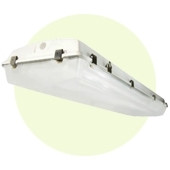
Food and beverage processing lines, bottling areas, and sanitation rooms need sealed fixtures that survive high-pressure washdown cycles and chemical cleaning agents. Standard industrial fixtures fail fast here. Go with clean room lighting or NSF-listed vapor-tight fixtures in stainless steel or polycarbonate housings, IP66 to IP69K rated, with shatter-resistant lenses (no glass) and smooth housings with no ledges or crevices where debris or standing water can collect.
799
Browse all Vapor Tight High Bays
Hazardous or Classified Locations
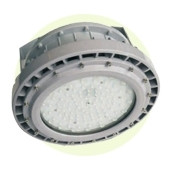
Facilities handling chemicals, paints, solvents, or combustible dusts may have areas classified under the National Electrical Code as Class I, II, or III locations. These require fixtures with specific UL or FM listings designed to contain any ignition source. Do not substitute a standard industrial fixture in a classified area. For full classification requirements, see NFPA 70 (the National Electrical Code).
Recommended: Explosion-Proof Lighting
- Confirm the Class, Division, and Group for each hazardous location before purchasing any fixture. This comes from the area classification study, not the fixture spec sheet.
- Use corrosion-resistant hardware and conduit seals at every junction point.
- Choose fixtures with accessible driver compartments so service doesn't compromise the enclosure rating.
774
Browse all Explosion Proof Lighting
Outdoor and Security Lighting
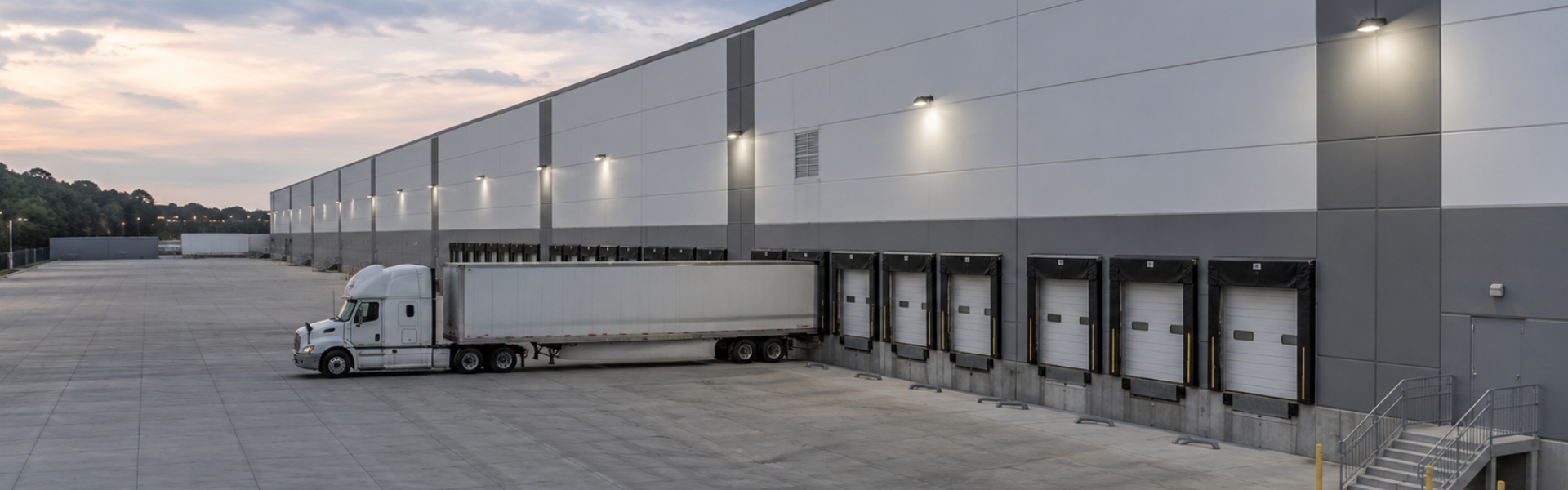
Exterior lighting helps workers move safely between buildings and improves perimeter visibility for security. Loading docks, truck courts, and facility entry points all need consistent light after dark. Loading dock bays specifically benefit from dock lights mounted at each door for safe trailer loading and unloading. For the perimeter and grounds, wet-listed fixtures with surge protection are the baseline: Wall Packs, Flood Lights, or Area Lights. Add photocells or dusk-to-dawn controls to cut waste during daylight hours, and motion sensors in low-traffic perimeter zones for additional savings without cutting visibility.
Egress and Emergency Lighting
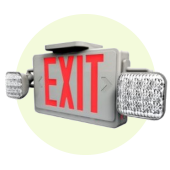
Exit routes have to stay illuminated at all times, including during a power failure. OSHA 1910.37 and local fire code set illumination and testing requirements for egress paths in industrial facilities. Build emergency lighting into the fixture schedule from the start, not as a late add.
Recommended: Exit and Emergency Lighting, Emergency Lighting Inverters
- Confirm battery runtime and self-testing features match the emergency lighting plan before ordering, especially on facilities with long egress paths.
- Use remote heads where a single unit can't cover an entire egress corridor.
- Keep exit signage visible at all times, including during construction or retrofit phases.
Common Mistakes to Avoid in Industrial Lighting Projects
Even experienced crews run into the same handful of problems on plant lighting upgrades:
- Ignoring environment ratings: a standard fixture in a hot, wet, or corrosive area loses lifespan fast and can void the warranty outright.
- Underestimating glare: swapping old high bays for very high-output LEDs without diffusers can leave the floor below harsh and uncomfortable. Check the glare rating and beam angle before ordering.
- Skipping layout verification: a one-for-one replacement can leave shadowed or over-lit zones if ceiling heights, task types, or the floor plan have changed since the original install.
- Choosing non-DLC fixtures: most utility rebates require DLC listing. An unlisted product can knock the whole project out of the incentive program.
- Forgetting about controls: new fixtures on old manual switches leave real savings on the table. Motion and occupancy controls alone can meaningfully cut lighting energy use in areas with variable occupancy.
ROI Insight
Pairing LED high bays with occupancy sensors typically adds another layer of energy savings on top of the fixture upgrade itself, often for minimal additional cost. Many utility rebate programs cover sensors alongside the fixtures, so check the program rules before finalizing the quote.

Lighting Controls and Energy Efficiency
Smart controls are now standard on most industrial lighting upgrades, and a basic control strategy alone can meaningfully cut operating cost without a full building automation system:
- Occupancy-based sensors in low-traffic or intermittent areas such as storage rooms, stairwells, and utility corridors.
- Daylight sensors near windows, skylights, or loading doors where natural light varies through the day.
- Time-based scheduling to align lighting with shift schedules or plant shutdowns.
- Dimming controls to fine-tune brightness by area or task type without adding separate circuits.
- Networked lighting systems for monitoring and remote adjustment on multi-building campuses.
If the site still has older wiring, start simple. Standalone occupancy sensors deliver measurable savings without requiring any IT infrastructure.
Planning a Lighting Upgrade
Before finalizing a fixture schedule for a retrofit or new-construction project, work through these steps:
- Audit existing conditions: record fixture types, wattages, mounting heights, and zone controls for every area.
- Identify problem areas: flag poor visibility, flickering, color inconsistency, or excessive glare affecting work quality or safety.
- Determine environment ratings: match fixture specs to the heat, humidity, or chemical exposure in each zone.
- Confirm target light levels: pull the foot-candle target from the plan or the applicable IES table for that task type, not a guess.
- Evaluate total cost of ownership: compare initial cost, energy use, maintenance frequency, and rebate eligibility, not just the fixture price.
- Plan control integration: identify where occupancy sensing, daylight harvesting, or scheduling adds savings in the layout.
- Verify compliance: confirm emergency lighting, hazardous area ratings, and any required NSF or UL listings are addressed before the order goes in.
- Loop in RelightDepot: we'll verify fixture selections, help with value engineering, and flag rebate opportunities for your region.
For facilities that combine industrial production with warehousing or distribution, see our Warehouse Lighting guide for fixture recommendations tailored to racking aisles, dock areas, and mixed-use spaces.
Long-Term Maintenance and Performance
A lighting system should run for years with minimal intervention. Keep lenses and reflectors clean: dust and grease buildup on a lens can reduce delivered light levels noticeably over time. Record fixture models and driver types for every zone so replacements are fast and compatible. Schedule periodic checks on controls, photocells, and battery backup systems, and use surge protectors in high-load or outdoor areas to protect drivers from electrical transients near heavy machinery.
RelightDepot carries a broad selection of commercial and industrial LED high bays and specialty fixtures built for long service life and low maintenance overhead.

Why Work with RelightDepot
Industrial lighting comes down to matching the product to the environment, the task, and the budget, and getting the project done without delays or costly substitutions. We supply a broad catalog of commercial and industrial LED fixtures from vetted manufacturers, help you value-engineer around a spec when budget or lead time is tight, and turn quotes around fast with factory-direct shipping to the job site.
Have a fixture schedule to price out or a substitution to run past our team? Contact us, call 888-548-6387, or email [email protected].