Get 12% OFF Automatically When You Spend $2,000 or More No Code Required

FREE SHIPPING ON ORDERS OVER $1K

EXPERT LIGHTING ADVICE

VALUE ENGINEERED QUOTES

ROI ANALYSIS AND DESIGN SUPPORT

Retail Lighting

Retail lighting in a commercial store environment

Retail lighting jobs live and die on the walk-through. A designer or store planner sets the intent, but it's the electrical contractor who turns that intent into a working store: matching the spec, sourcing what's actually available, and getting fixtures aimed and wired before the grand opening date that never moves.

This guide covers how retail spaces typically get lit by area, which fixture types show up on most retail bid sets, and where a contractor has room to source smart, substitute confidently, or flag a problem before it becomes a change order.

Pro Tip: Apparel, cosmetics, and jewelry specs almost always call out 90+ CRI, and for good reason: low-CRI light makes merchandise look off and drives returns. If a spec is silent on CRI or you're pricing a substitution, default to 90+ rather than standard 80 CRI product. It's a detail owners notice fast when it's missing.

Get 12% Off Automatically at Checkout

Typical Retail Areas and Activities

No two zones in a retail store get lit the same way. Here's what each area typically calls for, and which fixture families you'll be bidding, sourcing, or swapping in most often.

Sales Floor and Merchandise Aisles

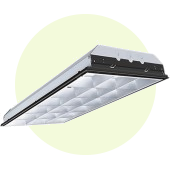
Sales floor lighting needs to be even and glare-free at eye level, not just bright on the floor. A lot of merchandise sits on shelves and wall displays, so vertical illumination matters as much as what's landing on the ground.

736

Feature Displays and End Caps

End caps and feature displays need to read brighter than everything around them. That's the whole point of accent lighting: it pulls the eye toward promotional or high-margin product without anyone consciously noticing why.

  • Goals: higher light levels than ambient, controlled beam spread, flexibility for merchandising changes
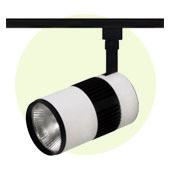
  • Common fixtures: LED track heads, adjustable recessed accent downlights, LED spotlights
  • Notes: aim lights at vertical surfaces and product faces, not the floor. It's a five-minute adjustment at walkthrough that gets skipped more often than it should
838

Checkout and Point-of-Sale

Checkout areas need to feel bright and welcoming for customers and staff. Lighting should support facial recognition and reduce glare on glossy counters, screens, and pin pads.

  • Goals: balanced brightness, reduced glare, comfortable color temperature
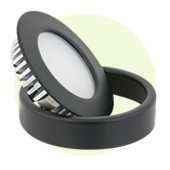
  • Common fixtures: recessed downlights, cylinders, decorative pendants, small linear fixtures
  • Notes: avoid harsh spotlights aimed directly at the counter surface

Fitting Rooms

Fitting rooms are where a sale gets made or lost. Bad color rendering here doesn't just look off; it kills conversions, so specs for this area usually call for high CRI and light aimed at the person, not just the ceiling.

  • Goals: high CRI, flattering vertical illumination, reduced shadows on face and clothing
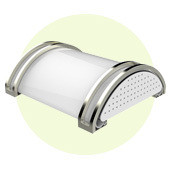
  • Common fixtures: linear wall lighting, wall sconces, recessed downlights with wide distribution
  • Notes: plans often place lighting to the sides of mirrors rather than only overhead, worth flagging in the field if the print doesn't call it out and the mirror layout has changed
816

Storefront and Window Displays

Window displays are the visual invitation into the store. Lighting needs to stay compelling at night and adapt during daytime conditions. The goal is contrast and focus, not just maximum brightness.

  • Goals: high contrast against interior ambient lighting, directional control, day and night adaptability
  • Common fixtures: track lighting, adjustable accent downlights, small spotlights, linear fixtures for signage
  • Notes: window and storefront circuits are usually put on their own controls or schedule to support after-hours visibility without lighting the whole store

Trade Partner Program

Retail Lighting Layers

Most retail jobs use a layered approach: ambient, accent, and task. Each layer does a specific job, and getting the balance right is what separates a store that feels intentional from one that just feels lit.

Ambient Lighting

Ambient lighting provides overall illumination throughout the store. It sets baseline brightness and visual comfort and supports safe navigation.

Accent Lighting

Accent lighting highlights specific products, walls, and displays. It runs brighter than ambient and relies on controlled optics and aiming to create focus.

Task and Detail Lighting

Task lighting supports checkout operations, product inspection, and back-of-house work areas. It also helps eliminate shadowy corners and improves visibility in high-activity zones.

Choosing Color Temperature and Color Quality

Color temperature affects mood, clarity, and product appearance. Color quality (CRI) affects how accurately products look compared to daylight.

  • 3000K to 3500K: warm and inviting, common in apparel and specialty retail
  • 3500K to 4000K: neutral and clear, common in general retail
  • High CRI (often 90+): recommended for apparel, cosmetics, jewelry, and fitting rooms

Specs typically hold CCT consistent across the main sales floor and use accent lighting and controls, not a mix of CCTs, to create hierarchy. If you're quoting a retrofit where the original spec is long gone, matching the existing CCT throughout the sales floor is the safer bid than introducing a second color temperature.

LED Lighting in Retail

LED is the standard for modern retail because it supports efficient ambient lighting, precise accent lighting, and flexible controls with longer service life.

  • Lower energy consumption and less heat than older sources
  • Longer lifespan, which can cut down on lift rentals and repeat maintenance calls
  • Better optical control for accents and displays
  • Strong compatibility with dimming, zoning, and scheduling
  • Most current retail LED product is DLC-listed, worth confirming up front on any job where the owner is chasing a utility rebate

Creating Visual Hierarchy Through Contrast

Contrast does more work in a retail space than raw brightness. Not every area should be lit to the same level, and a spec that lights the whole store evenly usually reads as flat once the fixtures are actually installed.

  • Keep ambient lighting consistent across aisles and circulation paths
  • Use higher light levels and tighter beams to emphasize priority displays
  • Avoid over-lighting every display, which kills the contrast effect
Design Tip: A common rule of thumb, worth confirming against the project's actual lighting design, is accent areas running three to five times brighter than the surrounding ambient. Real numbers shift with ceiling height, beam angle, and how reflective the merchandise is, so treat this as a sanity check on the plans, not a substitute for them.

Product-Focused Lighting and Backlighting

Backlighting highlights shelving, graphics, and displays without the harsh look narrow-beam accents can create. It's especially useful for lower shelves that ambient and accent layers tend to miss.

  • Common uses: shelving, under-shelf lighting, signage, feature walls
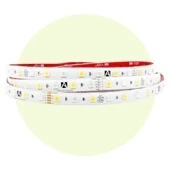
  • Common fixtures: LED tape lighting and LED strip lighting with appropriate drivers and mounting channels
  • Notes: plan driver and wiring access before the display goes in. Burying a driver behind a permanently mounted display is a callback waiting to happen
735

Retail Lighting Design Guidelines and Considerations

Every store is different, but these are the planning ranges most retail lighting designs land in. IES publishes recommended practice ranges for retail and merchandising spaces; treat the figures below as a starting point for pricing and layout, not a substitute for the project's actual foot-candle spec.

  • General sales floor: 30 to 50 foot-candles (approximately 300 to 500 lux)
  • Accent displays: about 3 to 5 times the ambient light level
  • Checkout areas: 30 to 40 foot-candles (approximately 300 to 400 lux)
  • Fitting rooms: 40 to 50 foot-candles (approximately 400 to 500 lux), high CRI recommended

Additional considerations that show up on most retail bids:

  • Glare control for glossy packaging, screens, and polished floors
  • Fixture spacing and optics based on ceiling height and aisle widths
  • Separate circuits and control zones for ambient and accent systems
  • Maintainability, especially in high ceilings and hard-to-access areas

Controls and Flexibility in Retail Lighting

Controls add flexibility and long-term value, especially in retail where layouts and merchandising change regularly.

  • Zoning: separate ambient from accent lighting so displays can change without rewiring the whole store
  • Dimming: dimmers for promotions, seasonal setups, and brand preference
  • Scheduling: keep window displays and storefront areas active after hours when the owner wants it
  • Occupancy sensors: a solid fit for stock rooms, offices, and back-of-house spaces

Value Engineering

Plan Your Retail Lighting Upgrade

Retail lighting jobs move fast once the spec is out, and the fixtures on page one of the submittal rarely match what's actually sitting on a shelf ready to ship. That's where RelightDepot comes in: quoting the spec as drawn, running down approved-equal substitutions, and getting you pricing and lead times before the schedule tightens.

Contact us with your retail lighting spec or a punch list of what needs replacing, and we'll turn around a quote.

Contact Us
Phone: 888-548-6387
Email: [email protected]

SUB TOPICS

WE CAN HELP

Talk to an Expert Now, Call (888) 548-6387

If you don't see what you're looking for, don't hesitate to contact us to discuss your needs with one of our lighting experts. We would be happy to walk you through all of the design considerations and help you choose the best type of lighting for your application.

Frequently asked questions

Stuck on something? We're here to help with all your questions and answers in one place.

Default to 90+ CRI for anything apparel, cosmetics, or jewelry. It's cheap insurance against a callback, and most retail specs land there anyway when they do specify.

Usually yes, if the substitute matches photometrics, DLC listing (when rebates are involved), and mounting type, and you submit it as an approved equal rather than swapping it in the field.

Most retail sales floor specs land in the 30 to 50 foot-candle range, but that's a planning range, not a code requirement. Pull the actual number from the project's lighting plan before you bid it.

Not always required, but almost always worth checking. If the owner is chasing a utility rebate, DLC listing is usually the qualifying criterion, and it's a lot cheaper to confirm before you order than after.

Match the existing CCT across the sales floor rather than introducing a new one. Mixed CCTs on an existing ceiling grid stand out immediately and tend to generate change-order pushback.

Call it in with the model or spec sheet in hand. Stock status and lead time on accent fixtures move fast in retail, and RelightDepot can usually confirm same-day.

Not by code in most jurisdictions, but separate zoning is common so fitting room lighting can be adjusted or scheduled independently of the main floor. Check the panel schedule on the actual job.

Behind an access panel or in an adjacent soffit, never buried inside a sealed display. If the display is already built and there's no access point, flag it before you wire it in.