FREE SHIPPING ON ORDERS OVER $1K
EXPERT LIGHTING ADVICE
VALUE ENGINEERED QUOTES
ROI ANALYSIS AND DESIGN SUPPORT
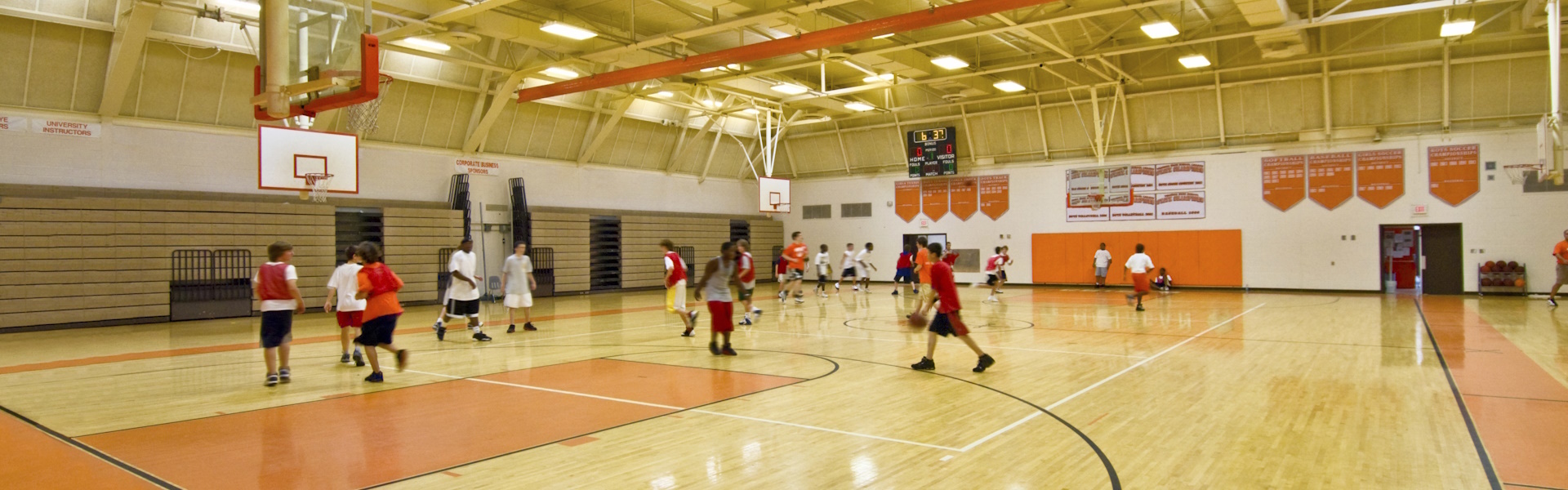
The school gymnasium does far more than host basketball games. It supports other sports like volleyball and wrestling that each have their specific needs along with assemblies, concerts, graduations, and community events. Lighting must deliver crisp, uniform visibility for athletes while creating a comfortable setting for audiences. The objective is a system that is bright, consistent, durable, adaptable, and efficient.
This guide explains practical fixture choices, standards that matter for high school use, safety and life-safety requirements, and strategies that help schools build a gym that works for every occasion.
Gyms are complex environments to illuminate. Mounting heights often range from 20 to 30 feet, so luminaires need the output and optical control to reach the floor and bleachers evenly. Each sport also brings its own visibility needs. Basketball and volleyball require excellent vertical and horizontal illuminance so players can track the ball without discomfort from glare. Wrestling demands smooth, shadow-free lighting across mats to help athletes, referees, and spectators see action clearly. Add assemblies and ceremonies to the schedule, and the lighting must also feel welcoming and comfortable for long audiences.
There is no single fixture that meets every goal. Schools often combine a primary high-bay system for athletic performance with supplemental fixtures and controls for multi-purpose needs. The subsections below introduce the most common options and where each one fits best.
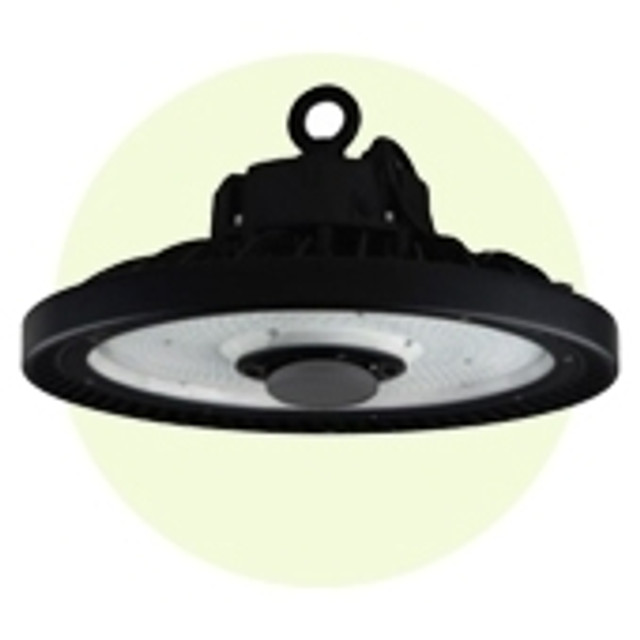
UFO high bays are compact, round luminaires that excel in one-for-one retrofit projects. They are lightweight, simple to install with hook or pendant hardware, and commonly available with DLC listings and multiple optical distributions. In many gyms, selecting the correct wattage and optic allows facilities to meet target levels while keeping the existing grid and branch circuits in place.
An added advantage of UFO high bays is that they can be configured with different reflector styles to manage glare. Aluminum reflectors direct light downward and reduce uplight, which minimizes wasted lumens in gyms with high ceilings. Prismatic reflectors, often polycarbonate or acrylic, diffuse light more evenly and soften the visual effect. This reduces discomfort glare for players tracking the ball overhead, particularly important in volleyball where sightlines are steep.
Explore our full line of UFO High Bay Fixtures.
Linear high bays use a rectangular housing that more closely resembles traditional fluorescent T5HO or T8 fixtures. This similarity makes them a natural fit for retrofits where existing mounting points or hardware were designed for linear fluorescent models. In addition to a familiar look, linear high bays are available in a wide range of lumen packages, often integrate easily with diffusers or wire guards, and can be installed in rows when uniform coverage is a priority.
Explore our full line of Linear High Bay Lights.
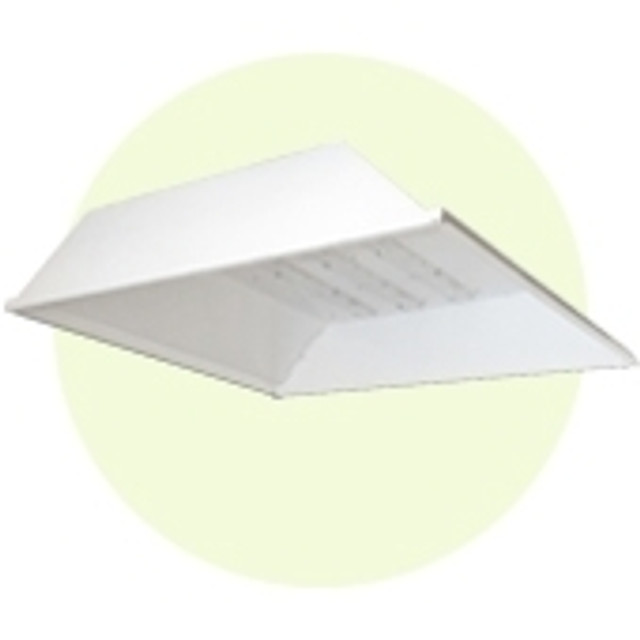
Some gyms, especially multipurpose halls, use acoustic tile ceilings rather than exposed trusses. In these spaces, grid high bays in 2x2 or 2x4 formats can drop directly into the ceiling grid. Installation is straightforward, labor is reduced, and the visual result is tidy and integrated. Modern grid high bays deliver high lumen output suitable for a 50 foot-candle athletic target and can dim down for assemblies. Polycarbonate lenses add impact resistance, and integral emergency options are available when life-safety coverage is part of the scope.
When gyms double as auditoriums or ceremony spaces, supplemental architectural lighting makes a clear difference. High-wattage cylinders, specified at warmer color temperatures such as 3000–3500K, create a comfortable atmosphere for guests. These fixtures provide a more architectural look and help transform the gym into an auditorium-like setting for graduations, assemblies, and performances.
Life safety lighting is essential in any gym. Exit and Emergency LightingExit signs must remain visible and durable, and egress illumination must be provided during a power outage. Exit signs should be rugged and, where appropriate, protected with wire cages. Emergency coverage can come from stand-alone fixtures, high bays with integral battery backup, or perimeter “bug-eye” units spaced to meet coverage. NFPA 101 requires egress paths maintain an average of 1 foot-candle with a minimum of 0.1 foot-candle for at least 90 minutes after loss of power. Confirm fixture locations and aiming so aisles, doors, and stairs remain clearly visible.
With modern lighting controls, school administrators can quickly transform the gym to match the activity at hand. Preset scenes let staff switch between full brightness for a game, reduced output for practice, or softer lighting for assemblies with the click of a button in an app or wall panel. This flexibility makes the gym feel like multiple spaces in one while also improving efficiency and lowering energy costs.
The table below shows common scene settings that balance performance, comfort, and efficiency.
| Mode | Light Level | Use Case |
|---|---|---|
| Game Mode | 100% | Basketball, volleyball, wrestling competitions |
| Practice Mode | 60-70% | Team practices, PE classes, daily training |
| Assembly Mode | 30-40% | Graduations, concerts, school assemblies |
| Cleaning or Maintenance | 100% | Custodial work, inspections, setup or teardown |
For high school athletics, the practical goal is reliable, uniform illumination that supports play and safety. The sections below summarize common targets and the control strategies that help a single space serve many purposes.
Most high school gyms aim for approximately 50 foot-candles across the playing surface. This target supports basketball, volleyball, and wrestling with good visibility, while remaining efficient to operate. Assemblies and community events often feel comfortable in the 20 to 30 foot-candle range, particularly when paired with warmer architectural lighting. Higher levels around 80 to 100 foot-candles are typically associated with professional and televised venues and are not necessary for most school projects.
Uniformity is as important as averages. Plan distributions and spacing so baselines, sidelines, bleachers, and mats do not fall into shadows, and so players tracking balls overhead experience minimal discomfort from glare.
Because gyms host practices, competitions, classes, and events, controls help the same fixtures serve different tasks. Occupancy sensors prevent lights from being left on when the gym is empty, which reduces utility costs. Dimming systems allow staff to set scenes such as “Game,” “Practice,” and “Assembly” with a single button. Scene control can be managed through standalone wall panels, wireless remotes, or integrated digital control systems.
Advanced networked lighting control systems provide additional capabilities. Using protocols like BACnet, DALI, or Zigbee, schools can group fixtures and program routines. This allows for effects such as flashing lights when the home team scores, sweeping dimming during player introductions, or synchronized lighting with audio during assemblies. These options are not required for code compliance, but they can enhance the experience for students and spectators alike.
Impact resistance and long service life are critical in school environments. Polycarbonate lenses resist ball strikes and discoloration. Wire guards provide added protection in zones with frequent impacts. Sealed housings keep dust away from boards and drivers and help maintain output. LEDs rated for 50,000 to 100,000 hours reduce the need for lifts and labor, which keeps the gym available for athletics and events and makes budgets more predictable for facility teams.
Most school upgrades begin as one-for-one retrofits. This approach uses the existing fixture count and branch circuitry, then selects lumen packages and optics that deliver target light levels and uniformity. The result is shorter construction windows, lower electrical labor, and minimal disruption to athletics. A full redesign is appropriate when the current grid cannot meet goals with reasonable wattages or when the school plans to add an architectural layer for assemblies and performances.
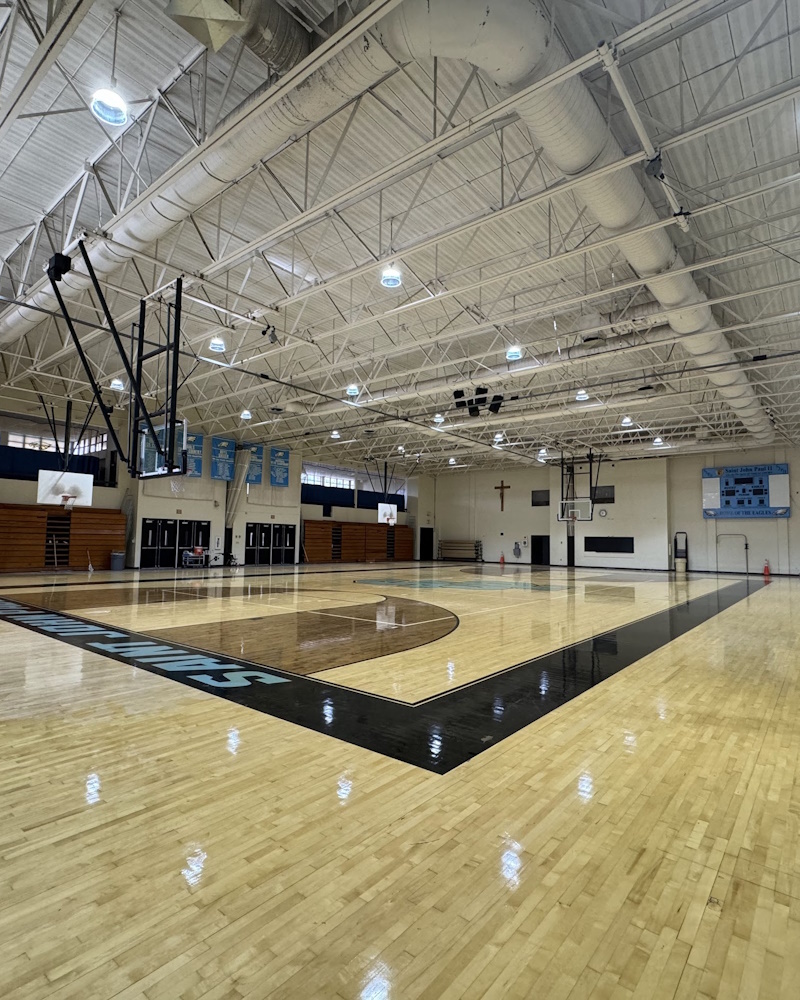 RelightDepot teamed up with one of our Trade Partners to retrofit a high school gymnasium in Florida. The project replaced 24 legacy 400 W metal halide high bays with 24 UFO LED high bays rated at 200 W. The new fixtures were installed with polycarbonate prismatic reflectors to help control glare and provide uplight.
Pre-project measurements showed light levels as low as 6 foot-candles in some corners. After the retrofit, the gym achieved a minimum of 39 foot-candles and an average of 55 across the court. Coaches and players reported clearer visibility, referees noted more consistent coverage into the corners, and the brighter appearance improved the setting for community events.
Even without rebates, the project reached a simple payback in less than two years due to energy savings and the elimination of regular relamping and ballast maintenance. This outcome reflects what many of our Trade Partners see in school retrofits: reliable LED products, streamlined installation, and measurable value for students, staff, and the broader community.
Set a 50 foot-candle target for high school competition and build the plan around uniformity rather than averages alone. Choose impact-resistant fixtures with long lifespans, and pair the athletic layer with supplemental cylinders for assemblies. Confirm exit and emergency lighting meets NFPA 101 requirements. Use controls that adapt lighting to practices, games, and events. For most projects, begin with a retrofit plan that reuses branch circuits and fixture counts, then redesign only where the existing grid cannot meet performance goals.
The gym is one of the most visible spaces in any school district. With a thoughtful combination of high bays, supplemental architectural fixtures, reliable emergency coverage, and flexible controls, schools can create lighting that supports athletics, keeps students and spectators safe, and welcomes families and community members. An LED upgrade reduces operating costs, extends service life, and improves the experience for everyone who uses the space.
If you don't see what you're looking for, don't hesitate to contact us to discuss your needs with one of our lighting experts. We would be happy to walk you through all of the design considerations and help you choose the best type of lighting for your application.