
How to Calculate the Return on Investment for Lighting Retrofit Projects
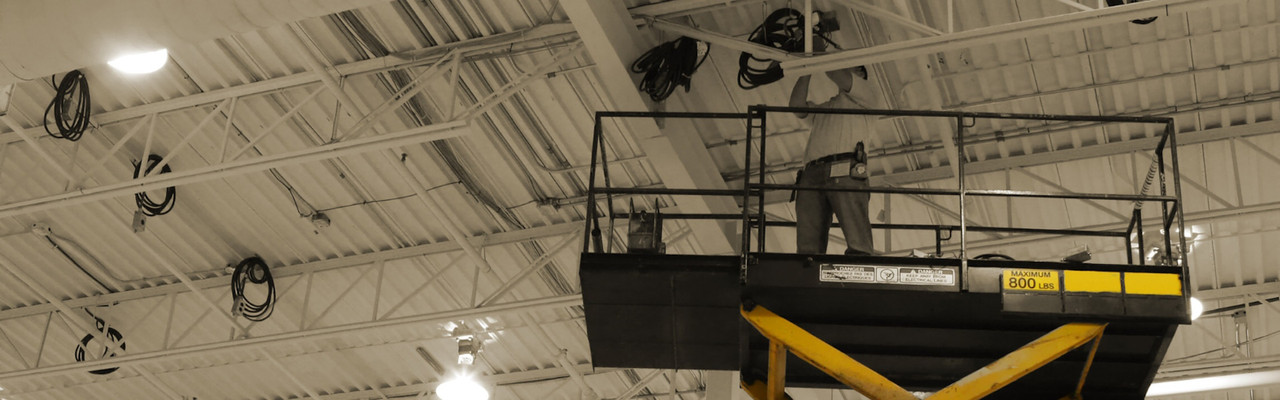
Lighting retrofits are one of the fastest and most reliable ways to reduce energy costs in commercial buildings. Whether you are a contractor offering retrofit services or a building owner evaluating the potential return, understanding how to calculate ROI (Return on Investment) helps you make informed decisions.
This guide reviews the key formulas you will need and walks through a real-world example of a 20,000 sq ft warehouse with 2,000 sq ft of office space, showing exactly how to estimate savings and payback.
Understanding ROI for Lighting Retrofits
A lighting retrofit replaces outdated fixtures such as metal halide or fluorescent with modern LEDs that offer higher efficiency and longer lifespans. The return on investment shows how quickly the upgrade pays for itself through reduced energy and maintenance costs.
Basic Formulas
Energy Use (kWh/year) = (Power Consumption per Fixture in Watts × Number of Fixtures × Hours/Day × Days/Year) ÷ 1000
Annual Savings = Existing Energy Use - New Energy Use - Annual Maintenance Savings
Project Cost = Material Costs + Labor Costs - Rebates and Incentives
ROI (%) = (Annual Savings ÷ Project Cost) × 100
Payback (Years) = Project Cost ÷ Annual Savings
Quick Insight: Many retrofit projects recover their cost within one to three years depending on energy rates, hours of operation, and available utility incentives.
Gathering Inputs
Before you can calculate savings, you need to understand how much energy your existing lighting system consumes and how much the new system will use. A lighting retrofit analysis starts with gathering a few key data points about each area of your facility.
- Number of fixtures in use
- Wattage of each fixture (include ballast wattage if fluorescent or HID)
- Average daily operating hours
- Days of operation per year
- Local electricity rate (¢ per kWh)
Many commercial projects include several types of spaces, each with different fixture types, mounting heights, and hours of operation. For example, a facility may combine warehouse, office, and outdoor lighting, all with distinct power requirements and usage patterns. The most accurate way to estimate overall project ROI is to calculate each area separately, determine its energy consumption, maintenance cost, and savings potential, then sum those results for a complete picture of total project benefit.
Example Project: 20,000 Sq Ft Warehouse + 2,000 Sq Ft Office
To make these calculations easier to follow, we’ll use a recent project as an example: a 20,000-square-foot warehouse with an attached 2,000-square-foot office. The warehouse operates six days a week for two shifts, while the office follows the same schedule but with lighter usage. Both areas rely on older lighting technology, making them ideal candidates for an LED retrofit that delivers measurable energy and maintenance savings.
- Hours of Operation: 12 hours per day × 6 days per week × 51 weeks per year = 3,672 hours per year
- Electricity Rate: $0.12 per kWh
- Local Utility Rebates: $55 per high bay, $15 per troffer
Existing Lighting System
| Area | Fixture Type | Qty | Wattage (system) | Total Load (W) |
|---|---|---|---|---|
| Warehouse | 400W metal halide high bay (incl. ballast ≈ 458W) | 50 | 458 | 22,900 |
| Office | 2×4 troffers with 3× 32W T8 lamps (incl. ballast ≈ 96W) | 32 | 96 | 3,072 |
Retrofit Lighting System
| Area | Fixture Type | Qty | Wattage (selected) | Total Load (W) | Unit Cost |
|---|---|---|---|---|---|
| Warehouse | Linear LED High Bay (155/185/200W Selectable CCT) | 50 | 185W | 9,250 | $92 |
| Office | Sensor Ready LED Troffer (34/38/45W Selectable CCT) | 32 | 38W | 1,216 | $65 |
Step 1: Calculate Existing Energy Use
Energy Use (kWh/year) = (Watts × Fixtures × Hours/Year) ÷ 1000
Warehouse: 458 × 50 × 3,672 ÷ 1000 = 84,088.8 kWh/year
Office: 96 × 32 × 3,672 ÷ 1000 = 11,280.4 kWh/year
Total Existing: 95,369.2 kWh/year
Annual Cost: 95,369.2 × $0.12 = $11,444.30
Step 2: Calculate New Energy Use (Base Case)
New Energy Use (kWh/year) = (Watts × Fixtures × Hours/Year) ÷ 1000
Warehouse: 185 × 50 × 3,672 ÷ 1000 = 33,966 kWh/year
Office: 38 × 32 × 3,672 ÷ 1000 = 4,465.2 kWh/year
Total New: 38,431.2 kWh/year
Annual Cost: 38,431.2 × $0.12 = $4,611.74
Energy Savings: 95,369.2 - 38,431.2 = 56,938 kWh/year, which equals $6,832.56 per year.
Step 3: Add Maintenance Savings and Rebates
Why Selectable Wattage Matters:
If a lower setting still meets light level requirements, energy use drops further and ROI improves without changing the layout.
If lower wattage settings are used: Running high bays at 155W and troffers at 34W reduces total consumption to approximately 32,453 kWh per year and saves about $7,550 annually on energy alone.
Lighting rebates are one of the most overlooked parts of a retrofit project. Most utilities and energy providers offer incentive programs designed to encourage upgrades to high-efficiency LED lighting. These rebates can significantly improve your ROI and shorten the payback period, especially for large commercial or industrial facilities.
To find available rebates in your area, you can check your local utility company’s website for “Energy Efficiency” or “Lighting Rebate” programs. You can also use national databases like DSIRE or the DesignLights Consortium (DLC) to locate regional programs.
In our example project, the local utility offers two levels of prescriptive rebates:
- $55 per qualifying LED high bay fixture
- $15 per qualifying LED troffer fixture
Total rebate amount: 50 × $55 (high bays) + 32 × $15 (troffers) = $3,230
Estimating Maintenance Savings
Maintenance savings depend on lamp life, ballast replacements, and labor cost. To calculate this, estimate how many times the existing fixtures will need to be serviced over the expected life of the new the LED system then multiply by parts and labor.
| Component | Typical Life | Replacement Cost | Labor Time | Labor Rate |
|---|---|---|---|---|
| Metal halide lamp | 15,000 hours | $20 | 0.5 hr | $60/hr |
| Fluorescent lamp | 24,000 hours | $3 × 3 = $9 | 0.25 hr | $60/hr |
| Ballast | ~50,000 hours | $25 | 0.5 hr | $60/hr |
| LED system | 50,000 hours | - | Minimal | - |
Example for a metal halide fixture: Over 50,000 hours, a 15,000-hour lamp will need roughly 3 relamps (50,000 ÷ 15,000 ≈ 3.3). Each relamp includes $20 material and $30 labor, total $70 per cycle. Three cycles equal $210 per fixture. Add one ballast replacement at about $55 total and you get $265 per fixture. For 50 fixtures, the total avoided maintenance is about $13,250.
For fluorescent troffers: Two lamp changes over 50,000 hours: 2 × ($9 materials + $15 labor) = $48 per fixture. For 32 fixtures, that equals $1,536.
Total avoided maintenance: approximately $14,800. Over ten years, this equals roughly $1,480 per year in maintenance savings.
Step 4: Determine Project Cost
Once you have estimated your material and labor costs, rebates can be subtracted to calculate your net project investment. The table below shows materials and labor for both fixture types along with the total rebate. This breakdown provides a realistic snapshot of total installed cost so that ROI and payback calculations reflect what a contractor or building owner might actually expect to spend.
| Category | Detail | Cost |
|---|---|---|
| Materials | High bays (50 × $92) | $4,600 |
| Materials | Troffers (32 × $65) | $2,080 |
| Material Subtotal | $6,680 | |
| Labor | High bays (50 × $85) | $4,250 |
| Labor | Troffers (32 × $50) | $1,600 |
| Labor Subtotal | $5,850 | |
| Total Before Rebate | $12,530 | |
| Less Rebate | $3,230 | |
| Net Project Cost | $9,300 |
Step 5: Calculate ROI and Payback
Annual Savings:
$6,832 (energy) + $1,480 (maintenance) = $8,312/year
ROI: ($8,312 ÷ $9,300) × 100 = 89%
Payback Period: $9,300 ÷ $8,312 = 1.12 years
Long-Term Benefits Beyond ROI
Energy and maintenance savings are only part of the story. A properly executed lighting retrofit brings long-term advantages that extend well beyond the initial payback period. By modernizing lighting systems, building owners and facility managers can achieve additional benefits such as improved tenant satisfaction, reduced operational risk, and greater control over energy performance.
- Improved Visibility and Productivity: Better light levels and color quality enhance safety, accuracy, and comfort for staff.
- Lower Heat Output: LED fixtures produce less heat, reducing HVAC load and improving energy efficiency.
- Increased Property Value: Efficient lighting systems make facilities more attractive to tenants and buyers.
- Smaller Carbon Footprint: Every kilowatt-hour saved reduces environmental impact.
Long-Term ROI: Over a 10-year life span, this example project would generate more than $80,000 in total savings while improving light quality and reducing maintenance downtime.
LED-to-LED Retrofit Considerations
LED fixtures have been in use for well over a decade, and many early-generation systems are now reaching the end of their useful life. Contractors and building owners increasingly face LED-to-LED retrofit opportunities. The ROI math is the same, although several factors should guide these projects.
Key Technical and Economic Considerations
- Diminished Light Output: Older LEDs can lose a significant portion of brightness over time. Replacing them restores illumination and consistency across the space.
- Improved Efficacy: Modern fixtures deliver more lumens per watt than early models, which reduces energy use for the same light output.
- Driver Reliability: Many first-generation LEDs used non-replaceable drivers. Newer designs often feature replaceable drivers or modular boards, which reduces long-term maintenance cost.
- Control Compatibility: Upgrading to fixtures with 0–10V dimming, motion sensing, or networked controls can unlock additional savings through reduced run time.
- Rebate Eligibility: Many utilities now provide incentives even for LED-to-LED upgrades if the new system exceeds a minimum efficacy threshold.
Non-Economic Reasons to Retrofit
- Improved Aesthetics: Newer fixtures often have slimmer profiles and better optical control, which gives offices and retail spaces a more modern appearance.
- Consistency Across Locations: Standardizing fixture types reduces maintenance complexity and simplifies inventory for multi-site operators.
- Safety and Compliance: Replacing non-UL or discontinued fixtures can help maintain current safety standards.
- Tenant Satisfaction: Upgrading lighting is one of the simplest ways to improve the look and feel of a leased space without major renovations.
Turning Numbers Into Action
This warehouse and office example demonstrates how breaking down calculations by area gives a complete view of the project’s financial performance. Even with conservative assumptions, this retrofit delivers strong ROI and pays for itself in about one year, with energy and maintenance benefits that continue throughout the life of the LED system.
Need help evaluating your own project? Contact [email protected] or call 888-548-6387 for personalized guidance and recommendations.
Latest Blog Updates
Planning an Industrial Lighting Retrofit: A Step-by-Step Guide for Facility Managers and Contractors
Upgrading lighting in a manufacturing or industrial facility is one of the most impactful ways to im...
New Healthcare Lighting Application Guide: Creating Safer, Brighter Medical Environments
Lighting plays a vital role in healthcare facilities. It does more than illuminate spaces. It affect...

Introducing QuickShipLights.com: Fast, Free Shipping on Lighting You Can Count On
Lighting projects often come up unexpectedly, whether it is a last-minute replacement, a renovation...

Halco Lighting Technologies October Promotion
RelightDepot is excited to announce the Halco Lighting Technologies October Promotion, featuring a w...
How to Calculate the Return on Investment for Lighting Retrofit Projects
Lighting retrofits are one of the fastest and most reliable ways to reduce energy costs in commercia...
Top Five Options For Lighting Today's Office Spaces
Modern offices look very different from those of twenty years ago. Closed rooms and fluorescent trof...