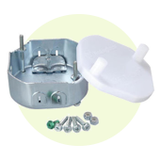
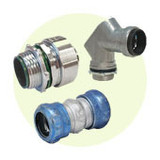
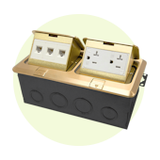
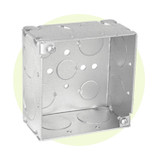
An undersized electrical box is one of the most common rough-in violations an inspector writes up, and no big-box category grid helps you avoid it. Start with the box-fill table below, match the box type to the application, and the order takes ten minutes instead of a return trip.
Electrical Box Fill: The NEC 314.16 Quick Table
Box fill is counted in conductor volumes: each 14 AWG conductor claims 2.0 cubic inches and each 12 AWG claims 2.25. Each device (switch or receptacle) counts as two conductor volumes, all internal cable clamps together count as one, and all equipment grounding conductors together count as one, based on the largest present. The capacities below are standard trade sizes per NEC 314.16; figures reference the 2023 edition, so verify the edition adopted in your jurisdiction.
| Box | Capacity (cu in) | Max 14 AWG | Max 12 AWG |
|---|
| 3 x 2 x 3-1/2 in device box | 18.0 | 9 | 8 |
| 4 in square x 1-1/2 in deep | 21.0 | 10 | 9 |
| 4 in square x 2-1/8 in deep | 30.3 | 15 | 13 |
| 4 in octagon x 1-1/2 in deep | 15.5 | 7 | 6 |
| 4-11/16 in square x 2-1/8 in deep | 42.0 | 21 | 18 |
Those counts are raw conductor capacity before deductions, so a 4 inch square box feeding a receptacle loses two counts to the device before the first wire lands. When a count comes out at the limit, upsize; the deeper box costs less than the correction.
Which Box Where: The Application Matrix
| Application | Box Type | Notes |
|---|
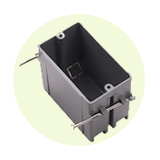
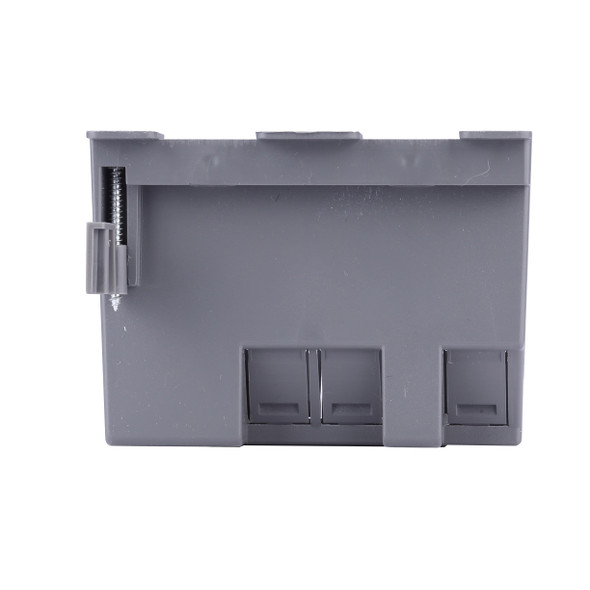
| Residential new construction, NM cable | Plastic new-work nail-on | Integrated clamps speed rough-in on stud walls |
| Retrofit in a finished wall | Old-work cut-in box | Wing clamps grip the drywall; no stud access needed |
| Commercial conduit (EMT) systems | 4 in square metallic with mud ring | Doubles as a junction box or pull point on the run |
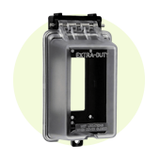
| Wet locations and exteriors | Weatherproof box with in-use cover | NEC 406.9 requires extra-duty in-use covers for wet-location receptacles |
| Ceiling fixture up to 50 lb | Round or octagonal ceiling box | Standard listing covers fixtures to 50 lb |
| Ceiling fan or heavy fixture | Fan-rated support box | Required for fan support per NEC 314.27 |
| Block, brick, or poured concrete | Masonry box | Made for wall assemblies with no stud cavity |
| Open floor plans, conference rooms | Floor box | Brings power and data to furniture away from walls |
Ceiling Boxes, Fixture Weight, and Fan Support
This is where electrical box selection meets lighting. A standard ceiling box carries fixtures up to 50 pounds; anything heavier must hang from a box listed for the load or be supported independently of the box, per NEC 314.27. Ceiling fans always require a fan-rated box, because a spinning load works fasteners loose in ways a static chandelier never will. Retrofit brace kits install through a fixture cutout without opening the ceiling; find them under ceiling fan support boxes.
Gang Count, Junction Boxes, and the Names on the Plans
A single-gang outlet box grows sideways as devices stack up: 2-gang, 3-gang, and wider gang box formats keep switch banks in one opening. The electrical junction box on your drawings, the j box in field shorthand, is usually a 4 inch or 4-11/16 inch square with a blank cover, and NEC 314.29 requires it to stay accessible, which means no burying splices behind drywall. Deep versions of both handle the conductor counts that make the fill table above worth bookmarking.
Fittings Finish the Run
Connectors, couplings, bushings, and locknuts terminate and protect every conduit and cable entry; find them under commercial, industrial, and residential fittings. Rounding out the rough-in package: raceway supports and box positioning brackets hold everything plumb between studs, plastic boxes and metallic boxes cover the wiring methods above, and weatherproof boxes and in-use covers handle everything outdoors.
Ordering for a full job? Send the device schedule and we will quote boxes, covers, and fittings as one package at contractor pricing.