Office lighting projects aren't complicated, but they go sideways the same few ways: panels at the wrong spacing for the reflected ceiling plan, controls that don't satisfy the local energy code, and emergency units that get punted to the end of rough-in and then fail inspection. This guide covers what you need to know when you're bidding or sourcing commercial office lighting and what to watch for in the field.
Space Types and What They Mean for Your Bid
General office projects typically break into four zone types, each with different fixture strategies on the plans:
- Open-plan offices: High-volume, uniform ambient lighting. Troffers or LED panels in a 2x4 or 2x2 grid are the default. The engineer sets spacing and foot-candle targets; your job is to source to the spec or flag a value-engineering opportunity early.
- Private offices and cubicles: Similar ambient spec, often with dimmable drivers because occupants in private spaces get personal controls under most current energy codes.
- Conference and huddle rooms: Expect dimming and sometimes separate zones for presentation walls. Glare control matters at the table level; confirm the fixture has a low-glare lens or louver if the spec calls for it.
- Breakout and collaborative zones: These often get decorative pendants or cylinders. The designer picks the fixture; your concern is mounting compatibility, J-box location, and whether the fixture needs a canopy adapter for the ceiling type.

Fixture Types on Office Projects
Selecting the right light fixtures for office spaces is crucial, not just for functionality but also for aesthetics. The choice of fixtures can influence the ambiance, productivity, and even the perceived size of the space. Here, we delve into some of the most recommended fixtures for office environments, exploring their unique benefits and ideal applications.
LED Panels
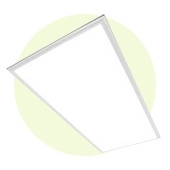
The default for drop-ceiling office space. They sit in a 2x4 or 2x2 grid, mount edge-to-edge with the ceiling tile, and deliver even illumination without hot spots. Look for DLC-listed units if the owner is chasing utility rebates, which most commercial projects are. Wattage and CCT are set in the spec; 35W to 40W at 4000K is common for general office. Dimmable drivers add cost but are increasingly required by the energy code.
25840,25841,25839,23787,33415
Shop LED Panel Lights and Lay-In Troffers
LED Troffers
Grid-compatible and built for 2x4 or 2x2 T-bar ceilings. Troffers use a lens or louver instead of a flat diffuser; parabolic louvers are standard in spaces where glare on screens is a concern. If the existing ceiling is staying, verify the grid size before ordering. A 15/16-inch versus 9/16-inch grid mismatch is a common rough-in hold-up that's easy to avoid.
13366,12931,25723,25724,33006,33416,24093
Shop LED Troffers and Parabolic Fixtures
Linear LED Pendants
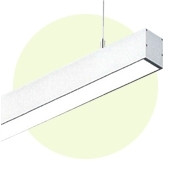
Common in open-plan spaces with exposed structure or high ceilings where the designer wants ambient plus direct/indirect distribution. Mounting is typically aircraft cable or rigid stem; confirm wire access point locations against the reflected ceiling plan before rough-in. Most commercial linears are field-cuttable or available in custom lengths. Make sure the joining hardware is in order.
10965,10966,10967
Shop Linear Pendant Lighting
Recessed Can Lights
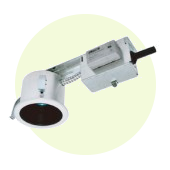
Used for accent, task, and supplemental lighting at reception desks, break rooms, and corridor intersections. In new construction, match the housing to the ceiling type: IC-rated for insulated ceilings, airtight where energy code requires it. In retrofit, confirm the existing can housing is compatible with the LED module or trim the spec calls for before ordering.
9906,9905,9904,33201,23486,33201
Shop Recessed Can Lights
Decorative Pendants
Designer-specified in lobbies, reception areas, and upscale breakout zones. Fixture selection sits with the designer or owner; your concern is J-box location, weight capacity of the ceiling structure, and canopy compatibility. Order the canopy and mounting hardware at the same time as the fixture. Lead times on decorative fixtures vary significantly from commodity stock items; confirm availability before the schedule locks.
14222,11867,26067,26064
Shop Decorative Pendant Lighting
LED Cylinders
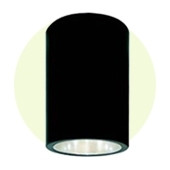
Surface-mount or pendant cylinders show up at reception areas, in corridors, and in spaces where the designer wants a cleaner look than a panel grid. Surface-mount units need a J-box at the right location; pendant units need wire access. Available in up/down configurations for indirect fill. Confirm mounting style, finish, and CCT against the spec before releasing material.
12678,12679,12742,12743,17054
Shop Pendant Cylinders | Shop Surface-Mount Cylinders

Light Level Targets
The engineer or lighting designer sets foot-candle targets in the spec. IES RP-1 (Office Lighting) is the reference most designers follow; it targets approximately 30 to 50 fc at the work plane for general office tasks, with higher targets for drafting or detail work. (NEEDS REVIEW before publishing: verify the specific fc range against the current edition of IES RP-1.)
Foot-candle targets don't drive fixture selection by themselves. Spacing, mounting height, and fixture efficacy all interact. If you're working from a performance spec that's light on detail and need to value-engineer a substitution, request IES files from the manufacturer and run them through a basic photometric calculator before committing to an alternative.
Pro Tip
When a substitution is on the table, matching the photometric distribution matters as much as matching the lumen output. A fixture with the same lumens but a different beam spread can fail the designer's spacing criteria even if it hits the foot-candle target at the centerline.
Controls and Code Compliance
ASHRAE 90.1 and most state energy codes require automatic controls in commercial office space. Requirements vary by jurisdiction and code edition, but these show up on most current projects:
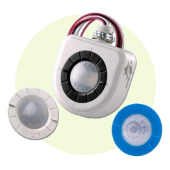
- Occupancy sensors: Required in private offices, conference rooms, break rooms, and other enclosed spaces. Dual-technology sensors (PIR plus ultrasonic) reduce false-off events where occupants are stationary.
- Daylight harvesting: Required in daylight zones, typically within 15 feet of windows or under skylights under most current energy code editions. Photosensor placement and calibration are critical; a sensor aimed at the wrong zone will cycle lights incorrectly.
- Dimmable drivers: Required where daylight harvesting is installed, and in many spaces under recent IECC or ASHRAE 90.1 editions. Confirm driver compatibility with the dimming system before ordering. 0-10V and DALI are the two common protocols; they are not interchangeable at the fixture level.
- Personal controls: Some energy code editions require occupants in private offices to have local dimming capability. Pull the energy compliance documentation early and confirm requirements per zone.
Controls are a common source of change orders and RFIs on commercial office projects. Confirm what's required per zone before material is released.
Emergency and Egress Lighting
Emergency and exit lighting in commercial office space is code-mandated. NFPA 101 and IBC set minimum egress illumination requirements; local AHJ interpretation varies, especially on exit sign placement. Confirm the following before rough-in:
- Exit signs at every required egress door and at decision points along the egress path.
- Emergency units with adequate coverage to meet the 1 fc minimum along the path of egress (NFPA 101 Section 7.9). (NEEDS REVIEW: verify section reference before publishing.)
- 90-minute battery backup minimum on all units.
- Whether the AHJ requires photometric documentation for the egress plan. Some do, especially on renovations where existing units are being relocated.

Get a Quote
Lighting in general office and workspace areas is a blend of art, science, and technology. By understanding the unique needs of these spaces and making informed choices about fixtures and controls, designers can create environments that are functional, safe, and aesthetically pleasing.
If you're seeking further insights, product recommendations, and a wide range of lighting solutions tailored to diverse needs, RelightDepot.com is here to assist. Contact us today! Our team of experts is ready to guide you every step of the way, ensuring that your commercial space is illuminated to perfection.