Dental lighting is a clinical instrument, not decor. If you're bidding or installing a dental office build-out or retrofit, the spec you're working to usually breaks into three tiers: 5,000 to 7,000 lux of shadow-free light at CRI 90 or higher in the operatory, moderate task light in sterilization, and warm, calm ambient light everywhere the patient sits and waits. Get the zoning wrong and you're back on site swapping fixtures after the practice opens. This guide covers the lux and CRI targets by zone, the glare-control call for reclined patients, and which healthcare lighting fixture types fit each space.
Why Dental Lighting Matters
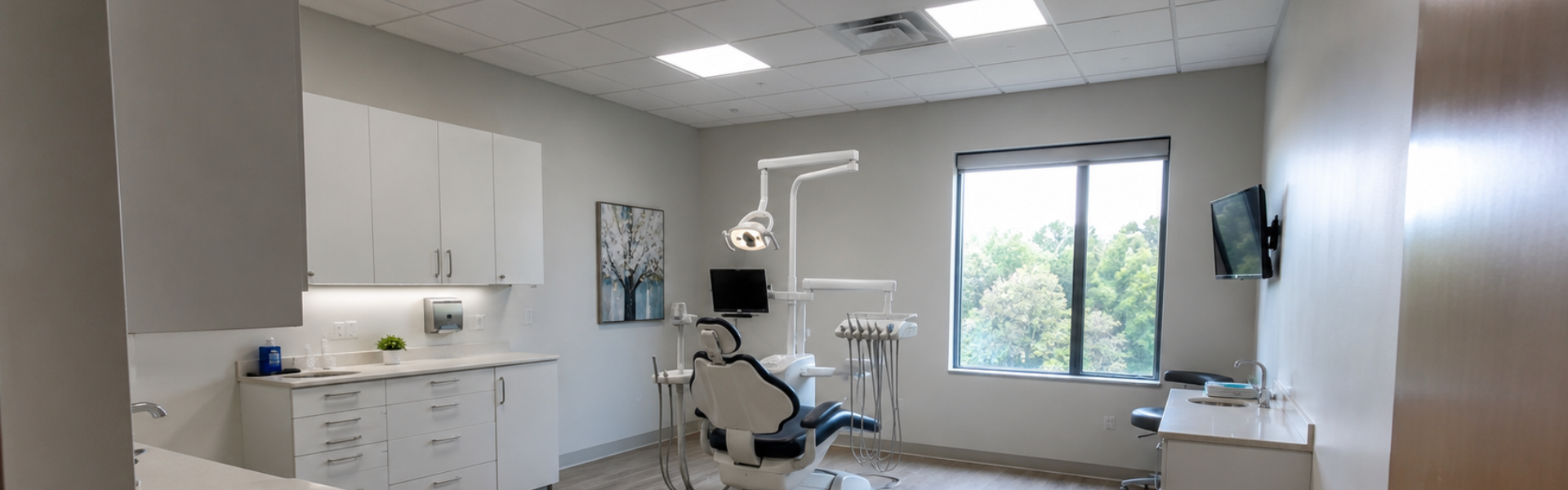
Operatory lighting isn't ambiance, it's a diagnostic tool. Dentists and hygienists need to read minute differences in tissue color, caries, and composite shade, and at typical office illumination (300 to 500 lux) those differences wash out. IES RP-29 and general dental-industry practice put the operatory target at 5,000 to 7,000 lux at the patient's mouth, with CRI 90 minimum and CRI 95 or higher when the case involves cosmetic shade matching. [PUBLISHER NOTE: verify the exact RP-29 table/section this figure comes from before publish; do not attribute a specific lux number to IES without a citable source.] Under-lit operatories show up later as shade-matching redos, missed diagnoses, and eye fatigue complaints from the clinical staff, none of which come back on the person who installed the fixtures, but all of which get noticed.
Each zone carries its own number. Waiting rooms want warm, low-glare ambient light. Sterilization wants bright, even task light for visual contamination checks. Reception needs enough light for paperwork and screens without kicking glare across the front desk monitor. Getting the zoning right the first time is the difference between a punch list and a callback.

Lighting Requirements by Zone
Use this table as the bid spec. If the plans don't call out lux and CRI by room, confirm with the designer or practice owner before you price fixtures, don't assume standard office-grade product will pass inspection by the dentist.
| Zone |
Illumination |
CRI |
Color Temp |
Notes |
| Operatory (at patient's mouth) |
5,000 to 7,000 lux |
90 min, 95+ for cosmetic |
5,000K to 6,500K |
Diffused or louvered fixtures; no hot spots or deep shadows |
| Ambient treatment room |
300 to 500 lux |
80 min |
5,000K to 6,500K |
Even room-wide distribution |
| Sterilization / instrument processing |
500 to 750 lux |
80 to 85 min |
5,000K to 6,500K |
Bright, shadow-free light directly over work surfaces |
| Waiting room |
300 to 500 lux |
80 min |
3,000K to 3,500K |
Warmer, calmer feel |
| Reception desk |
500 lux |
80 min |
3,000K to 3,500K |
Enough for paperwork and screens without glare |
Fixture Selection by Zone
Operatories and Exam Rooms: LED Panels and Troffers
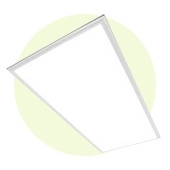
For operatory and exam-room overhead lighting, LED panels and troffers in 2x2 or 1x4 are the default on drop ceilings. Specify 5,000K to 6,500K, CRI 90 or higher, and a diffused or prismatic lens to control glare for reclined patients. Look for fixtures rated at 5,000 lux or more at 8 to 10 foot ceiling heights, and confirm DLC listing before quoting if the job qualifies for utility rebates.
843
Browse all LED Panels and Troffers
Waiting Areas: Recessed Cans
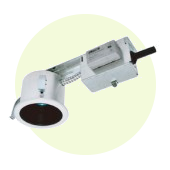
Recessed can lights in 4 inch and 6 inch with 3,000K warm-white modules produce a welcoming feel in waiting rooms and reception. CRI 80 is fine for general ambience; pair with a reception-desk task light at 500 lux for paperwork.
832
Browse all Recessed Can Lights
Sterilization and Instrument Processing
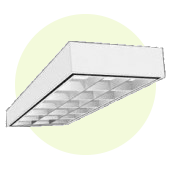
Sterilization needs 500 to 750 lux of bright, shadow-free task light. Surface-mount LED fixtures with diffused lenses work well here, CRI 80 or higher, positioned directly above work surfaces and supplemented with ambient ceiling fixtures so there's no dark corner where a contamination check could get missed. If the room uses spray disinfectants, spec a vapor-tight surface mount over a standard one, it's a cheap upgrade compared to a callback for a fixture that fogged.
Browse all Surface Mount Ceiling Lights

Design Guidelines That Actually Prevent Callbacks
Glare Control in Operatories
Patients reclined in the chair look straight up into the ceiling fixture. Use diffusers, parabolic louvers, or an indirect-light design, and angle the fixture slightly off the patient's direct sightline where the ceiling plan allows. The recessed architectural troffer line covers the parabolic-louver option if the spec calls for it. Lean on the chair-mounted task light for the focused exam work rather than an intense overhead source; that's the fixture the dentist aims, not the ceiling.
Pro Tip
If the overhead fixture needs the chair light on to be usable for general visibility, it's undersized or mis-specified for the room. The ambient overhead should carry the space on its own; the chair light is for focused work, not backup ambient.
Color Temperature Strategy
Use 5,000K to 6,500K in operatories, treatment rooms, and sterilization for accurate color perception. Use 3,000K to 3,500K in waiting and reception for a calmer feel. Don't mix color temperatures between adjacent open spaces, the transition line reads as a mistake even when both zones are individually correct.
Layered Lighting and Controls
Combine ambient overhead (300 to 500 lux) with task-specific lighting (chair-mounted or accent fixtures at 5,000 lux or more) rather than blanket over-lighting the whole room to operatory levels. Adding occupancy sensors in back-of-house rooms and a dimmer on the waiting room ambient layer both cut energy use and give the practice control over the front-of-house feel without touching the clinical zones.
Uniformity and Shadow Prevention
Position fixtures to avoid shadows from the dentist's body, equipment arms, or cabinet doors. Offset multiple fixtures or use diffusers to smooth the distribution, and target a 3:1 ratio or better between the brightest and dimmest points in the operatory.
Code and Rebate Notes
Confirm exit and emergency lighting requirements for the occupancy with the AHJ before final walkthrough; dental offices are commercial occupancies and egress lighting is not optional. [PUBLISHER NOTE: this is a general reminder, not a code citation. Confirm applicable code section with the local jurisdiction before stating a specific requirement.] On the fixture side, check DLC-listed status before quoting if the utility rebate is part of the customer's payback math, not every high-CRI fixture in this range qualifies.
What a Retrofit Actually Costs and Saves
Numbers here depend entirely on the practice's existing fixture count, wattage, and local utility rate, so treat this as a worksheet, not a promise.
| Step |
How to calculate it |
| 1. Wattage delta |
Existing fixture wattage minus new LED fixture wattage, per fixture, per operatory |
| 2. Annual hours |
Operating hours per day x days open per year |
| 3. kWh saved |
Wattage delta x annual hours / 1000 |
| 4. Dollar savings |
kWh saved x the practice's actual commercial utility rate (commonly $0.11 to $0.22/kWh depending on region) |
Worked Example
A 6-operatory practice replacing legacy fluorescent ambient and task fixtures with LED equivalents might see a wattage drop in the range of 1,500 to 2,500 watts across the practice, depending on fixture count and age. At 2,600 operating hours a year and a mid-range utility rate, that lands in the low four figures annually in energy savings alone, before counting reduced lamp replacement labor. Run the practice's actual fixture count and rate through the table above for a real number, or request a custom ROI estimate from RelightDepot for a site-specific projection.
Beyond the utility bill, practices that move to CRI 95 in the operatory generally report fewer chairside shade-matching redos on composite work and fewer patient complaints about overhead glare. [PUBLISHER NOTE: this is general industry experience, not a documented case. Provide a citable source or a real client reference before publishing this claim as-is.]

Get Fixtures and Support for Your Next Dental Project
Send us the room-by-room lux and CRI targets from the plan set and we'll turn around a fixture list and pricing, including DLC-qualified options where rebates apply. RelightDepot carries LED panels, recessed cans, surface mounts, and task fixtures for every zone in the practice.
Phone: 888-548-6387 Email: [email protected]
Browse all Healthcare Lighting applications