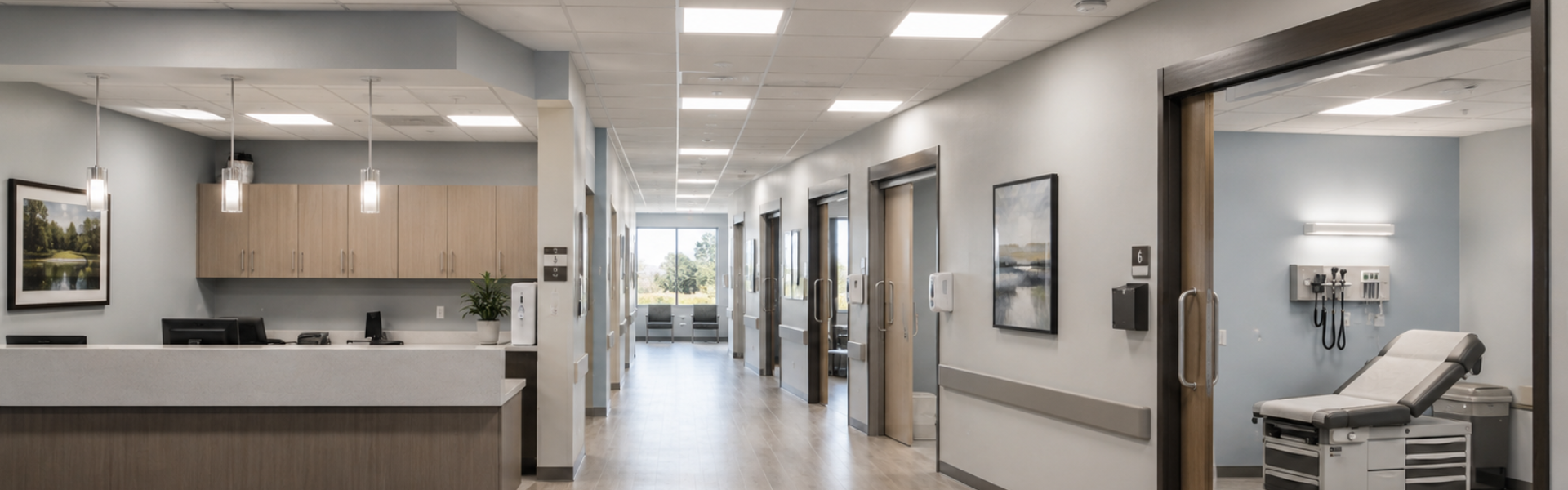
Outpatient clinics and urgent care centers run long hours, turn rooms over fast, and depend on accurate visual assessment to deliver care. The lighting has to support clinical precision in exam rooms, comfort in waiting areas, code compliance on the egress path, and infection control everywhere in between. This guide covers the lux and CRI targets per zone, fixture selection by space, and the design calls that keep the facility compliant and efficient.
Why Lighting Matters in Outpatient Settings
Unlike a hospital with a dedicated facilities department, most outpatient and urgent care sites manage their own lighting on a tight budget and extended hours. Get it right and exam rooms support faster, more confident visual assessment, waiting rooms read as clean and cared-for instead of institutional, and the energy and maintenance line drops once the facility is off fluorescent troffers and halogen task lights.
Good lighting helps clinicians catch what poor lighting hides: skin discoloration, wound margins, eye injuries, and other visible diagnostic cues. Poor color rendering hides those same cues, which is why CRI is treated as a clinical spec, not a nice-to-have, throughout this guide.

Illuminance and CRI Targets by Zone
Each zone in an outpatient or urgent care facility carries its own illuminance and color-rendering target. Use this table as a quick reference when bidding or scoping a retrofit, and confirm current figures against IES RP-29 or the project spec before locking a quote.
| Zone |
Illuminance target |
CRI target |
CCT |
| Exam and treatment rooms |
500 to 1,000 lux |
90+ |
4000K |
| Waiting and reception |
300 to 400 lux |
80+ |
3000K |
| Procedure and minor surgery |
1,000 to 2,000 lux |
95+ |
4700K to 5000K |
| Lab and specimen areas |
Exam-room grade |
90+ |
4000K |
| Admin and charting |
400 to 500 lux |
80+ |
4000K |
| Break rooms |
300 lux |
80+ |
3000K |
| Corridors and restrooms |
200 to 300 lux |
80+ |
4000K |
Examination and Treatment Rooms
CRI 90 or higher is the baseline; below that, color rendering starts hiding the diagnostic cues clinicians rely on. Dimmable drivers let staff balance patient comfort against clinical visibility without swapping fixtures, and flicker-free operation matters more here than almost anywhere else in the building given how long a single visit can run.
Waiting Areas and Reception
3000K reads as warm and welcoming instead of clinical. Even distribution and flicker-free drivers cut visual fatigue for patients who may be sitting under the same fixtures for an hour or more.
Procedure and Minor-Surgery Rooms
Centers doing minor procedures or complex wound care need surgical-grade task lighting: minimal shadowing and precise positioning matter as much as raw lux. LED surgical lights have replaced halogen at most progressive facilities for better color accuracy, lower heat output at the patient, and lower operating cost.
Pro Tip
CRI 95 is worth the premium in the procedure room and nowhere else in the building. Specifying it across every space adds cost with no functional payoff outside color-critical work.
Laboratory and Specimen Areas
In-house rapid tests, urinalysis, and point-of-care labs need exam-room-grade lighting: high CRI for specimen color assessment, layered task and ambient light at the bench, and no glare on screens or test equipment. Task and accent lighting fills the gap that overhead panels alone leave at the bench.
Staff, Administrative, and Break Areas
Admin and charting areas run well at 400 to 500 lux and 4000K for reading comfort during long shifts. Break rooms work better at 300 lux and 3000K, a deliberate step down for decompression between patients.
Corridors, Restrooms, and Egress
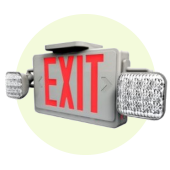
200 to 300 lux is adequate with consistent color temperature and no hard shadows. Emergency egress lighting and illuminated exit signs are code-mandated on the path of egress; modern LED exit signs draw a fraction of the power of older models while staying more visible.

Fixture Selection by Space
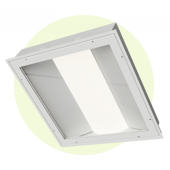
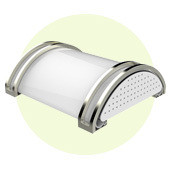
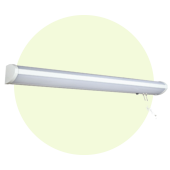
The zone table above sets the lux and CRI targets. These are the fixture types that actually hit those numbers in an outpatient clinic: panels and troffers for general exam and admin lighting, sconces for layered task and ambient light at the patient, and bed lights where a room does double duty as a recovery or observation space.
LED Panels and Troffers
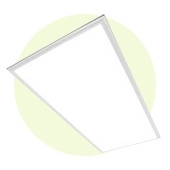
2x2 and 2x4 panels and troffers are the workhorse fixture for exam rooms, waiting rooms, and admin areas. CRI 90 or higher for exam and clinical spaces, CRI 80 or higher for non-clinical areas. Confirm dimmable drivers, flicker-free operation, and a diffused or prismatic lens before ordering. 4000K delivers accurate color rendering in the exam room without the coolness of 5000K.
843
Browse all LED Panels and Troffers
Patient-Room Wall Sconces
Wall sconces add ambient and reading light in exam rooms and procedure bays without the glare of an overhead-only setup. Upward and downward distribution softens shadows during exams while staying out of a reclined patient's direct line of sight. CRI 80 or higher, 3000K to 4000K depending on the room's clinical function.
820
Browse all Wall Sconces
Hospital Bed Lights
Wall-mounted, headwall-mounted, or bed-integrated units combine reading light, exam task light, and a nightlight in one fixture. Multi-function models with independent switching let a patient control reading light without affecting anything else. Look for medical-grade housings with smooth, cleanable surfaces rated for hospital-grade disinfectants, not just a wipeable finish.
817
Browse all Hospital Bed Lights
Healthcare-Specific Design Guidelines
Color Temperature Strategy
Where the spec leaves CCT open, or a substitution is on the table, zone it by function: 3000K in waiting rooms and break rooms, 4000K in exam rooms, admin, and labs, 4700K to 5000K only in procedure rooms where color discrimination is critical. Avoid a visible CCT jump anywhere two zones share a sightline; it reads as a mismatch even when both fixtures are spec-correct.
Infection Control
Choose fixtures with smooth, sealed optical systems. Avoid recessed fixtures with exposed ballasts or gaps that collect dust. Confirm trim rings, gaskets, and lenses tolerate hospital-grade disinfectants before they go on the order, not after a facilities manager rejects the finish. Antimicrobial coatings are available for high-touch sconces in high-infection-risk areas.
Glare and Shadow Management
Overhead fixture placement should keep a clinician's own head or arms from casting a shadow across the assessment area. Diffused or parabolic optics control glare. Layering sources, overhead plus wall sconce plus task light, eliminates the deep shadows a single overhead source leaves in an exam room.
Dimming and Controls
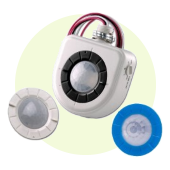
0-10V or phase-cut dimmable drivers are the standard for patient-facing and clinical spaces; confirm the fixture you're bidding actually includes compatible dimming before it goes on the order, that's a common substitution trap. Keep the control interface simple: wall dimmers and preset switches beat complex scene controllers for frontline staff who don't have time to relearn a lighting panel mid-shift. Procedure rooms benefit from scene presets: exam, procedure, wound closure, cleanup. Occupancy sensors in corridors and support spaces are a low-cost way to move toward local energy code compliance; confirm the specific control requirement with the adopted code before counting on sensors alone.
Emergency Egress
Emergency lighting on the path of egress must meet NFPA 101, 90 minutes of battery-backed illumination, plus whatever the local AHJ adds on top. LED emergency drivers integrate into standard fixtures, which cuts down on dedicated emergency hardware. Monthly 30-second function tests and an annual 90-minute duration test are required by code; build both into the maintenance contract up front.
Maintenance
Plan for fixture replacement at end of life rather than bulb-by-bulb maintenance. LEDs rated 50,000 hours run roughly 8 to 12 years at 12 to 16 hours a day, which covers most outpatient operating schedules. Keep lumen output where it should be by cleaning lenses and checking dimming calibration annually. Stock a few spare LED drivers for the fixture types you run most; a driver failure is a faster fix than a full fixture swap.

ROI and Rebate Capture
LEDs typically cut lighting energy 50 to 70 percent versus a fluorescent or halogen baseline, with a 50,000-hour rated life against 8,000 to 15,000 hours for older technology. On a facility running 12 to 16 hours a day, that difference in run-hours alone moves the payback math significantly.
Rebate Note
DLC Premium listing is usually the gate for utility rebate eligibility, but the actual rebate amount and paperwork are set by the local utility program, not by DLC, and they change often. Pull the current program details before you build a rebate number into a bid.
Most facilities phase the retrofit: exam and procedure rooms first for the clinical impact, then waiting and patient-facing spaces, then admin and support. Parabolic and troffer retrofit kits are a cost-effective path when the existing drop ceiling stays in place. RelightDepot's commercial lighting team can help track down available utility incentives and scope a phased plan.
Phone: 888-548-6387
Email: [email protected]
Browse all Healthcare Lighting applications