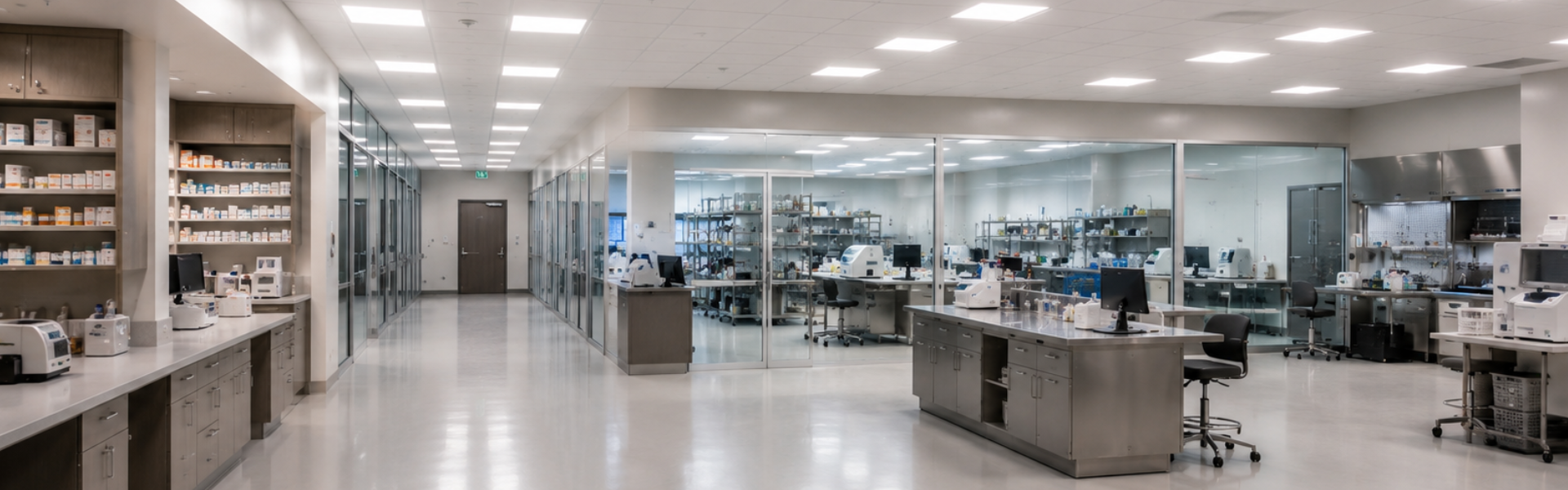
Pharmacy and lab build-outs run on precision, and the lighting spec is part of that, not an afterthought. Compounding under USP 797 and 800 calls for high-CRI, shadow-free illumination so pharmacists can verify labels, catch particulates, and confirm drug identity. Lab benches need enough color accuracy for technicians to read specimen gradations and microscopy without glare. Clean rooms need fixtures that meet particle-control and cleanability requirements on top of the light levels. This guide covers the IES RP-29 footcandle and CRI targets that drive the spec, the fixture types that meet them, and the design details a contractor or facility manager needs to bid, source, and install the job correctly. For the broader healthcare category, see our Healthcare Lighting guide.
Why Pharmacy and Lab Lighting Matters
These spaces stack several demanding requirements on top of each other: color-critical tasks, screen-intensive work, long staff hours, and strict contamination control. Get the lighting wrong and it shows up downstream, in medication errors, specimen misidentification, staff eye strain, and compliance citations at survey. Get it right and it does double duty: better visibility and glare control for the people doing the work, plus the documented light levels that state boards, Joint Commission, and FDA inspectors expect to see on file.
In hospital compounding pharmacies, clinical reference labs, and pharmaceutical clean rooms, the lighting spec is usually driven by two references working together: USP 797 and 800 require "adequate illumination" for sterile and hazardous compounding but don't publish specific numbers, and IES RP-29 (Lighting for Hospitals and Health Care Facilities) supplies the footcandle and CRI targets that satisfy that requirement. Knowing which document sets the number and which one sets the requirement matters when a bid gets value-engineered.

Typical Areas and Activities
Each functional area in a pharmacy or lab building carries its own light-level and color-accuracy target. Here's what the spec typically calls for in each one, and what that means for sourcing and installing the fixtures.
Pharmaceutical Dispensing and Compounding Areas
The spec for verifying drug labels, checking batch numbers, and catching particulates or discoloration during sterile and hazardous compounding typically targets 50 to 100 footcandles of uniform light at the work plane, per IES RP-29. Overhead fixtures need to be laid out to eliminate shadows; under-cabinet and task lights fill in for detail work like powder reconstitution and label inspection where the overhead layout alone won't cut it. Exact footcandle and fixture requirements vary by state board of pharmacy and accreditation body, so run the final numbers past the facility's compliance lead before the order is locked in.
Analytical and Clinical Laboratories
Colorimetric assays, cell counts, urinalysis, and pathology reads all depend on high-CRI lighting to catch fine color gradations and morphological detail. IES RP-29 puts this at 75 to 100 footcandles with CRI 90 or higher. Microscopy workstations and computer terminals need layered lighting and anti-glare optics on top of that, standard overhead alone will wash out a scope eyepiece or throw glare across a monitor during a long read session.
Clean Room and Controlled Environments
Clean rooms in pharmaceutical manufacturing, biologics, and microelectronics add a second layer of requirements on top of the light level: particle-shedding, cleanability, and IP rating. Fixtures need to be smooth, sealed, and free of the crevices where particles settle. Ceiling-mounted recessed or semi-recessed units are the default; surface-mount only where recessed isn't an option in the ceiling grid. ISO 5 compounding rooms typically run 75 to 100 footcandles with no dead zones or shadows at the work plane, confirmed against the facility's ISO 14644 classification documents and clean-room design engineer before fixtures are ordered.
Benefits of Proper Lighting
The case for getting this spec right holds up on four fronts.
Task accuracy. High-CRI, shadow-free illumination cuts medication preparation errors and improves specimen analysis. A well-lit compounding workspace reduces label mix-ups, ingredient substitutions, and dosing mistakes.
Regulatory compliance. USP 797 and 800 reference lighting adequacy directly. Documented light-level verification and fixture maintenance records support Joint Commission, FDA, and state pharmacy board inspections, and clean-room facilities need that same documentation on a defined schedule.
Reduced eye strain and fatigue. Glare-controlled lighting at the right brightness keeps staff focused through extended detail work, and fewer fatigued staff means fewer procedural errors.
Lifecycle cost. LED fixtures rated for 50,000 to 100,000 hours cut down on re-lamping. Clean-room-rated fixtures built for washdown cleaning last longer under that duty cycle, and integrated LED emergency fixtures fold a second maintenance item into one.
Recommended LED Panels for Pharmacies and Labs
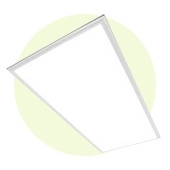
LED panels and troffers in 2x2 and 2x4 sizes cover the general overhead illumination for compounding rooms, analytical labs, and clean-adjacent areas. Spec CRI 90 or higher for color-critical work (CRI 95 for cosmetic dispensing and pathology), 4000K to 5000K for color accuracy, flicker-free dimmable drivers, and diffused lenses to control glare on screens and specimens. For USP 797 and 800 compounding areas, look for fixtures with cleanable lenses rated for the facility's specific disinfectant, lens material compatibility varies by manufacturer and needs to be checked against the actual product before ordering, not assumed.
843
Browse all LED Panels and Troffers
Vapor Tight Fixtures for Clean Areas
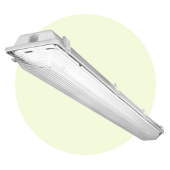
Vapor-tight fixtures seal out dust, moisture, and cleaning agents, which makes them the right call for wet labs, sterile compounding anterooms, and any space on a frequent washdown protocol. IP65 or higher is the standard rating to look for. Sealed LED units with polycarbonate or tempered-glass lenses hold up to hospital-grade disinfectants and spray-down cleaning cycles better than a standard gasketed fixture.
Clean Room and Task Lighting
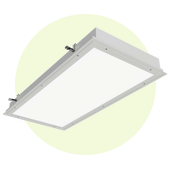
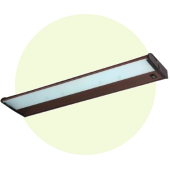
For ISO-classified clean rooms, spec sealed LED panels with smooth, flush-mount trim that eliminates particle-accumulating ledges, confirmed against the facility's clean-room classification documents and design engineer before fixture selection is finalized. Pair overhead with dedicated task lighting at each workstation: articulated-arm LEDs or under-cabinet task lights that put 100 footcandles or more directly on the detail work.

Design Guidelines and Considerations
A handful of details separate a spec that passes inspection on the first try from one that gets flagged. Here's what to check before the order goes in.
Light Levels and Uniformity
IES RP-29 puts compounding areas at 50 to 100 footcandles, lab work at 75 to 100 footcandles, and microscopy or precision assembly at 75 to 150 footcandles. Uniformity matters as much as the absolute number: aim for no more than a 3:1 ratio between the brightest and dimmest points at the work plane. Measure horizontal illuminance at work-surface height and keep the readings on file for compliance records.
Color Rendering and Temperature
CRI 90 or higher covers most color-critical tasks; CRI 95 is the target for compounding and pathology work, where catching subtle discoloration or contamination is the whole point of the lighting spec. Color temperature runs 4000K to 5000K for color-critical zones, a warmer 3000K masks the color variations staff need to see in specimens and medications. Holding one consistent color temperature across the facility also cuts the adaptation lag when staff move between stations.
Glare and Discomfort Control
Glare is a real occupational hazard for staff logging long hours on screens or microscopes. Indirect fixtures, diffused lenses, and louvers handle most of it. For task lighting, asymmetric optics direct light down onto the work without spilling onto adjacent screens. Automated blinds or louvers help in any workstation near a window.
Emergency and Egress Lighting
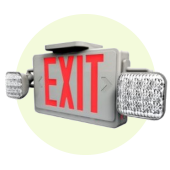
Pharmacy and lab spaces fall under NFPA 101 egress requirements: an average of 1 footcandle along the path of egress, with a minimum of 0.1 footcandle at any point, maintained for the duration required by the facility's emergency power system (commonly 90 minutes on battery backup). Verify the exact figures against the current NFPA 101 edition and the local AHJ before finalizing the emergency lighting layout. Integrated LED emergency fixtures combine battery backup with the standard fixture, which cuts down on total hardware and simplifies maintenance.
Controls and Automation
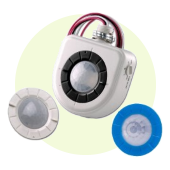
Occupancy sensors save energy in storage, corridors, and restrooms without touching safety in the work areas. In the work areas themselves, daylight harvesting can dim overhead fixtures when natural light is available while holding work-plane illuminance constant. Keep the control interface simple, a complex system tends to get overridden to manual and stays there.
IP and Cleanability Ratings
IP54 is the floor for any fixture that might see spills; IP65 or higher is standard for vapor-tight and washdown applications. Spec sealed LED fixtures with removable, cleanable diffusers, and check that the facility's approved cleaning solvents are compatible with the actual lens material on the product being ordered. Polycarbonate, acrylic, and glass react differently to the same disinfectant.
Pro Tip
CRI 95 fixtures with cleanable sealed lenses are the recommended spec for USP 797 and 800 compounding areas based on IES RP-29 guidance. Keep fixture maintenance, lens cleaning, driver inspection, and light-level verification, documented on a quarterly or semi-annual schedule. That paper trail is what closes out most survey findings before they become citations. Exact requirements vary by state board of pharmacy and accreditation body, so run the final spec past the facility's compliance lead.

Next Steps
Pharmacy and lab lighting is a compliance, accuracy, and efficiency call rolled into one spec. RelightDepot stocks high-CRI LED panels, clean-room-rated and vapor-tight fixtures, task lighting, and emergency lighting for precision environments, and our commercial lighting team can help match fixtures to a USP, IES, NFPA, or clean-room spec, including sourcing an approved equal when the original spec'd fixture is on backorder.
Phone: 888-548-6387 | Email: [email protected] | Contact Us
Sources: Illuminating Engineering Society (IES), National Fire Protection Association (NFPA)