Loading docks and shipping yards are among the most demanding lighting environments in industrial facilities. Exterior staging areas, truck courts, and perimeter zones must deliver reliable illumination around the clock while standing up to weather, dust, and rough handling. Poor dock lighting leads to accidents, inventory damage, operational delays, and liability exposure. This guide covers industrial dock and shipping area lighting with an emphasis on exterior zones, the fixtures that address real-world outdoor challenges, and design strategies that keep your facility safe, compliant, and cost-effective.
Why Industrial Dock Lighting Matters
A well-lit industrial dock is foundational to safe around-the-clock operations. Drivers, forklift operators, and yard hostlers need to navigate truck courts, align trailers, spot leveler edges, and read shipping labels without squinting into shadows. Exterior shipping yards face the hardest challenges: weather exposure, full darkness outside business hours, and the need for uniform illumination across large ground areas. Underlit yards increase workers' compensation claims, slow throughput, and create liability for facility managers. Proper outdoor dock lighting reduces those risks while supporting compliance with OSHA, NFPA, and insurance-carrier lighting expectations, and cuts energy costs through LED retrofits and controls.
What This Guide Covers
We walk through the main functional zones of an industrial shipping operation, from the truck court and perimeter fence line down to the dock leveler and interior staging floor. For each zone you will find target illumination levels, recommended fixture types, and design principles for layout, controls, and maintenance.

Key Zones in an Industrial Shipping Operation
Industrial shipping operations are made up of several distinct zones, each with unique lighting demands. Understanding these areas ensures you select the right fixtures in the right quantities for each task.
Exterior Shipping Yards and Trailer Staging
Outdoor shipping yards are the backbone of any industrial dock operation. Tractor-trailers are staged, dropped, and hooked. Containers are stored. Inventory is temporarily placed during overflow periods. These zones require durable, weather-rated fixtures capable of continuous outdoor operation in rain, snow, high heat, salt air, and freezing conditions. Typical exterior dock yards require 20 to 30 foot-candles for safe equipment operation and inspection, with higher levels (50 or more foot-candles) near loading and unloading points. Motion-activated controls can cut exterior yard energy use by 30 to 50 percent compared to continuous operation.
Truck Courts and Approach Roads
The truck court is the maneuvering zone where tractors back trailers into dock positions. Drivers rely on side mirrors and spotter signals, which means the court needs glare-free, uniform lighting that does not wash out mirror views or silhouette spotters. Flood lighting mounted on poles or the building facade, aimed across the court at a downward angle, delivers the uniform coverage required. Plan for 10 to 20 foot-candles across the full court with higher levels right at the dock face.
Perimeter Fence Line and Security Lighting
Industrial dock properties are theft and trespass targets after hours. Perimeter lighting along the fence line, parking entrances, and outbuilding access points supports security camera performance and deters unwanted activity. Wall packs, area lights on poles, and flood fixtures aimed outward from the building provide the layered coverage cameras and patrols need. Insurance carriers often require documented perimeter lighting for industrial risk classes. Cool color temperatures (4000K to 5000K) improve camera contrast and facial recognition. Motion sensor lights on low-traffic perimeter zones can substantially cut overnight energy use.
Dock Door and Leveler Zone
The dock leveler is a high-risk area where workers and equipment operate at the transition between the facility floor and the trailer bed. Poor lighting here creates shadows, depth-perception errors, and trip hazards. The dock face, leveler plate, and trailer opening must all be evenly illuminated with minimal glare. Forklift operators must see the leveler edges, any debris on the approach, and the trailer bed interior clearly. This zone typically requires 50 to 75 foot-candles of maintained illumination.
Interior Dock Floor and Staging
The interior staging floor, where pallets are prepped, shipments are labeled, and barcodes are scanned, needs uniform, flicker-free lighting. Shadows cast by racking or staged cargo must be minimized. Most interior dock areas require 30 to 50 foot-candles, with 75 foot-candles in high-speed sorting or inspection zones.
Forklift Traffic Routes
Forklift operators need clear sightlines along routes to and from the dock, especially where traffic crosses pedestrian pathways or turns sharply. Lighting along routes should avoid sharp contrast transitions that can momentarily blind operators moving between lit and darker zones. Aim for 20 to 30 foot-candles in aisles, with brighter spots at turns and intersections where visibility is critical.
Benefits of Proper Industrial Dock Lighting
Investing in appropriate dock and yard lighting delivers measurable returns across multiple dimensions of facility operations.
Safety and Injury Prevention
Clear, shadow-free illumination reduces slip, trip, and fall incidents across the yard and on ramps and dock surfaces. Improved visibility of levelers, equipment, and obstacles significantly lowers the rate of foot injuries and equipment damage. Better sightlines for forklift and yard-tractor operators prevent collisions and material-handling errors.
Operational Efficiency
Properly lit yards and docks enable faster, more accurate loading and unloading cycles. Workers can process shipments at full speed without slowing to visually confirm picking accuracy or pallet positioning. Inventory damage caused by visibility-related handling mistakes drops significantly. Throughput improvements typically pay for lighting upgrades within 18 to 24 months through labor productivity gains alone.
Compliance, Security, and Liability Protection
Meeting IES recommended illumination levels and local electrical codes protects facility owners and managers from citations and liability exposure. Documented compliance with industry standards provides a clear defense in the event of a workplace incident. Many property insurance carriers offer premium reductions for facilities that maintain documented exterior lighting. Adequate perimeter lighting also reduces after-hours theft, vandalism, and trespass claims.
Energy Efficiency and Cost Control
Modern LED dock and yard fixtures use 40 to 70 percent less energy than legacy high-intensity discharge (HID) or high-pressure-sodium systems while providing superior light quality and instant-on capability. Motion-sensor controls and photo controls reduce energy consumption in areas that do not require 24/7 full brightness. LED fixtures also reduce maintenance costs through longer service life and elimination of frequent lamp replacements.

Recommended Fixtures by Zone
Different dock and yard zones benefit from different fixture types and mounting strategies. The recommendations below address the durability and optical challenges of each area.
Dock Leveler and Door Zone Fixtures
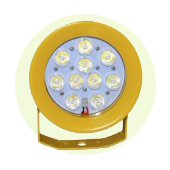
The dock face and leveler area demand high-output, tightly focused illumination without excessive glare. Wall-mounted fixtures positioned to the sides and above the dock opening provide even coverage across the leveler plate and trailer entry. Dock lights (specialized wall-mounted fixtures with integrated guards and optics) are purpose-designed for this application. These fixtures typically emit 80 to 150 watts of LED power and are rated IP65 or higher for weather and dust exposure. Mount pairs on either side of the dock opening at approximately 8 to 12 feet above the dock floor, angled to light both the leveler surface and the trailer opening.
Browse dock lights for the leveler and door zone:
775
Browse all Dock Lights
Exterior Dock Yards and Perimeter Walls
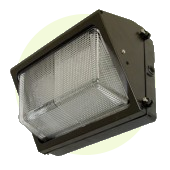
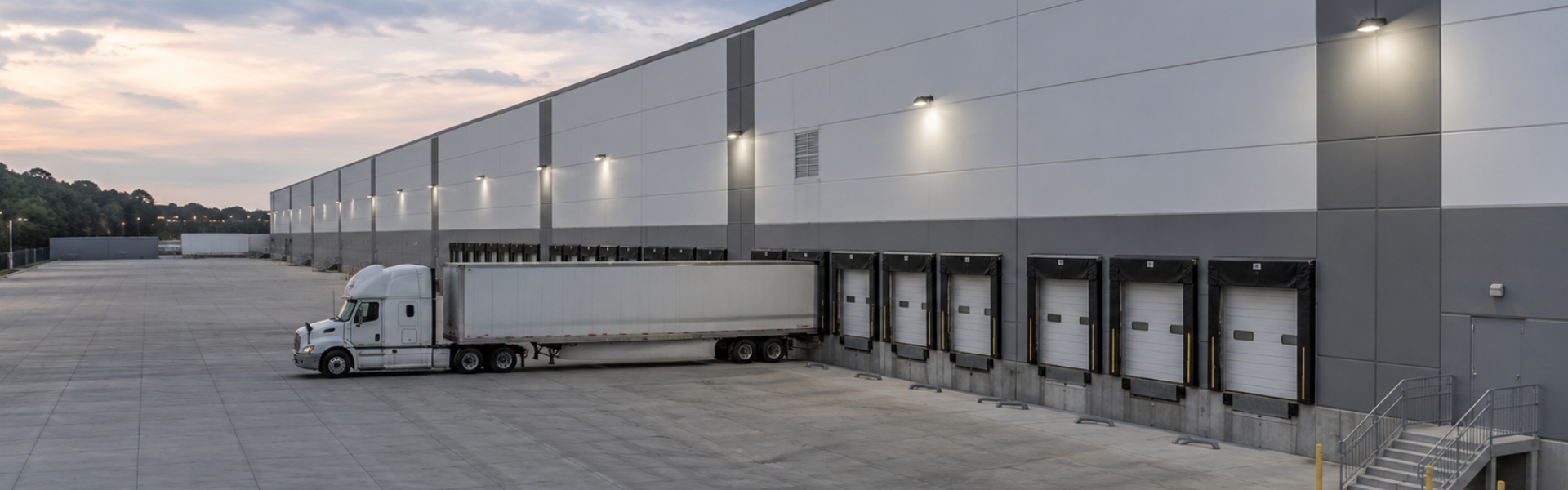
Outdoor shipping yards and truck staging areas require rugged, weather-rated fixtures capable of continuous outdoor operation. Wall packs (square, rectangular, or round fixtures mounted flush to the facility wall) are the standard choice for dock yard lighting and perimeter coverage. Modern LED wall packs (100 to 180 watts) rated IP65 or higher with integrated photo controls provide reliable, long-life illumination that withstands rain, salt spray, temperature swings, and dust. Mount wall packs at 12 to 15 feet high, spaced 30 to 40 feet apart, positioned to minimize shadows and light spillover into neighboring properties. Motion sensors or occupancy controls can significantly reduce operating costs for yards used primarily during business hours.
Browse wall packs for exterior dock areas and perimeter coverage:
756
Browse all Wall Packs
Flood Lighting for Truck Courts and Large Yards
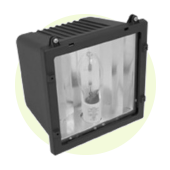
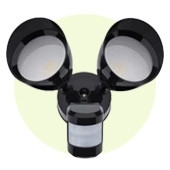
Facilities with expansive outdoor staging yards, multi-bay truck courts, or pole-mounted perimeter installations need flood lights mounted at heights of 20 to 35 feet on poles or building edges. Asymmetrical LED flood fixtures (200 to 400 watts) provide long throw distances and concentrated beam patterns suited to illuminating large ground areas. Pole-mounted flood systems offer flexibility for multi-dock facilities and can be integrated with photo controls, motion sensors, or dusk-to-dawn scheduling for substantial energy savings when yard activity is intermittent or seasonal. Cool color temperatures in the 4000K to 5000K range optimize security camera contrast.
Browse flood lighting for loading yards and truck courts:
740
Browse all Flood Lighting
Interior Dock Floor Lighting
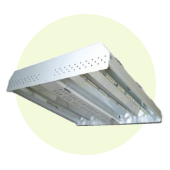
LED high bay fixtures or low-bay linear systems mounted at 12 to 20 feet above the interior dock floor provide uniform, glare-controlled illumination across the entire staging area. LED high bay fixtures (100 to 240 watts) mounted on a grid spaced 20 to 30 feet apart deliver 30 to 50 foot-candles depending on fixture output and mounting height. For facilities with lower ceilings (10 to 15 feet), low-bay linear fixtures or smaller high bays (60 to 100 watts) spaced more closely (12 to 18 feet apart) work better. All interior dock fixtures should be rated IP54 or higher to resist dust and occasional moisture.
Design Guidelines and Considerations
Beyond fixture selection, several design principles ensure your dock and yard lighting system performs safely, efficiently, and reliably for years.
Light Levels and Uniformity
The Illuminating Engineering Society (IES) publishes recommended minimum maintained illumination levels for industrial work areas, and those levels inform workplace safety compliance programs. For interior dock floors, IES guidance for industrial work areas typically calls for 30 to 50 foot-candles for general material handling and 50 to 75 foot-candles for detailed inspection or high-speed sorting. Exterior dock yards typically require 20 to 30 foot-candles for safe equipment operation and 50 or more foot-candles in high-activity loading zones. Uniformity ratios (ratio of maximum to minimum illumination across the space) should not exceed 3:1 for safety-critical areas.
Glare and Shadow Control
Glare from improperly positioned fixtures reduces visibility and causes eye strain, especially in exterior yards where drivers rely on mirrors. Aim flood fixtures downward (never above horizontal), and use fixtures with optical controls (louvers, diffusers, or asymmetrical reflectors) that direct light onto work surfaces rather than into driver eye height. Overlap fixture coverage to eliminate abrupt shadows from racking, containers, or staged trailers.
Emergency and Exit Lighting
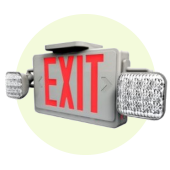
Loading docks are egress routes under building codes. Provide emergency lighting on exit paths at no less than 1 foot-candle and install exit signs in accordance with the International Building Code (IBC) and local authority requirements. LED emergency fixtures with integral battery backup are preferable to hardwired central-inverter systems, as they remain operable during power disruptions and require less infrastructure investment.
Controls, Photo Sensors, and Dusk-to-Dawn
Exterior yards and perimeter zones are ideal candidates for photo-sensor controls and dusk-to-dawn scheduling. Motion-activated controls on yard floods and wall packs can cut energy use by 30 to 50 percent compared to continuous operation. For 24/7 facilities, zoning controls allow independent adjustment of truck court, dock face, and perimeter lighting based on current operational needs. Tie lighting controls to your security system when possible so motion triggers both illumination and camera activation.
Fixture Durability and IP Ratings
Loading docks expose fixtures to dust, moisture, chemical splash, temperature swings, and vibration. Interior fixtures should meet minimum IP54 ratings; all exterior fixtures should be rated IP65 or higher. Stainless steel hardware and powder-coated aluminum or polycarbonate housings resist corrosion better than standard finishes. For coastal facilities or yards exposed to de-icing chemicals, marine-grade or stainless-steel fixtures rated for extreme environments pay off over the fixture lifetime.
Maintenance Access and Replacement Planning
Choose fixtures and mounting locations that allow safe, simple maintenance. Wall-mounted exterior fixtures are preferable to pole-mounted floods that require a bucket truck. LED fixtures with 50,000-plus hour rated lives (10 to 15 years at typical duty cycles) minimize replacement frequency. Group fixtures on separate circuits to allow maintenance without darkening the entire yard. Stock spare LED modules or complete fixtures for rapid replacement in critical zones.
Pro Tip
An average 5,000-square-foot dock retrofitted from 400-watt metal halide fixtures to modern 100 to 150 watt LED systems can reduce annual energy costs by 4,000 to 6,000 kWh. At typical commercial rates, that translates to 500 to 800 dollars in annual savings per dock, with payback typically achieved in 3 to 5 years. Add motion controls on exterior wall packs and floods for another 30 to 50 percent savings on outdoor energy use.

Upgrade Your Industrial Dock Lighting
Industrial loading dock and shipping yard lighting is a critical investment in safety, security, compliance, and operational efficiency. RelightDepot offers a complete range of dock lights, wall packs, flood lights, and LED high bay fixtures selected for industrial and manufacturing applications. Have questions about fixture selection, light-level targets, or controls? Contact us: