Grocery stores and supermarkets run lighting systems that have to do several jobs at once: showcase fresh produce with accurate color, illuminate refrigerated cases without adding heat load, create an inviting sales floor, and meet energy codes. Get any one of those wrong, and you see it in shrink, dwell time, or the utility bill. This guide is built for the facility managers and owners scoping a produce, case, or store-wide relight, and for the electrical contractors bidding and installing that retail lighting work. It covers what each zone needs, what fixture types fit the spec, and how the finished project hits code, supports merchandising, and pays back through energy savings and stronger fresh-category performance.
Typical Areas and Activities in a Supermarket
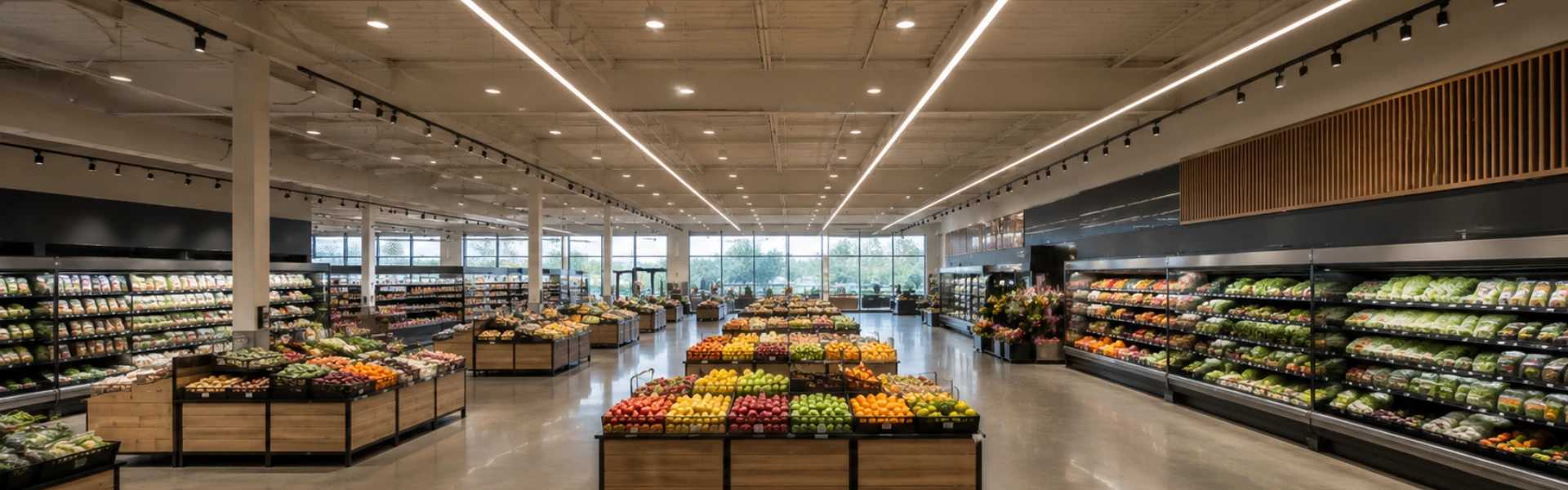
A modern grocery store is really a collection of micro-environments, each with its own visual tasks. Getting the fixture, CCT, and CRI right in each zone is what separates a store that feels fresh and easy to shop from one that feels flat.
Produce Department
Produce displays need color-accurate lighting. Customers decide with their eyes, and low-CRI fixtures make red apples look dull, lettuce yellowed, and citrus flat. Look for CRI 90 or higher for produce areas, aim for 80 to 100 foot-candles on the display surface, and use tight beam angles on accent fixtures to pop the merchandise without washing out adjacent aisles.
Refrigerated and Frozen Cases
Refrigerated and frozen cases are one of the biggest energy levers in a grocery store. Legacy T12 and T8 fluorescent case lighting dumps heat into the box and forces the compressors to work harder. Modern low-temperature LED case lights clip into case decking or mount above shelves, rated for minus 10 to 40 degrees F, and pull roughly 8 to 12 watts per four-foot section versus 40-plus watts for fluorescent. Typical targets for dairy and deli cases run 50 to 75 foot-candles; frozen packaged goods often warrant 100-plus foot-candles.
Bakery and Deli
Bakery and deli customer areas benefit from warm light (2700K to 3000K) that flatters golden tones on baked goods and prepared foods. Behind the counter, prep zones want 50 to 75 foot-candles of cleaner 3500K to 4000K task light so staff can portion accurately and work safely. Separating customer-facing display lighting from task lighting lets you dim the ambient layer during slow periods without sacrificing safety.
Aisles and General Sales Floor
Main shopping aisles want uniform, glare-free illumination at 30 to 50 foot-candles. LED panels in a drop ceiling or low-bay LEDs on an open structure cover the job efficiently; 8 to 10 foot spacing with 120-degree distribution is a good starting point. End caps and promo zones carry higher illumination (50 to 75 foot-candles) with a touch of directionality to draw the eye.
Checkout and Customer Service Areas
Checkout stands are task-heavy. Cashiers scan items, read receipts, and handle cash, often under a computer screen. Aim for 75 to 100 foot-candles right over the register, use diffused or recessed trims to keep glare off monitors, and add a linear strip under overhead cabinets to kill shadows on the bagging surface.
Back-of-House and Storage
Receiving, stock rooms, and prep areas want practical lighting at 30 to 50 foot-candles with no aesthetic requirement. LED shop lights and vapor-tight fixtures in wet areas, paired with occupancy sensors in overstock rooms and low-traffic storage, will strip 15 to 30 percent off the back-of-house lighting load with zero impact on operations.

Recommended LED Panels for Grocery Aisles
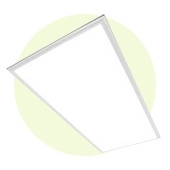
For dropped-ceiling aisles and general sales floor, a 2x2 or 2x4 LED panel is the fastest path to uniform, glare-free footcandles without the relamping headaches of an old troffer. These are the panels and troffers grocery and supermarket accounts reorder most.
843
Browse all LED Panels and Troffers
Benefits of Proper Supermarket Lighting
A strategic lighting investment pays back across several lines at once.
Stronger Fresh-Category Sales
High-CRI lighting in produce and deli increases perceived quality and moves fresh product faster. Operators commonly see a 5 to 8 percent lift in fresh-category revenue within the first quarter after a produce and case relight, which by itself tends to cover fixtures and install inside 18 to 24 months. (Actual results vary by store size and baseline system; consult your utility or an energy audit for site-specific projections.)
Lower Energy and Maintenance Costs
LED case conversion eliminates the thermal load from fluorescent tubes inside refrigerated boxes, which typically cuts compressor runtime by 8 to 12 percent. Across a 25,000 square foot supermarket, a full LED retrofit commonly recovers $35,000 to $50,000 in avoided refrigeration energy over five years, and 50,000-hour rated fixtures eliminate most of the bulb and ballast labor that used to land on the maintenance budget. (Energy savings estimates vary; consult your utility or an energy audit for site-specific projections.)
Improved Safety and Compliance
Correct task lighting at checkouts and in back-of-house cuts down on scanning errors, cash-handling mistakes, and slip-and-fall risk, and it's usually part of what a health department inspector checks in prep and storage areas. Integrated LED emergency and exit fixtures make it straightforward to meet NFPA 101 egress requirements without bolting mismatched retrofit hardware onto a finished ceiling.
Better Employee Comfort
Flicker-free, well-diffused LEDs reduce eye strain and headaches, especially at checkouts and prep counters. Staff comfort shows up in turnover and in scanning accuracy; it is a real line item even if it is hard to quantify.
Recommended Fixtures by Supermarket Area
The fixture types below are proven performers in grocery retail and are available at RelightDepot.com across the categories linked throughout this guide.
Produce and Display Lighting
High-CRI LED track heads (CRI 95-plus, 4000K to 5000K) or recessed directional downlights give you precise illumination without excess heat. Space fixtures 6 to 8 feet on center with roughly 70-degree beam angles for even coverage. Under-shelf LED strips add secondary fill for lower tiers so color reads consistently from every viewing angle. For dedicated refrigerated produce cases, look for low-temperature case lights designed for minus 10 to 40 degrees F operation with UL wet-location listing and NSF certification where required by your health department; confirm specific product ratings in the RelightDepot product specs before ordering.
Refrigerated and Frozen Case Lighting
Integrated LED case lights designed for low-temperature operation mount directly into case decking or clip onto existing shelves. They eliminate in-case heat, install quickly, and drop maintenance calls to near zero over the rated life. Space every 4 to 6 feet along case edges for even illumination across every shelf level and product facing. Confirm UL wet-location listing and any NSF certification requirements with your health department inspector before finalizing the spec.
Bakery and Deli Task Lighting
Warm-white (2700K) under-cabinet LED strips or pendant-mounted warm downlights handle prep surfaces at 75 to 100 foot-candles, while warm pendants in customer-facing deli and bakery zones set an inviting ambient tone at about 50 foot-candles. Dimmable drivers let you drop the ambient layer during slow periods.
Aisle and General Floor Lighting
Recessed LED panels (2x2 or 2x4, 40 to 50 watts) in a drop ceiling, or low-bay LEDs (100 to 150 watts) on an open structure, cover the general sales floor. Look for fixtures with diffusers or lenses to keep glare off customer eye level (roughly 5 to 6 feet above the floor). Add occupancy sensing in seasonal-goods aisles and storage-access corridors to recover idle hours.
Checkout and Service Counter Lighting
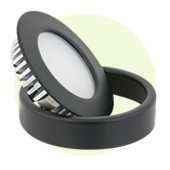
Recessed high-output LED downlights (15 to 20 watts each, 3500K to 4000K) mounted directly above register stations deliver 75 to 100 foot-candles of task light. Use diffusers or trim rings to keep direct glare off screens and bagging surfaces, and add a linear under-cabinet LED strip for shadow-free color assessment at the point of sale.
Back-of-House and Storage
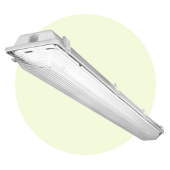
LED shop lights (4-foot or 8-foot linear, 40 to 80 watts) cover general receiving and stock room illumination at 30 to 50 foot-candles. Vapor-tight LED fixtures protect against produce-wash moisture, condensation from ice machines, and daily cleaning. Occupancy sensors in overstock, supply, and equipment rooms typically cut phantom load by 20 to 30 percent.

Vapor Tight Fixtures for Cold Storage
Walk-in coolers, freezers, wash-down areas, and loading docks all call for a sealed, moisture-rated fixture rather than a standard commercial linear. These are the vapor-tight options stocked for cold-storage and wet-location retrofits.
954
Browse all Vapor Tight Fixtures
Design Guidelines and Considerations
Supermarket lighting has to balance aesthetics, operations, and code compliance. These guidelines help keep fixture selection, layout, and controls consistent across every zone, whether the job is new construction or a retrofit.
Light Levels and Foot-Candle Targets
Typical industry targets for retail food (verify against IES RP-2-20 and your local IECC adoption): 30 to 50 foot-candles on the general sales floor and back-of-house, 50 to 75 foot-candles in refrigerated cases and deli prep, and 75 to 100 foot-candles on produce displays and at checkout. Color temperature varies by zone: 2700K to 3000K in bakery and deli customer areas, 3500K to 4000K in task-heavy checkout and prep zones, and 4000K to 5000K in produce. Local codes and utility rebate programs may set stricter thresholds; verify with the AHJ before finalizing the design.
Color Rendering and Temperature Strategy
Use CCT to create hierarchy without adding fixtures. Warm white (2700K to 3000K) in bakery, deli, and specialty food zones enhances perceived quality. Neutral to cool white (4000K to 5000K) in produce and high-CRI task areas supports accurate color and safety. Keep CRI 90 or higher across every customer-facing zone so merchandise looks the same way it does in the supplier's photography.
Layout and Spacing
Coordinate fixture spacing with aisle width and case height. For recessed ceiling fixtures in open floor areas, 8 to 10 foot spacing with 120-degree distribution is a reasonable default. For under-case and case-top lighting, plan on every 4 to 6 feet. For stores over roughly 15,000 square feet, get a photometric layout from your supplier or designer before placing the order; small CCT and spacing errors compound fast across a large footprint, and a layout catches them before they're on the ceiling.
Emergency and Exit Lighting
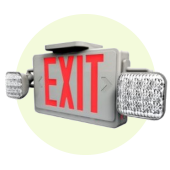
Exits, emergency stairs, and secondary evacuation routes have to meet NFPA 101 and local codes. Integrated LED emergency fixtures (self-powered or hardwired backup) deliver required egress illumination at 1 to 5 foot-candles while matching the aesthetic of the main system, and draw 2 to 3 watts versus 15 to 20 watts for legacy incandescent backups. Exit signs with LED sources stay visible from the required distance and ride through outages without trouble.
Controls and Occupancy Sensing
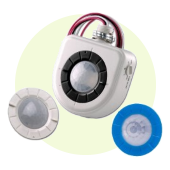
Occupancy sensors in back-of-house, storage, and low-traffic aisles cut 15 to 30 percent off those circuits with minimal disruption. Wireless sensors make retrofits easy where new wiring would be painful. Dimmers in bakery, deli, and seasonal display zones let you drop output during slow periods, and time-clock controls can automate open/close routines in storage and receiving.
Pro Tip: ROI Timeline
A typical 25,000 square foot supermarket moving from fluorescent to LED commonly invests $35,000 to $50,000 and recovers it inside 4 to 6 years on energy alone (roughly $6,000 to $8,000 per year), plus avoided maintenance labor and reduced compressor wear on refrigerated case circuits. Utility rebates in many markets can offset a meaningful share of fixture cost and pull the payback toward 2.5 to 4 years. Actual results vary; consult your utility or an energy audit for site-specific projections.
Glare and Flicker
Commercial LED fixtures rated for retail use include drivers engineered to minimize flicker (under 3 percent flicker is imperceptible to most viewers) and run at high frequency to prevent visual fatigue. Look for fixtures with diffusers, lens covers, or directional trim rings to keep direct glare off customer and employee sightlines. In produce and checkout where bright white light is needed, anti-glare louvers or parabolic reflectors are worth specifying.
IP and DLC Ratings
Fixtures in produce spray zones, deli prep, and dishwashing need IP65 or higher (dust-tight and protected against low-pressure water jets), along with UL wet-location listing, which is what U.S. inspectors and AHJs enforce. For food-service areas, confirm NSF certification requirements with your health department inspector before finalizing fixture selection. DLC or ENERGY STAR certification confirms the fixture meets efficiency thresholds, and a listing on the DLC Qualified Products List is usually what a utility rebate program checks before it pays out. Verify all ratings in the RelightDepot product specs before ordering for any wet environment.

Upgrade Your Store Lighting with RelightDepot
RelightDepot.com offers the fixtures, controls, and category expertise to design and install a supermarket lighting system that covers product visibility, operational efficiency, employee safety, and code compliance at the same time. Our team has guided hundreds of facility managers and contractors through supermarket projects ranging from 5,000 square foot neighborhood grocers to regional chains over 50,000 square feet. Start by browsing our retail lighting applications or reach out to our team to walk through your specific layout.
Contact RelightDepot.com: Phone 888-548-6387, Email [email protected], or visit Contact Us.