Outdoor Lighting Organized by Application, Not Style
Most outdoor lighting catalogs sort by fixture shape and finish. That works for picking a porch light; it does not work for lighting a site. This catalog is organized the way a project actually breaks down: building perimeter, area and site, landscape, and security. Each entry point below tells you what lives there and the one spec question that decides the pick, so contractors, facility managers, and specifiers can route straight to the right outdoor light fixtures.
| Application | Start Here | The Deciding Spec |
|---|
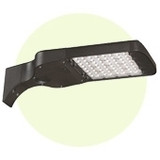
| Parking lots, roadways, campus sites | Area & Site Lighting | Pole height and IES distribution type |
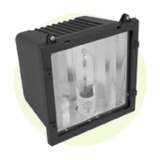
| Building facades, signage, sports fields | Flood Lighting | Beam spread and aiming position |
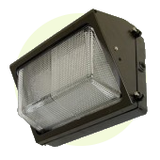
| Building perimeter and entryways | Outdoor Wall Lights | Full cutoff vs traditional wall pack optics |
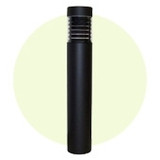
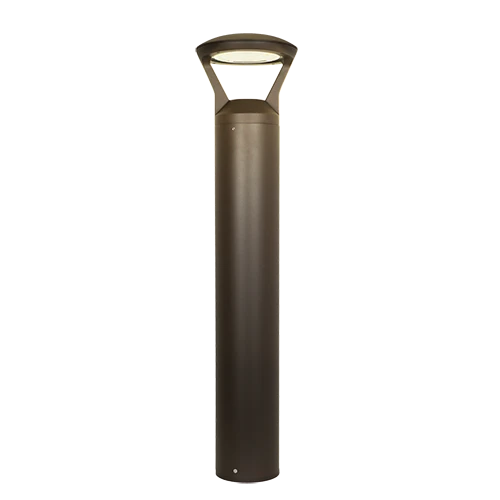
| Pathways, gardens, grounds | Bollards & Landscape Lighting | Line voltage vs low voltage system |
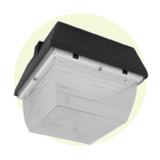
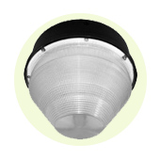
| Gas stations, drive-thrus, covered entries | Canopy Lights | Recessed vs surface mount to the deck |
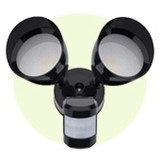
| After-hours deterrence, dusk to dawn duty | Security Lights | Photocell, motion, or solar operation |
Wet vs Damp Location: Get the Listing Right
Every exterior fixture carries a UL location listing, and it is the first thing an AHJ checks. Wet rated fixtures handle direct rain, spray, and washdown; they are the default for open walls, poles, and floods. Damp rated fixtures belong only under full cover, such as canopies, soffits, and covered walkways that never see wind driven rain. When a covered location is borderline, specify wet rated and move on. Nearly all outdoor lights in this catalog are wet listed, with the listing stated on each product page.
Dark Sky, BUG Ratings, and Light Trespass
More municipalities now regulate uplight and spill at the property line. Two terms cover most ordinance language: full cutoff fixtures emit no light above horizontal, and BUG ratings score a fixture's Backlight, Uplight, and Glare from its photometric report. If a project sits near residential parcels or falls under a dark sky ordinance, filter for full cutoff optics and check the BUG rating on the cut sheet before submitting. Full cutoff wall packs and shielded area fixtures usually satisfy trespass complaints without sacrificing ground coverage.
Controls: Photocells, Timers, and Motion
Commercial exteriors rarely run on a wall switch. Photocells give dusk to dawn operation and come integrated, as button style sensors, or as twist-lock NEMA receptacle modules on area fixtures. Timers and astronomical time clocks suit sites that want lights off before dawn, and motion sensors layered on security fixtures cut runtime in low traffic areas. Solar lights with integrated panels and batteries handle spots where trenching power is impractical; see the solar options under security lighting.
Commercial Grade Construction and Rebates
The difference between contractor grade outdoor lights and big box stock shows up in the housing: die-cast aluminum, powder coat finishes, sealed IP65 or IP66 optical compartments, and surge protection sized for pole mounted exposure. Most fixture lines here are DLC listed for utility rebate programs, and product pages carry cut sheets, IES files, and DLC numbers for submittal packages. Porch lights and decorative entry fixtures get the same treatment: real location listings and photometrics, not just a finish swatch. Contractor pricing and project quotes are available on request.