A non-compliant fixture in a USDA-inspected processing facility can trigger a product hold or a full facility shutdown. Food processing and cold storage lighting have specific requirements for NSF listing, temperature rating, and washdown protection that standard industrial fixtures don't meet. This guide covers NSF-listed options for food processing facilities, temperature considerations, design standards, and the ROI of switching to compliant fixtures that protect both product and personnel.
Why NSF-Rated Lighting Matters in Food Processing
Food processing environments present hazards that standard industrial lighting doesn't address. USDA and NSF standards together cover fixture requirements that prevent glass, plastic, or metal contamination from reaching food product. Beyond contamination risk, cold storage areas run well below freezing, and lighting has to hold its performance at minus 20°F or colder. Washdown and chemical exposure are routine, so fixtures need to be sealed and corrosion-resistant. NSF International listing means the fixture has been evaluated against standards for food-contact surface safety, materials migration, and durability in high-humidity, high-pressure wash environments.
Lighting compliance isn't optional in USDA inspections. If glass or lens fragments reach the product stream, you're looking at a recall, not just a fixture replacement. Selecting NSF-listed, IP66+ fixtures from the start cuts your compliance risk, cuts downtime from failed fixtures, and gives you a clean paper trail for your HACCP (Hazard Analysis Critical Control Point) audit.

Typical Food Processing and Cold Storage Areas
Food processing facilities have distinct lighting zones, each with its own requirements.
Processing Floors and Cutting Areas
High-moisture, washdown-intensive zones call for NSF-listed vapor-tight fixtures with shatterproof or polycarbonate lenses. These areas see frequent CIP (Clean-In-Place) chemical sprays and high-pressure water jets. Fixtures need to be mounted to allow full washdown access, with no crevices or ledges that trap moisture and bacteria. Stainless steel housing is strongly recommended to resist corrosion from acidic cleaning compounds and salt brine used in curing and pickling.
Pro Tip
If you're bidding a food-plant retrofit or new-construction washdown package, confirm NSF listing before you price the job, not after. If the spec calls for a model that's backordered, ask about an approved-equal substitution: many vapor-tight and clean-room fixtures across manufacturers carry the same NSF/ANSI 51 listing, so a documented equal usually clears submittal review faster than waiting out a long lead time. On phased retrofits across multiple rooms, stock stainless fasteners and gaskets separately. Running short mid-job on a washdown line means downtime the plant can't absorb.
Cold Storage Rooms and Freezers
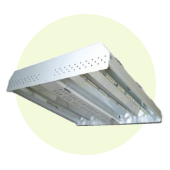
Blast freezers and long-term storage rooms run minus 10°F to minus 40°F. Standard LED modules and drivers lose efficiency at these temperatures, so fixtures need to be specifically rated for cold storage duty. Polycarbonate lenses replace glass to prevent brittleness and shattering. Thermal management matters here: fixtures need to vent heat without collecting condensation that turns to ice. Metal halide and older fluorescent fixtures are being replaced by cold-rated LED high-bay fixtures built with proper thermal management.
Loading Docks and Receiving Areas
These transition zones see temperature swings and moisture buildup as warm, wet incoming product meets cold air. Fixtures here bridge processing and storage, and need IP66+ ratings, stainless steel where feasible, and temperature ratings down to at least 0°F. High-bay fixtures are common here to light large pallets and truck beds. For more on dock-area lighting, see the Loading Dock and Shipping Area Lighting Guide.
Packaging and Labeling Zones
Product-near areas where final inspection, labeling, and case packing happen need to meet NSF food-contact surface standards. These zones may run warmer than cold storage, but they're still high-humidity and subject to washdown. Sealed clean room fixtures keep product from contacting any lens or housing material. 4000K to 5000K is standard here to support visual inspection and barcode reading.
NSF and USDA Compliance Checklist
Confirm every fixture in product-contact and washdown areas carries an NSF-listed or NSF-certified designation, and check which recognition pathway applies to that specific model on the manufacturer's current NSF certificate. Verify temperature ratings against your coldest operating zone. Require stainless steel hardware and fasteners. Washdown-safe fixtures should allow full CIP chemical spray contact with no ledges, crevices, or openings where bacteria can harbor. Document fixture compliance in your HACCP plan.
Food Safety and Lighting Compliance Standards
Multiple regulatory bodies intersect in food processing lighting decisions. Knowing the standards behind NSF listing helps you ask the right questions when reviewing product submittals.
NSF/ANSI 51 sets material and design requirements for equipment used in food-contact and processing environments. It requires fixtures to be designed to eliminate harboring sites for pathogens, support sanitation effectiveness, and prevent direct or indirect product contamination, including avoiding open vents and ledges or crevices where debris and moisture can collect. NSF/ANSI 2 covers commercial food equipment design and construction more broadly. Many fixtures carry multiple NSF listings depending on their intended use zone.
USDA Food Safety and Inspection Service (FSIS) regulations require facilities to implement preventive controls addressing contamination hazards, including those from facilities and equipment. The FDA Food Safety Modernization Act (FSMA) extends similar preventive-controls requirements to produce and sprout operations (seafood has been under separate mandatory FDA HACCP requirements since 1997). General industry OSHA rules require safe working conditions in all industrial environments, including cold storage; specific foot-candle targets come from IES, not OSHA.
IES RP-7 (Recommended Practice for Lighting Industrial Facilities) gives recommended light levels by task: detailed sorting and cutting may call for 100 to 200 foot-candles, general processing areas run 50 to 75 foot-candles, and cold storage navigation needs at least 30 foot-candles on walking surfaces. Confirm these targets against the current IES RP-7 edition and any state or local codes that apply to your facility type.

Recommended Fixtures by Area and Function
Matching fixture type to zone balances compliance, durability, and total cost of ownership.
Vapor-Tight and Sealed Fixtures for Processing Floors
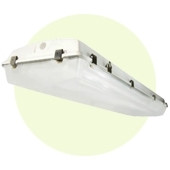
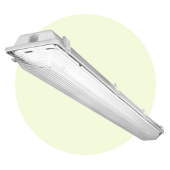
Vapor-tight fixtures are the workhorse of food processing facilities. Polycarbonate or acrylic lenses bond to metal housings with gaskets, sealing out washdown water and cleaning chemicals. LED vapor-tight fixtures run 40 to 60 percent less energy than older fluorescent or high-bay models while delivering better color rendering for product inspection. A typical 150-watt LED vapor-tight fixture produces 18,000 to 22,000 lumens and runs roughly $400 to $700 (verify current pricing). Over a 10-year, 50,000-hour rated life, energy savings at $0.12/kWh continuous operation can reach $3,200 to $4,200 per fixture replacing 400-watt high-pressure sodium models; actual savings depend on your operating hours and energy rate. Many vapor-tight fixtures are UL-listed for wet locations, but NSF listing is a separate certification. Confirm it on the manufacturer's current NSF certificate for the specific model you're ordering.
799
Browse all Vapor Tight High Bays
Clean Room and Sealed High-Bay Fixtures for Packaging and Cold Storage
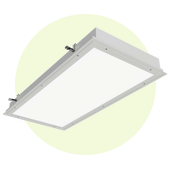
Clean room fixtures are built to NSF/ANSI 51 standards, with stainless steel construction and sealed designs that shed condensation and water runoff. They suit packaging areas where lighting directly overlooks the product. LED clean room high-bay units (100W to 240W) operate reliably down to minus 20°F, with thermal management that vents heat without frost buildup. Installation cost runs higher than standard vapor-tight, but compliance certainty and lower maintenance justify it for most plants.
Vapor Proof Light Fixtures
954
Browse all Vapor Proof Fixtures
Cold Storage and Freezer-Rated Fixtures
Fixtures rated for minus 20°F to minus 40°F need specialized LED drivers and thermal design. These units typically cost 15 to 25 percent more than standard LED fixtures but avoid repeated replacement cycles and hold consistent output across seasonal swings. Polycarbonate lenses are required in cold storage to prevent glass brittleness and shattering. Stainless steel hardware resists rust in high-humidity freezer environments where moisture condenses and refreezes on mounting hardware. For facilities replacing fluorescent fixtures in operating freezers, LED retrofit kits cut installation downtime compared to full fixture replacements.
Design Guidelines for NSF Compliance and Performance
Beyond picking listed fixtures, placement and design choices directly affect lighting performance and inspection outcomes.
Fixture Placement and Washdown Access
Fixtures need to be positioned to allow full washdown of walls, floors, and equipment without creating water traps or protected ledges above food or processing surfaces. Ceiling-mounted fixtures should sit at least 8 feet above the process floor to keep direct washdown spray off the fixture itself. If washdown does contact fixtures directly, IP66 or higher is required. Recessed installations beat surface-mounted designs because they eliminate the horizontal ledges where water and cleaning residue collect. All visible fasteners should be stainless steel, 304 or 316 grade, to resist salt spray and acidic cleaning agents. For chemical exposure beyond standard cleaning agents, see explosion-proof lighting options.
Color Temperature and Rendering
A CRI of at least 90 and a color temperature of 4000K to 5000K are standard in processing and packaging areas, supporting visual inspection of product color, foreign material detection, and reliable barcode and label reading. Cold storage areas can run 3500K to 4000K where cost savings matter, but 4000K is preferred for worker safety during inventory checks and material movement.
Temperature Rating Specifications
Confirm the fixture's temperature rating covers your coldest operational zone with a 10 to 15 degree Fahrenheit margin. A facility running at minus 15°F should specify fixtures rated to at least minus 25°F to hold performance through seasonal cold snaps and emergency freezing scenarios. Ask for third-party test reports confirming lumen depreciation across the full temperature range, not just endpoint testing.
Illustrative ROI Example
A mid-size meat processing facility replaced 60 aging 400-watt metal halide high-bays with 150-watt LED vapor-tight NSF-listed fixtures. Upfront cost: approximately $28,000 installed. Annual energy and maintenance savings: approximately $18,000. Regulatory compliance also reduced the risk of a failed USDA inspection (estimated remediation cost: $35,000). At these figures, payback runs approximately 19 months. Actual results vary based on your energy rate, operating hours, and installation costs.
Material Selections: Stainless Steel, Polycarbonate, and Corrosion Resistance
Material choice directly affects fixture longevity in harsh food processing environments. Stainless steel (304 or 316 grade) housings and fasteners resist corrosion from sodium hypochlorite bleach, acid sanitizers, and salt brine. 316 stainless is preferred near salt-processing or seafood operations. Polycarbonate lenses beat glass in cold storage because they stay flexible at minus 40°F instead of turning brittle. Acrylic lenses work fine in warmer processing zones above 0°F and offer slightly better light transmission than polycarbonate. Avoid aluminum in direct washdown contact zones; if used, it must be anodized and sealed to keep it from corroding and shedding particles into the product stream. Browse vapor-proof fixtures for sealed polycarbonate options.

Get NSF-Rated Lighting for Your Facility
RelightDepot carries vapor-tight, NSF-listed, and cold-storage-rated fixtures for meat, poultry, seafood, and dairy processing operations. Contact our industrial lighting team to discuss your facility requirements, request fixture specifications, and get a compliance checklist ready for your next USDA or internal safety audit.
RelightDepot.com
Phone: 888-548-6387
Email: [email protected]
Contact Us
Back to Industrial Lighting Applications