Classroom lighting directly affects student focus, teacher fatigue, and the district's energy budget. Poorly lit classrooms cause eye strain and reduced performance, while well-designed LED systems cut energy costs by 40 to 60% compared to older fluorescent fixtures and deliver measurable long-term ROI. This guide walks facility managers, district procurement teams, and school administrators through IES standards, fixture selection, controls strategy, and practical implementation steps for classrooms and learning spaces across campus.
Overview: Why Classroom Lighting Matters
Classroom lighting affects student achievement, teacher effectiveness, and operating costs. Research on educational environments consistently shows that students in well-illuminated spaces score higher on standardized tests, demonstrate fewer behavioral issues, and report better attention spans. Correct light levels reduce eye strain, support circadian rhythms (especially important in classrooms without daylight access), and minimize glare on interactive displays, all while LED retrofits cut energy consumption by 40 to 60% compared to fluorescent systems.
This guide covers IES recommendations, the specific lighting needs of different classroom areas, fixture selection, controls and automation, and the financial case for modernizing school lighting infrastructure.

Typical Classroom Areas and Their Lighting Challenges
Modern classrooms include diverse learning zones, each with distinct lighting demands. Understanding these sub-areas helps facility managers scope retrofits accurately and specify the right fixture types for each space.
General Teaching and Learning Areas
The main classroom floor is where most instruction occurs. Students need clear visibility of chalkboards, whiteboards, handouts, and their own work surfaces. Uneven lighting or shadows across desks create visual fatigue. Per IES recommendations for educational facilities, general classroom work calls for 30 to 50 foot-candles with uniform distribution to minimize harsh shadows or bright spots.
Recommended LED Panels and Troffers for Classrooms
843
Browse all LED Panels and Troffers
Whiteboard and Smartboard Zones
Interactive displays are standard in most classrooms today, but they introduce a critical challenge: glare and reflection. A whiteboard or smartboard lit by ceiling fixtures directly overhead will reflect light into students' eyes, reducing visibility and causing discomfort. Many classroom lighting failures trace back to inadequate glare control at the display wall.
Teacher Desk and Demonstration Areas
Teachers grade papers, set up demonstrations, and review materials at their desks. These work surfaces benefit from localized task lighting in the 50 to 75 fc range, separate from general classroom illumination.
Entryways, Corridors, and Restrooms
Hallways and restrooms adjacent to classrooms require lower light levels (20 to 30 fc) but must meet egress and safety codes. Sharp transitions between bright classrooms and dim corridors cause disorientation; adequate corridor lighting smooths that transition and supports safe egress.
Benefits of Proper Classroom Lighting
Upgrading classroom lighting yields immediate and long-term benefits across three key areas.
Enhanced Student Performance and Well-Being
Research on educational environments consistently shows that students in well-lit spaces demonstrate improved concentration, higher test scores, and fewer behavioral incidents. A color temperature of 4000K to 5000K, standard for classrooms, supports alertness. Adequate brightness prevents the fatigue and headaches associated with dim or flickering light sources.
Teacher Productivity and Safety
Teachers spend entire days in classrooms. Eye strain from poor lighting leads to fatigue, reduced lesson quality, and higher sick-leave rates. Flicker-free LED drivers eliminate the low-frequency flicker common with aging fluorescent ballasts and protect teacher health over a full working day.
Operational Cost Reduction
LED systems consume 40 to 60% less energy than fluorescent fixtures while lasting 25,000 to 50,000 hours versus 1,000 to 10,000 hours for older technologies. A typical 10,000 sq ft school building can save $8,000 to $15,000 annually on electricity and maintenance after an LED retrofit. Over 10 years, that compounds to $80,000 to $150,000 in direct savings before accounting for utility rebates.

Recommended Fixtures by Classroom Area
The right fixture type depends on ceiling height, layout, and area function. Below are standard recommendations for common classroom spaces.
General Classroom Illumination: Drop Ceiling Troffer Fixtures
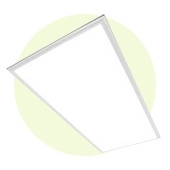
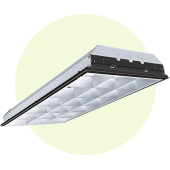
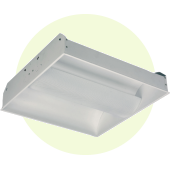
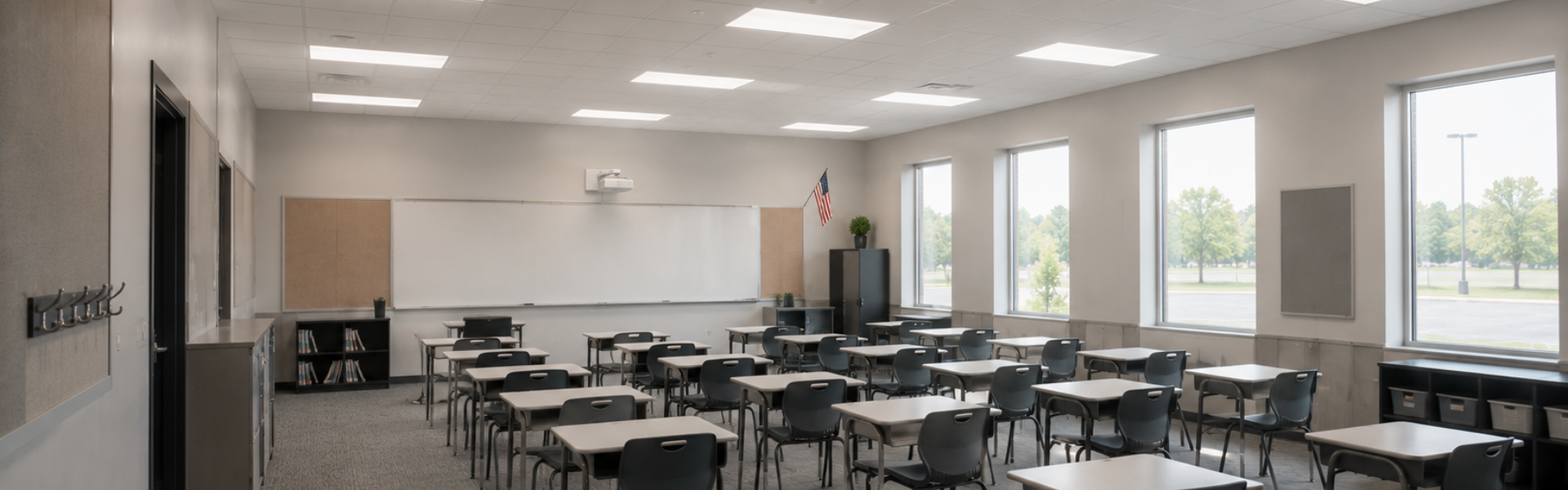
In most U.S. school buildings, classrooms sit beneath suspended (drop) ceilings with 9 to 10 ft clearances. Recessed LED panel lights and lay-in troffers are the standard fixture type for these spaces. A 2x2 ft LED troffer (typically 30 to 40W) delivers 3,500 to 4,000 lumens, covering 30 to 50 fc in a standard classroom. Troffers distribute light evenly, minimize glare when properly positioned, and work directly with occupancy sensors and daylight harvesting controls.
Modern Learning Spaces and Libraries: LED Panels
For libraries, collaborative learning areas, or spaces with higher ceilings (12 ft or more), surface-mounted or pendant LED panels (1x4 ft or 2x2 ft) deliver excellent light quality and a lower-profile appearance. These fixtures appear frequently in specs for educational libraries and commons areas, and they accept 0-10V dimming drivers for integration with scene controls.
Targeted Task Lighting: Teacher Desks and Work Areas
Localized, adjustable task lights at teacher desks support grading and planning work. A 15 to 20W LED desk lamp or under-cabinet fixture provides 50 to 75 fc on the work surface without spilling into student areas.
Glare Control and Dimming
For classrooms with whiteboards or smartboards, anti-glare louvers or asymmetrical optics direct light away from the display surface. Pair troffers with electronic dimming drivers or scene controls so overhead light intensity can be reduced during presentations, improving display visibility and reducing energy use during those periods.
Occupancy Sensors and Automated Controls
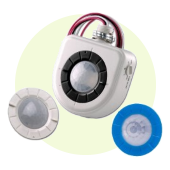
Installing occupancy sensors in classrooms, especially specialist rooms and small-group spaces, reduces lighting energy consumption by 15 to 25%. Sensors activate lights when a room is occupied and dim or shut off after 10 to 15 minutes of vacancy. Modern sensors are calibrated to avoid nuisance shutoffs during quiet activities like independent work or testing.
974
Browse all Occupancy Sensors
Retrofit Kits for Existing Fixtures
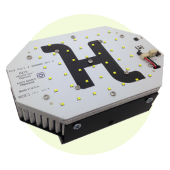
Schools with older fluorescent or HID fixtures have a cost-effective upgrade path: LED retrofit kits replace just the light engine and driver, reusing the existing housing. A retrofit kit typically costs 30 to 40% less than a full fixture replacement and avoids the labor and downtime of cutting new ceiling openings. Many districts use retrofit kits as a staged approach, modernizing over 3 to 5 years rather than in one large capital project.
LED Retrofit Kits
828
Browse all LED Retrofit Kits
Design Guidelines and Considerations
Beyond fixture selection, several design principles determine whether classroom lighting performs well in practice.
Light Levels and Uniformity
IES recommendations for educational facilities call for 30 to 50 foot-candles for general classroom instruction, with uniformity ratios (max to min) no higher than 1.5:1 to avoid bright spots and dim shadows. Teacher desks and demonstration areas should reach 50 to 75 fc. Glare-prone zones near whiteboards benefit from indirect or asymmetrical fixtures that keep direct light off display surfaces. Review photometric reports during the design or evaluation phase to confirm foot-candle levels and uniformity across the actual space.
Color Temperature and Flicker
A color temperature of 4000K (neutral white) is the standard for classrooms; it supports alertness without the blue-heavy tint of 5000K or the warmer, lower-energy feel of 3000K. Confirm that all LED drivers are flicker-free (high-frequency, 100 kHz or higher) and rated for school occupancies. Flicker causes eye strain and can affect students with sensory sensitivities or learning disabilities.
Emergency and Egress Lighting
Life Safety Code (NFPA 101) and local building codes require emergency lighting along all egress routes. In schools, this means battery-backed emergency lights and illuminated exit signs at each exit door and along the egress path. Browse exit and emergency lighting options for egress-compliant LED products with self-testing battery backup and long service life.
Daylight Integration and Harvesting
Classrooms with windows benefit from daylight harvesting: photosensors measure incoming natural light and dim electric fixtures proportionally, reducing lighting energy use by 20 to 40% in daylit zones. Harvest sensors are typically mounted on the ceiling near windows or on perimeter walls. Pair sensors with 0-10V dimmable drivers and occupancy controls for maximum efficiency. Schools in sunny climates see the fastest payback from harvest systems.
Controls for A/V Presentation Environments
Most classrooms today include projectors, smartboards, or interactive displays. Lighting must accommodate both presentation mode (dimmed to reduce screen glare) and normal teaching mode (full brightness for reading and writing). Programmable scene controls, preset wall buttons that switch between Teaching, Presentation, and Cleaning modes, give facility staff one-touch control and eliminate manual ballast adjustments.
LED Retrofit ROI for School Districts
The financial case for LED retrofit is straightforward. Consider a representative example: a 10,000 sq ft school building with 50 classrooms, each lit by eight 40W fluorescent troffers (320W per classroom, 16 kW total).
Retrofit Scenario: Replace all fluorescent fixtures with 2x2 ft LED troffers (two 18W fixtures per classroom equivalent, 1.8 kW total).
- Energy savings: (16 - 1.8) kW x 2,000 operating hours per year x $0.12 per kWh = approximately $3,384 per year
- Maintenance savings: Fluorescent lamps last roughly 10,000 hours (5 years); LED fixtures last 50,000 hours (25 years). Eliminating annual lamp replacements saves roughly $2,000 to $3,000 per year in labor and materials
- Total annual savings: approximately $5,400 to $6,400
- Fixture cost: approximately $40,000 to $50,000 (LED troffers plus installation)
- Simple payback: 7 to 9 years; 10-year net savings approximately $25,000 to $35,000
Many utilities and state energy agencies offer rebates ($5 to $20 per fixture) or incentive programs that can reduce payback to 5 to 7 years. Improved student performance and reduced teacher absenteeism are harder to quantify but well-documented in education facility research.

Call to Action and Next Steps
Ready to upgrade your school's classroom lighting? RelightDepot offers a wide selection of fixtures, controls, and retrofit solutions for educational environments. Our commercial lighting team can help you source the right products, match open specs, and turn quotes around fast.
Get Started:
Explore our Lighting for Schools resource center, including the School Gymnasium Lighting Guide and the Cafeteria and Multipurpose Room Lighting Guide. From a single classroom retrofit to a district-wide LED upgrade, we are ready to help.