Universities run around the clock. Classrooms, labs, libraries, and outdoor pathways all operate on different schedules, and each has its own light-level requirements, energy targets, and safety obligations. Getting this right across dozens of buildings is an operations challenge as much as a product selection problem. This guide covers the critical areas, design practices, and fixture recommendations for building out campus lighting at higher education institutions.
Overview: Why Campus Lighting Matters
Modern universities operate 24/7. Students attend classes at all hours, researchers work through the night, and campus safety depends on well-designed outdoor illumination. Unlike K-12 schools with fixed operating hours, higher education lighting has to support lectures, lab work, athletics, events, and social gatherings on the same footprint. Poor lighting shows up as higher energy bills, safety complaints, and maintenance calls that strain already tight facilities budgets.
A strategic campus-wide approach typically delivers meaningful energy savings over legacy systems, along with improved security, better LEED eligibility on new construction and renovation work, and fewer maintenance tickets. Exact savings vary by building age, current fixture mix, and utility rates.

Typical Campus Areas Requiring Strategic Lighting
Each area of a university campus has distinct lighting requirements based on its function, occupancy pattern, and safety considerations.
Lecture Halls and Classrooms
Lecture halls need precise light distribution to minimize glare on presentation screens while keeping visibility for note-taking. Dimmable recessed ceiling fixtures with color temperature controls (3000K to 4000K) let instructors adjust brightness during presentations. General teaching areas typically run in the 30 to 50 foot-candle range, with added task lighting at podiums and demonstration tables. [Verify against the specific IES recommended practice for educational facilities before publishing, cite the document and table.]
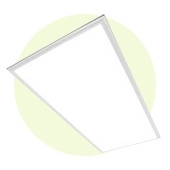
LED Panels for Classrooms and Offices
843
Browse all LED panels and troffers
Dormitory Common Areas
Lounges, kitchenettes, and study nooks in residence halls need flexible lighting. LED panel lights with tunable white capability, moving from warm 2700K in social spaces to cooler 4000K in study zones, are increasingly specified for new construction. Most residence halls in service today still run fixed-CCT fixtures at 3000K to 3500K; tunable-white upgrades show up mostly where new controls infrastructure is already being installed.
Research Laboratories
Lab work calls for high light output (75 to 100 foot-candles) with strong color rendering, CRI 90 or higher, 95 or higher for colorimetric work, for accurate sample and specimen examination. LED drivers with high-frequency operation eliminate visible flicker that can interfere with sensitive instruments, and LED fixtures cut heat load in precision environments, easing the HVAC burden. [Foot-candle and CRI figures should be checked against the spec sheets you actually carry before publishing.]
Library Study Spaces
Libraries combine general navigation lighting with targeted task lighting. Open stacks typically run 30 to 40 foot-candles, while individual study carrels do better with direct under-shelf or pendant fixtures that cut shadows. Dimmable systems accommodate different study hours and daylight integration.
Campus Pathways and Outdoor Areas
Safety lighting on sidewalks, between buildings, and through landscaped areas is not optional. Bollard lights, pole-mounted area lights, and landscape uplighting cover wayfinding and security together. Pathways generally call for 0.5 to 2.0 foot-candles depending on traffic volume, with higher levels at intersections and building entrances.
Athletic and Recreation Facilities
Outdoor sports fields and indoor gymnasiums need high lumen output, roughly 50 to 150 foot-candles depending on the activity, with minimal glare. LED area lights and high bay fixtures replace older metal halide systems in these spaces while cutting maintenance and operating costs.
Illustrative ROI Model: Multi-Building LED Retrofit
Here's a representative model of what a phased LED retrofit can return on a large campus: replacing roughly 2,400 legacy fixtures across 40 buildings with LED equivalents and networked controls typically lands in the 35 to 45% energy reduction range, with payback in the 3 to 5 year window before incentives. Actual results depend on your current fixture mix, utility rates, and local rebate programs, run the numbers against your own audit data rather than this range. If you have a documented case study from a completed campus project, that will carry more weight with this audience than a modeled scenario.
Key Benefits of Strategic Campus Lighting
Modern campus lighting pays back beyond the utility bill. Institutions that upgrade report improvements across safety, maintenance, certifications, and student experience.
- Energy and cost efficiency: LED fixtures cut energy use roughly 75 to 80% versus incandescent and 40 to 50% versus fluorescent, depending on what's being replaced. Campus-wide controls and occupancy sensors cut waste in unoccupied spaces on top of that.
- Safety and security: well-lit pathways and outdoor areas reduce accidents and support the sense of security that factors into retention and campus reputation.
- Student health and performance: research on lit environments suggests tunable, circadian-aligned lighting may support melatonin regulation and sleep quality; outcomes vary by implementation and this isn't a guarantee.
- Sustainability and certifications: LED upgrades and daylighting integration support LEED v4.1, ENERGY STAR, and other campus sustainability certifications, which matter for recruiting and rankings.
- Maintenance reduction: LED fixtures run 30,000 to 50,000 hours versus 1,000 to 3,000 for incandescent, cutting labor and replacement costs significantly over the fixture's life.

Recommended Fixtures by Campus Area
Sourcing against an open spec takes different criteria than scoping a retrofit, and every space on this list has its own checklist.
Indoor Teaching and Learning Spaces
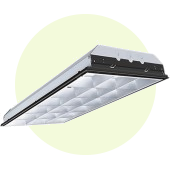
Recessed ceiling fixtures are the workhorse of campus interiors. Look for dimmable LED recessed units with color temperature controls, wide beam angles (30 to 40 degrees) for even distribution, and emergency battery backup for life-safety code compliance. These fit lecture halls, classrooms, and library study areas.
Research and Laboratory Environments
Labs need flicker-free LED fixtures with high CRI (90 or higher, 95 or higher for colorimetric work) and consistent color temperature, 4000K to 4100K is standard. T8 LED linear fixtures or edge-lit LED panels work well over benches. Confirm fixtures are sealed or IP-rated for potential chemical exposure or spills.
Residential and Common Areas
Dormitory lounges and social spaces do well with LED panels offering tunable white capability and smart-building integration where the budget supports it. Dorm corridors call for streamlined flush-mount fixtures that minimize vandalism risk while keeping brightness uniform.
Outdoor Pathways and Landscape
743
Browse all bollards and landscape lighting
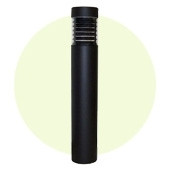
Bollards provide low-level wayfinding along sidewalks and through landscaping with less maintenance than ground-embedded uplights. Pair bollards with pole-mounted area lights at intersections and building entries. Choose fixtures rated for wet locations, and rated for direct burial where bollards call for it.
Large Open Areas and Perimeter
744
Browse all area and site lighting
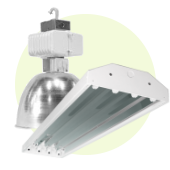
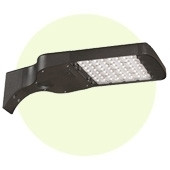
Parking lots, athletic fields, and building perimeters need high-output LED area lights, delivering 50 to 150 foot-candles with minimal glare and long throw distances on tall poles. Wall packs handle building perimeter and entry lighting where a pole isn't practical. Modern LED area lights ship with built-in photocontrols and dimmable drivers compatible with networked campus control systems.
Design Guidelines and Best Practices
Effective campus lighting design goes beyond selecting individual fixtures. On new construction and major renovations, these calls sit with the project's lighting designer or engineer; on retrofit and MRO work, they typically sit with the facilities team or owner. Either way, the guidelines below shape what ends up in the spec, and what a contractor sourcing or substituting against that spec should be checking for.
Layered Lighting and Flexibility
Layer lighting in three tiers: ambient (general illumination), task (focused light for specific activities), and accent (landscape or architectural features). This lets buildings run at different brightness levels based on occupancy and time of day. Dimmable fixtures and occupancy sensors are what make this flexibility possible in practice, not just on paper.
Color Temperature and Circadian Alignment
Warmer color temperatures (2700K to 3000K) suit social and residential spaces. Neutral or cool white (4000K to 4100K) suits study areas, labs, and task-critical environments where alertness and visual acuity matter more than comfort. Tunable fixtures let a campus shift color temperature through the day where the controls budget supports it.
Glare Control
Indirect or semi-direct distribution cuts glare on screens, whiteboards, and workstations. Recessed and troffer fixtures with diffusers and louvers beat exposed bulbs for this. Outdoor fixture aiming should respect neighboring properties and dark-sky guidance where it applies.
Networked Controls and Integration
Lighting controls that integrate with a building management system let a campus run central dimming, scheduling, and occupancy-responsive dimming across hundreds of fixtures at once. That reduces manual oversight and captures energy savings beyond what fixture-level upgrades alone can reach.
Compliance with Standards
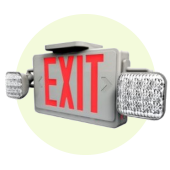
Design to ASHRAE 90.1 for lighting power density limits, IES standards for light levels and distribution, and local electrical codes. Document compliance for LEED v4.1 or whichever sustainability certification applies. Confirm emergency egress lighting meets the NFPA 101 requirements adopted by your AHJ, typically a 90-minute battery runtime at 1 foot-candle average and 0.1 foot-candle minimum along the egress path, but confirm the specific edition your local authority has adopted before you spec to it.
Pro Tip: LEED v4.1 Credits and the Edition Question
Campus lighting projects can contribute to several LEED v4.1 credits, energy performance optimization, advanced energy metering, light pollution reduction, and daylight credits among them, but the exact credit names and thresholds differ between the BD+C and O+M rating systems. Confirm which rating system your project is pursuing before promising a specific credit to the owner. Combined with utility rebates, energy savings often offset fixture costs within 3 to 5 years.
Next Steps: Assessing Your Campus Lighting
Start with a lighting audit to flag high-energy areas, safety concerns, and fixture age. Prioritize the longest-operating-hours spaces first, libraries, labs, pathways, and the buildings with the largest fixture counts, for the fastest payback. Many universities run phased upgrades over 3 to 5 years to balance budget against operational gains. LED retrofit kits are usually the fastest path to savings in existing buildings.
RelightDepot supports higher education lighting projects with product sourcing, spec-sheet support, and fast quoting across every campus area, and can answer detailed product questions for facilities directors, procurement staff, and the electrical contractors they work with. See also our Lighting for Schools guide for K-12 applications.

Contact RelightDepot for Campus Lighting Solutions
From a single-building upgrade to a multi-year campus-wide plan, RelightDepot offers a full product range and a team focused on energy-efficient, safety-first solutions for higher education facilities.
Contact us: