
7 Retail Lighting Decisions That Impact Sales, Energy Use, and Maintenance
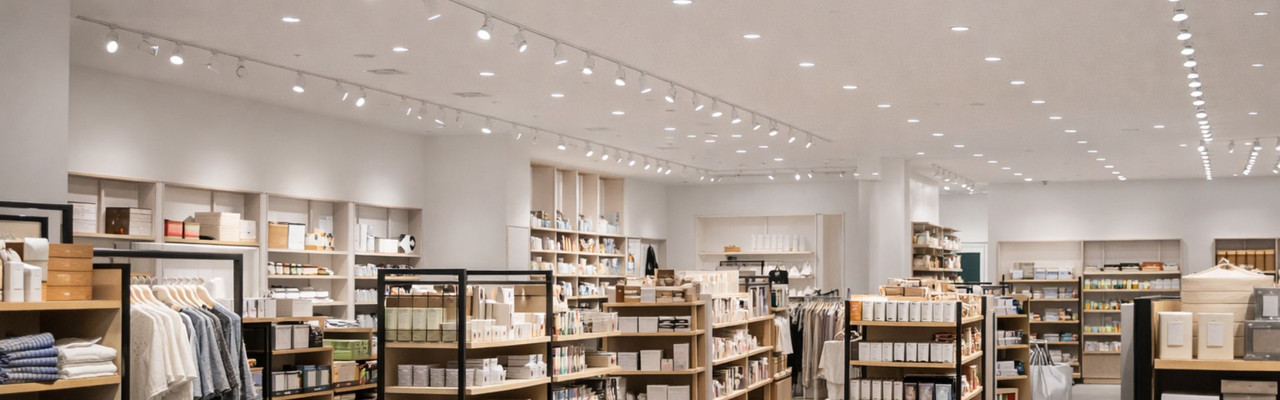
Retail lighting directly impacts how products sell, how much energy a store consumes, and how often fixtures need maintenance. These outcomes are driven by decisions, not aesthetics.
Lighting influences customer attention, product visibility, and time spent in-store. Poor lighting choices can reduce engagement and hurt sales without being obvious. At the same time, inefficient fixtures and over-lighting increase energy costs and create avoidable maintenance issues.
As energy prices rise and retailers focus more on operational efficiency, lighting decisions must support both performance and cost control. The right lighting strategy improves sales, reduces energy use, and limits long-term service demands.
How Retail Lighting Influences Sales, Energy, and Maintenance
Retail lighting affects revenue, operating costs, and service workload. These outcomes are controlled by how lighting is specified, installed, and managed.
Lighting and Customer Behavior
Lighting determines what products customers notice and how long they stay engaged. Focused, well-balanced lighting increases product visibility and dwell time. Poor contrast, glare, or inaccurate color reduces confidence and lowers conversion.
Lighting and Operational Costs
Lighting is a major energy load in retail spaces. Over-lighting and inefficient fixtures raise electricity and cooling costs without improving performance. Energy-efficient retail lighting delivers required light levels using less power.
Lighting and Long-Term Maintenance Planning
Lighting choices impact how often fixtures fail and how disruptive maintenance becomes. Low-quality products and inconsistent fixture types increase labor and replacement costs. Long-life LED systems reduce service calls and simplify upkeep.
Decision #1: Lighting Layer Strategy (Ambient, Accent, Task)
Using a single type of lighting is a performance mistake. Retail lighting works best when ambient, accent, and task lighting are used intentionally, each with a specific purpose.
What Happens When Retailers Rely on One Light Layer
Stores that rely only on general lighting create flat, uniform spaces. Products do not stand out, customers scan, and engagement drops. This approach also wastes energy by lighting everything at the same level, often relying heavily on overhead LED troffers, regardless of importance.
How Layered Lighting Guides Customer Movement
Layered lighting creates visual hierarchy. Ambient lighting supports navigation, while accent lighting pulls attention toward displays and high-priority merchandise. Task lighting supports functional areas without over-lighting the entire space. Customers naturally move toward brighter focal points.
Sales and Energy Implications of Contrast Ratios
Contrast drives focus. Highlighting products with higher light levels allows ambient lighting to remain lower. This improves product visibility while reducing total energy use. Well-managed contrast supports sales without increasing operating costs.
Decision #2: Light Level Targets and Contrast Ratios
Light levels directly affect sales performance and energy costs. Over-lighting wastes energy without improving visibility, while under-lighting reduces product clarity and customer confidence.
Recommended Foot-Candle Ranges by Retail Zone
-
General aisles and circulation: 20–40 foot-candles
-
Standard merchandise displays: 50–100 foot-candles
-
Feature or promotional displays: 150–300 foot-candles (controlled and focused)
These ranges support visibility without unnecessary power use and align closely with industry guidance on recommended light levels for commercial interiors.
How Contrast Improves Product Engagement
Customers respond to contrast, not uniform brightness. Brighter displays against slightly lower ambient lighting draw attention to products and increase dwell time. Contrast creates focus and improves merchandising effectiveness.
Energy Waste Caused by Uniform Brightness
Lighting every area at the same high level increases energy use without adding value. Uniform brightness removes visual hierarchy and forces higher wattage across the entire store. Using contrast, combined with lighting controls and sensors, allows retailers to reduce ambient light levels while maintaining strong product visibility.
Decision #3: Color Temperature Consistency Across the Store
Color temperature isn’t just aesthetic; it affects brand perception, shopper comfort, and employee productivity. Warm lighting (2700–3000K) creates a cozy, inviting feel ideal for boutiques and luxury products, neutral (3500–4000K) works for general retail areas, and cool lighting (4000–5000K) energizes high-traffic or technical product zones.
Inconsistent color temperatures across your store confuse customers and weaken trust. Shoppers notice mismatched lighting between aisles, displays, and checkout areas, which can make products look lower quality. Consistency also matters for staff; uniform lighting reduces eye strain and keeps employees productive throughout long shifts.
By standardizing color temperature, you reinforce your brand, make merchandise look its best, and create a comfortable environment that encourages longer browsing and higher sales.
Decision #4: CRI and Color Accuracy for Merchandise
Color Rendering Index (CRI) isn’t just about aesthetics; it directly affects customer confidence, product satisfaction, and returns. Low CRI lighting can make products appear dull or inaccurate, hurting sales.
Minimum CRI Thresholds by Retail Type
-
Apparel & Fashion: 90+ CRI to display true colors of fabrics.
-
Grocery & Fresh Foods: 85+ CRI for realistic produce appearance.
-
Cosmetics & Jewelry: 95+ CRI to accurately show shades and sparkle.
Why Apparel, Grocery, and Cosmetics Need Higher CRI
Shoppers rely on accurate color to make purchase decisions. Incorrect color perception leads to hesitation, lower basket size, and higher return rates.
CRI vs Lumen Output Misconceptions
High brightness alone doesn’t improve color perception. A 5000-lumen light with low CRI can make colors look flat, while a moderate lumen output with high CRI ensures products look true to life and more appealing.
Decision #5: Fixture Selection, Placement, and Glare Control
Choosing the right fixtures isn’t just about looks; it directly impacts product visibility, shopper comfort, and maintenance costs. Poor fixture choice or placement can waste energy and reduce sales, so this decision should be treated as a strategic one.
Shielding, Beam Angles, and Visual Comfort
Narrow beam angles are essential for highlighting products without spilling light onto walls or ceilings, ensuring merchandise stands out. Fixtures with built-in shielding help prevent direct glare into shoppers’ eyes, maintaining comfort throughout the store. Properly angled lights guide customer focus naturally while keeping the environment visually comfortable, encouraging longer browsing and higher engagement with displays.
Common Placement Mistakes in Retail Stores
Many stores unintentionally reduce the effectiveness of their lighting through poor placement. Overhead lights positioned too close to walls create unwanted shadows on displays, while accent lights placed too far from products fail to capture attention. Uniform ceiling lighting eliminates depth, making merchandise less noticeable and reducing the visual hierarchy that drives sales. Careful planning of fixture placement can prevent these issues and improve both shopper experience and operational efficiency.
How Glare Reduces Dwell Time
Bright spots or harsh reflections cause shopper discomfort. People move faster through glare-heavy areas, decreasing time spent browsing and ultimately lowering sales.
Decision #5: Fixture Selection, Placement, and Glare Control
Choosing the right fixtures isn’t just about looks, it directly impacts product visibility, shopper comfort, and maintenance costs. Poor fixture choice or placement can waste energy and reduce sales, so this decision should be treated as a strategic one.
Shielding, Beam Angles, and Visual Comfort
Narrow beam angles are essential for highlighting products without spilling light onto walls or ceilings, ensuring merchandise stands out. Fixtures with built-in shielding help prevent direct glare into shoppers’ eyes, maintaining comfort throughout the store. Properly angled lights guide customer focus naturally while keeping the environment visually comfortable, encouraging longer browsing and higher engagement with displays.
Common Placement Mistakes in Retail Stores
Many stores unintentionally reduce the effectiveness of their lighting through poor placement. Overhead lights positioned too close to walls create unwanted shadows on displays, while accent lights placed too far from products fail to capture attention. Uniform ceiling lighting eliminates depth, making merchandise less noticeable and reducing the visual hierarchy that drives sales. Careful planning of fixture placement can prevent these issues and improve both shopper experience and operational efficiency.
Decision #6: LED Technology and Energy Efficiency Strategy
LEDs are the backbone of modern retail lighting; they aren’t just bulbs; they form the store’s energy and operational system. Selecting the right LED technology directly affects energy savings, maintenance frequency, and even staff comfort. Poor choices can lead to higher long-term costs and operational headaches.
Energy Savings vs Total Cost of Ownership
High-quality LEDs can reduce energy bills by 40–60% compared to traditional lighting, but the upfront cost is only part of the equation. Lifespan and maintenance matter just as much; cheaper LEDs may burn out sooner, increasing replacement costs and causing inconsistent illumination. True long-term ROI comes from fewer service calls, stable lighting quality, and predictable energy savings.
Heat Reduction and HVAC Impact
LEDs produce far less heat than halogens or fluorescents, which reduces the load on air conditioning systems. This not only lowers energy usage but also improves shopper comfort by keeping the store at a more consistent temperature. Proper planning of fixture types and placement can cut HVAC costs by an estimated 10–15%, further boosting efficiency.
Why Cheap LEDs Increase Maintenance Calls
Low-quality LEDs are more prone to failure, flickering, or shifts in color temperature over time. These issues disrupt store operations, increase labor costs, and undermine the visual consistency critical for product presentation. Investing in reputable LED brands ensures reliable performance, minimizes downtime, and protects both the store’s aesthetic and operational efficiency.
Decision #7: Lighting Controls and Maintenance Planning
Smart lighting controls and proactive maintenance planning aren’t just tech upgrades; they directly reduce costs, downtime, and operational headaches. Retailers who leverage these tools gain better energy efficiency, extend bulb life, and create a more consistent shopping environment.
Occupancy Sensors and Daylight Harvesting
Occupancy sensors automatically dim or switch off lights in unoccupied areas, saving up to 30% on energy. Daylight harvesting further enhances efficiency by adjusting interior brightness based on natural light, maintaining consistent illumination while lowering energy bills. Together, these strategies reduce the frequency of bulb replacements, extend fixture life, and contribute to smoother daily operations.
Centralized Control Benefits
Centralized lighting control systems allow managers to adjust lighting across multiple zones or even different store locations from a single dashboard. This capability enables fast adaptation for promotions, seasonal setups, or layout changes without manual intervention. By reducing service calls and preventing uneven lighting, these systems enhance both customer experience and operational efficiency.
Fixture Standardization Across Locations
Using consistent fixtures across stores simplifies maintenance, streamlines spare parts inventory, and speeds up repairs. Standardization ensures a uniform brand experience, fostering shopper trust and comfort. Fewer custom components also lower long-term maintenance costs and minimize operational disruptions, creating a reliable, scalable lighting strategy across all retail locations.
Common Retail Lighting Mistakes That Hurt Performance
Small lighting errors can directly reduce sales and increase costs. Mixing color temperatures across a store confuses customers and weakens brand perception. Over-lighting aisles while under-lighting displays hides key products and lowers engagement. Low CRI lighting makes colors appear off, leading to returns and dissatisfaction, especially in apparel, cosmetics, and grocery. Choosing cheap fixtures to save upfront costs often backfires, lights fail sooner, maintenance rises, and illumination becomes uneven. Correcting these basics boosts sales, reduces energy waste, and improves customer experience immediately.
How to Evaluate Your Current Retail Lighting System
Before investing in new lighting, it’s essential to understand exactly where your store stands. Start with a walkthrough audit: check that all product displays are evenly lit, aisles aren’t brighter than feature areas, color temperatures are consistent throughout the store, and glare or harsh shadows aren’t affecting customer comfort. Confirm that your lights are energy-efficient LEDs with the right CRI for your products.
Decide whether to retrofit or redesign based on your findings. Retrofit if your layout works, but fixtures are outdated or inefficient. Redesign your store flow, zoning, or product emphasis if it isn’t optimized to guide customer behavior effectively.
Involving a lighting specialist makes sense when audits reveal persistent color inconsistencies, glare problems, or areas with poor customer engagement. Specialists are also valuable if energy costs remain high despite LED upgrades, or when implementing advanced lighting controls and layered lighting strategies. A structured evaluation ensures that any lighting investment boosts sales, improves comfort, and reduces operating costs without guesswork.
Conclusion: Lighting as a Long-Term Retail Investment
Retail lighting isn’t just decoration, it’s a strategic investment with measurable ROI. The right lighting drives sales, lowers energy costs, and reduces maintenance headaches, while creating a comfortable, trustworthy environment for customers and employees alike.
By focusing on layered lighting, correct light levels, color consistency, CRI, smart LED technology, and controls, retailers can turn lighting into a tool that actively supports profits, operational efficiency, and brand perception.
Get Help Planning Your Lighting Retrofit
Upgrading your retail lighting can be simple and cost-effective with the right guidance. RelightDepot’s team can review your current setup, recommend the best fixtures, and create a detailed Bill of Materials for your retrofit. They’ll design an efficient control strategy, identify rebate-eligible products, and ensure consistent results across your store. For detailed fixture recommendations, explore our full Retail Lighting Guide or contact a lighting specialist directly at [email protected] or 888-548-6387 to start your upgrade.
Latest Blog Updates

7 Retail Lighting Decisions That Impact Sales, Energy Use, and Maintenance
Retail lighting directly impacts how products sell, how much energy a store consumes, and how often...

Save 12% Automatically on Lighting Orders Over $2,000
Large lighting projects can quickly become expensive and complicated when orders are placed in piece...
Lighting Basics: A Rule of Thumb to Estimate Total Lumens for Your Space
Underlighting can make a space feel dim and unsafe, while overlighting wastes energy and increases g...
Difference Between High Bay and Low Bay Lighting
Choosing between high bay and low bay lighting is one of the most common decisions in commercial and...

Introducing SubmittalGenerator: A Faster Way to Build Professional Construction Submittals
We are excited to announce the public launch of SubmittalGenerator, now available at SubmittalGenera...
Product Spotlight: Westgate LTRI Series Indirect Mesh-Basket Troffers
The new LTRI Series from Westgate Manufacturing brings a fresh approach to modern troffer design. In...