The quality of lighting in your hotel, restaurant, or bar shapes how guests feel from the moment they walk through the door. A well-lit lobby signals professionalism and care. A dimly lit bar creates a mood that keeps guests lingering. A guest room with layered, dimmable lighting puts the traveler in control of their own experience. Get it right, and lighting becomes one of the most cost-effective tools you have for building loyalty and repeat visits.
LED technology has made professional-grade hospitality lighting accessible at a fraction of the operating cost of older metal halide or halogen systems. You get better color rendering, longer fixture life, lower energy consumption, and far greater control over color temperature and dimming. For property owners and facility managers running multi-area properties, that last point matters most.
This guide covers the key areas of a typical hospitality property: the lobby and public spaces, bar and dining areas, and hotel guest rooms. It includes specific fixture recommendations, color temperature guidance, and product links to help you build a complete lighting plan. For a broader overview of commercial property lighting, start with the Applications hub.
Choosing the Right Lighting Approach
Hospitality properties are multi-use spaces. A hotel lobby functions as a check-in area, a lounge, a meeting point, and sometimes an informal workspace, all at once. A hotel restaurant serves breakfast at full brightness and dinner at half intensity. Getting the lighting right means thinking in layers: ambient lighting provides the general fill, task lighting focuses on reading and work surfaces, and accent lighting directs attention to architectural features, artwork, or display areas.
Color temperature is one of the most important decisions in a hospitality lighting project. For guest-facing spaces such as lobbies, guest rooms, bars, and dining areas, target a warm white in the 2700K to 3000K range. That range flatters skin tones, creates an inviting atmosphere, and aligns with the warmth guests associate with premium hospitality environments. For back-of-house areas such as laundry, storage, and kitchen prep zones, step up to 3500K to 4000K for functional visibility.
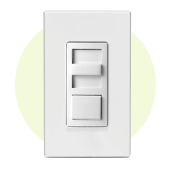
Dimmers are essential in a well-designed hospitality property. They allow staff to shift the entire mood of a dining room from lunch service to dinner service with a single adjustment. In guest rooms, dimmable circuits give travelers the flexibility to set the exact light level they need for sleep, work, or relaxation. Any fixture you specify for public-facing areas should be confirmed dimmable and paired with a compatible dimming control.
For broader context on commercial and mixed-use property lighting, see our Commercial Lighting guide. The same layering principles apply; hospitality simply puts a stronger premium on warmth and atmosphere than a standard office or retail environment.
Lighting the Hotel Lobby
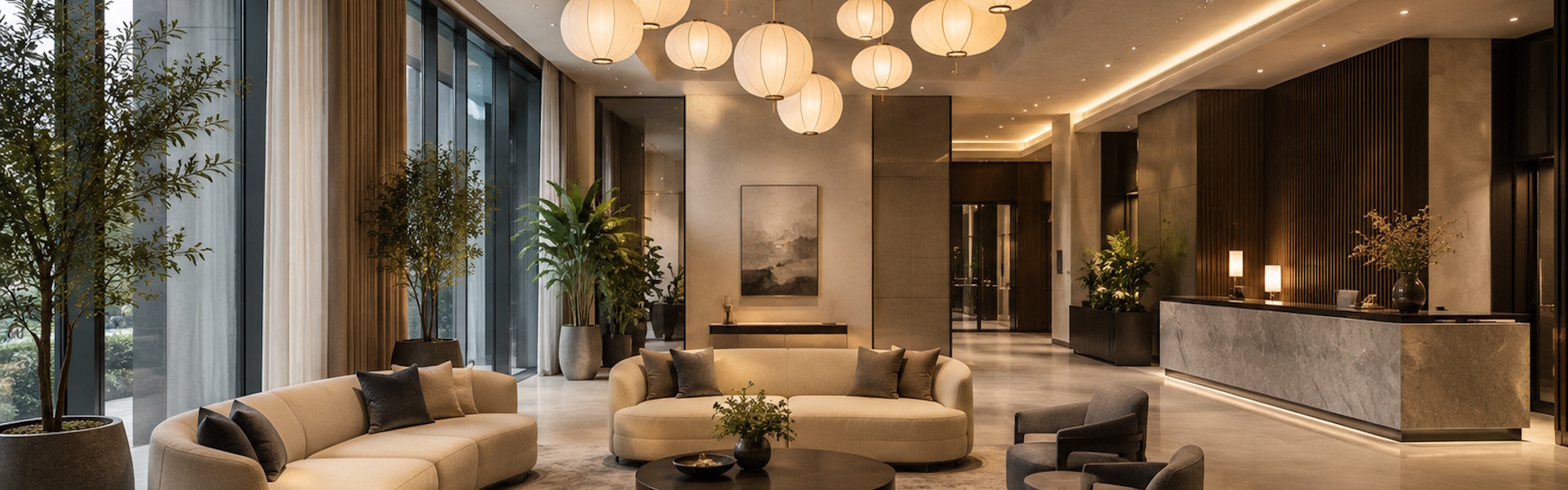
The lobby is the first space guests experience, and it carries more visual weight than its floor area alone suggests. The lighting design needs to accomplish several things at once: orient guests as they enter, reflect the property's brand and aesthetic, and create a mood that signals comfort. That is a lot to ask of a lighting plan, but a layered LED approach with the right fixture mix handles it well.
Aim for 2700K to 3000K in the lobby. Bright, cool light in the 4000K to 5000K range tends to read as clinical in a guest-facing environment. If the property has a modern, contemporary aesthetic with metal accents and clean lines, 3000K works well. For warm-toned interiors with wood, leather, or brass elements, 2700K enhances those materials and feels immediately inviting.
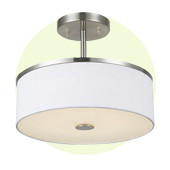
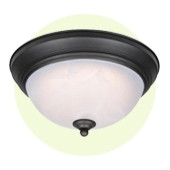
The architectural character of the lobby also shapes fixture selection. High ceilings call for statement fixtures with visual presence from a distance. Lower ceilings do better with flush mount decorative ceiling lights and sconces that keep the space feeling open rather than compressed. Vintage décor or period architectural details benefit from warm 2700K sources; exposed filament-style LED lamps in industrial or transitional settings reinforce the design intent rather than fighting it.
Decorative Pendant Lights and Chandeliers
Statement fixtures are the focal point of any lobby. Large decorative pendant lights and chandeliers draw the eye upward in high-ceiling spaces and set the tone for the entire property. For a contemporary lobby, a cluster of geometric pendants or a linear pendant array over the reception desk gives a polished, intentional look. Traditional properties do well with multi-tier chandeliers using candle-style LED lamps at 2700K. Transitional styles that blend classic forms with modern materials accommodate both warm-filament and diffused white LED sources. Specify LEDs across the board to avoid re-lamping on fixtures that are difficult to reach.
Ceiling and Recessed Fixtures
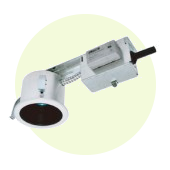
High-ceiling lobbies benefit from recessed can lights as the ambient layer. These fixtures provide even fill light across the floor plane, reducing harsh shadows and making the space feel open. Use them to complement your statement fixtures rather than compete with them; the ambient layer should be noticeably dimmer than the pendant or chandelier feature to preserve the intended focal point. Adjustable-head recessed trims let you aim specific fixtures at a reception desk, a seating area, or an accent wall.
Floor Lamps
Floor lamps add warmth and dimension to lobby seating areas. They work well in corners that would otherwise fall into shadow, and they function as task lighting in informal seating areas where guests may read or work. Floor fixtures come in styles from sculptural to minimal, so it is easy to find options that reinforce the lobby's design language. At 2700K, a floor lamp in a corner seating cluster reads as intentional hospitality design rather than an afterthought.
Decorative Pendant Lights for Hospitality Spaces
765
Browse all Decorative Pendant Lighting
Lighting the Hotel Bar and Dining Areas
Bar and dining areas work differently from any other space in a hospitality property. The lighting needs to shift mood and intensity across the day, and it needs to make food and people look good while doing it. A bar that is too brightly lit loses intimacy; one that is too dark makes guests uncomfortable and complicates reading the menu. The answer is a layered design with dimmable circuits, so the same space that runs at 30 foot-candles for lunch transitions to 15 foot-candles for dinner service with warm accent sources filling in the difference.
Color rendering matters here as much as color temperature. Specify LEDs with a CRI of 90 or higher for any dining or bar environment. High-CRI light makes food look vibrant and appetizing. Low-CRI light, even at the right color temperature, makes food look flat and unappealing. Pair that with the 2700K to 3000K target for guest-facing spaces and you have a combination that works across every service period.
Wall Sconces
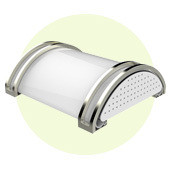
Wall sconces are a practical workhorse in bar and dining spaces. Mounted at head height or slightly above, they add warm ambient fill without harsh overhead glare. When the overhead circuits are dimmed for dinner service, sconces at 2700K maintain enough fill light for guests to feel comfortable without disrupting the mood the room is working to create. Choose styles that match the aesthetic: sleek linear sconces with a diffused panel for a contemporary bar, or exposed LED Edison-bulb styles for industrial or transitional settings.
Strip and Shelf Lighting
LED strip lights behind the bar counter backlight liquor bottles and glassware, turning the back bar into a visual element rather than storage. A thin linear strip mounted to the underside of shelves creates a warm inside glow that highlights the product display. Warm neutral at 2700K to 3000K keeps the overall aesthetic cohesive. Tunable-white strip lights give the bar manager the option to shift color temperature between afternoon and late-evening service without changing a single fixture.
Track Lighting for Restaurants and Dining Areas
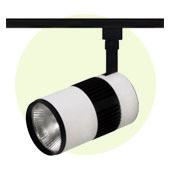
Track lighting is a strong choice for restaurant dining rooms and food-service areas where flexibility matters. A track system lets you aim individual heads at specific tables, artwork, or architectural features without committing to fixed ceiling layouts. For operators who rearrange floor plans seasonally or for private events, track lighting means the lighting adjusts with the furniture. Specify adjustable track heads with CRI 90 or higher at 2700K to 3000K. Track is also effective at highlighting food display cases, wine walls, and any feature surface that anchors the dining room visually.
Statement Fixtures and Chandeliers
A well-chosen chandelier or decorative pendant over a bar or dining area creates overhead visual interest and signals intentional design. When installed correctly, it draws the eyes upward and adds a sense of scale that makes the room feel more considered. For bar and dining installations, prioritize fixtures that accept dimmable LED sources at 2700K, since most evening service runs these circuits at reduced intensity.
Track Lighting for Restaurants and Feature Areas
838
Browse all Track Lighting
Lighting the Hotel Guest Rooms
Guest room lighting has one overriding requirement: it needs to be simple for the guest to control. A traveler arriving after a long day does not want to troubleshoot a complex switch panel to find a comfortable light level. The fixture selection and control layout should make it obvious how to shift from bright work light to soft evening light with minimal effort.
A layered approach works well in guest rooms. Ambient lighting from recessed ceiling fixtures provides the general fill. Task lighting from a bedside table lamp or wall-mounted reading light gives focused illumination for reading or work. Accent lighting from a decorative sconce or floor lamp softens the room and adds personality. All three circuits should be on dimmable controls and wired to accessible switches near the bed.
Target 2700K across all guest room circuits for warmth and consistency. A desk or work area within the room can use a task lamp slightly cooler at 3000K to help with focus, but keep the surrounding ambient sources at 2700K so the room does not feel divided.
Recessed Ceiling Lights
Recessed can lights are the standard for hotel room ambient lighting because they integrate cleanly into the ceiling plane and avoid adding visual clutter to the room. Specify dimmable LED recessed fixtures with a CRI of 90 or higher at 2700K. Adjustable-head trims allow the fixture to be aimed at a specific surface or feature, which gives the maintenance team more flexibility during furniture rearrangements or room refreshes.
Table Lamps
Table lamps are a staple of hotel room design, placed by the bed and at any work desk. Bedside table lamps at 2700K contribute to the warm ambient feel of the room and give guests a softer alternative to overhead lights for reading before sleep. Desk or task lamps in the 3000K range provide better focus for laptop work without disrupting the room's overall warmth. Ornamental lampshades let you reinforce the property's design language, and LED-compatible bases mean lamp heads can be updated without replacing the entire fixture.
Wall Sconces
Wall sconces serve two roles in hotel guest rooms. In corridors and hallways leading to rooms, they provide consistent ambient lighting that keeps the path clear and safe without harsh overhead glare. Inside the rooms themselves, they are a space-saving alternative to table lamps in smaller rooms, and they add a designed quality that elevates the guest experience. Choose adjustable-head sconces so guests can direct the light precisely where they need it. At 2700K with a CRI of 90 or higher, sconces add the final warm-light layer to a well-designed guest room.
Wall Sconces for Hotels and Hospitality
951
Browse all Wall Sconces
Corridors, Back-of-House, and Safety Lighting
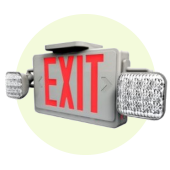
Code-compliant exit and emergency lighting is required in all occupied commercial buildings, including hotels and restaurants. Every exit door and egress path needs a clearly visible exit sign, and emergency lighting units must provide enough illumination for occupants to evacuate safely during a power loss. Most jurisdictions require emergency lighting to maintain at least 1 foot-candle at the floor along the egress path. Battery-backed LED emergency units and photoluminescent exit signs keep maintenance demands low and reduce the risk of a failed unit going unnoticed.
Guest room corridors typically run at 5 to 10 foot-candles. Recessed downlights or wall sconces at 3000K work well for corridor runs; this is slightly cooler than the 2700K target for guest spaces, which supports visibility and wayfinding without a clinical feel. Back-of-house areas such as laundry, storage, and kitchen prep should step up to 3500K to 4000K for task visibility. LED surface-mount or vapor-tight fixtures are the practical choice in utility areas.
Related Guides
For specific guidance on fast-food and quick-service restaurant lighting, see the Fast Food Restaurant Lighting Guide. It covers the unique demands of high-volume food-service environments, including the illuminance levels and fixture types that support speed-of-service operations.
The Commercial Lighting guide covers office, retail, and mixed-use environments with the same fixture-by-area approach used here, and is useful when a hospitality project includes administrative offices or mixed-use common areas.
Talk to an Expert
Specifying lighting for a hospitality property involves decisions across fixture type, color temperature, dimming compatibility, and code compliance. The team at RelightDepot has worked with contractors, facility managers, and property owners on projects of all sizes. If you have questions about fixture selection, want a review of a fixture schedule, or need help with a custom quote, we are ready to help.
Contact us online, call 888-548-6387, or email [email protected]. We are available Monday to Friday, 8 AM to 8 PM ET.