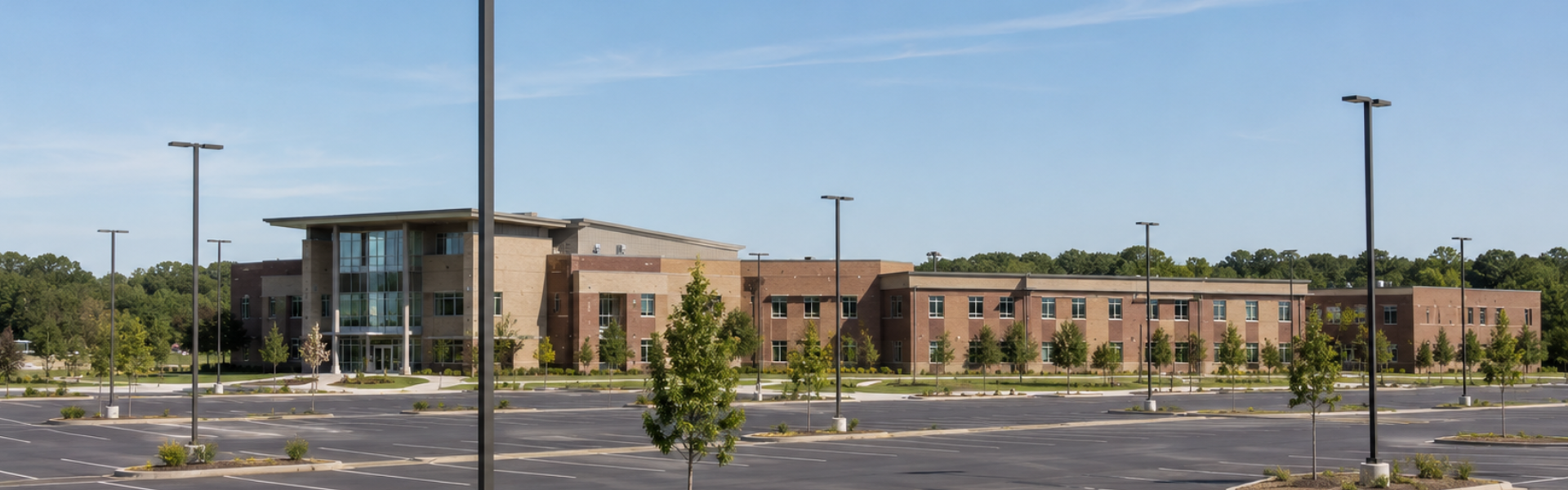
School parking lots and campus exteriors carry their own liability profile: a poorly lit drop-off lane or a dark walkway between the gym and the lot is where slip-and-fall claims and security incidents start. This guide covers parking lot illumination standards, athletic field perimeter lighting, walkway and entrance solutions, dark sky compliance, vandal-resistant fixtures, emergency and security lighting, and control strategies for K-12 exteriors. For indoor coverage, see the Lighting for Schools application hub, including our gymnasium lighting guide and cafeteria and multipurpose room lighting guide.
Parking Lot Illumination Standards
School parking lots must meet specific visibility and safety standards while minimizing glare and light spillover. The Illuminating Engineering Society's RP-8, Recommended Practice for Parking Facilities, is the standard most designers cite for foot-candle targets, though the exact number depends on traffic volume, area crime data, and whether the district's insurer or local police department sets its own minimum. Confirm the current RP-8 table against the numbers below before finalizing a design. For a school with 200 or more parking spaces, achieving uniform illumination takes careful fixture spacing and mounting height, not just more wattage. Note that this guide covers surface lots; for a structured deck, see Parking Garage Lighting for deck-specific foot-candle and uniformity guidance.
Light Levels and Layout
Parking lots serving high-traffic periods (drop-off, pickup, evening events) should target 15 to 20 foot-candles with uniformity ratios of 3:1 or better. Lower-traffic overflow lots may be designed to 10 foot-candles. Mounting heights of 20 to 30 feet work well for most school applications, allowing wide beam spreads that reduce fixture count while maintaining coverage. A 10,000-square-foot parking lot may require 8 to 12 fixtures depending on mounting height and fixture output; a photometric model is the reliable way to confirm coverage before ordering.
Fixture Selection and Efficiency
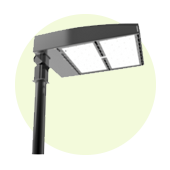
LED shoebox fixtures rated for parking lot use are now standard on new work and retrofits alike. Where the spec is open, or a substitution is on the table, look for:
- Color temperature: 4000K or 5000K (white light for security and visibility)
- CRI 70 minimum (supports facial recognition and vehicle identification); 75+ preferred for security-sensitive areas
- Asymmetric (Type III or Type IV) optics to minimize light spillover beyond lot boundaries
- IP65 or higher rating for weather resistance
- Confirm warranty terms on the spec sheet before ordering; LED shoebox fixtures from established manufacturers typically carry multi-year driver and housing coverage
For a typical school parking lot retrofit, switching from 400W metal halide (approximately 32,000 initial lumens, derated to around 18,000 lumens late in lamp life) to 125W LED (18,000 to 20,000 lumens, stable output) cuts energy consumption by roughly 65% while improving light quality and reducing maintenance. Confirm actual lumen output and efficacy against the spec sheet for the fixture under consideration. LED fixtures last 50,000 or more hours vs. 15,000 for metal halide.
Recommended Area Lights and Shoeboxes
893
Browse all Area Lights and Shoebox Fixtures

Athletic Field Perimeter Lighting
Athletic fields require bright, uniform lighting to support safe play and spectator visibility. Field lighting differs from parking lots: higher light levels, precise uniformity, and glare control are critical to prevent player eye strain and maintain competitive fairness.
Field Lighting Design
IES RP-6, Sports and Recreational Area Lighting, recommends foot-candle targets that scale with sport and competition level; verify the current table against your classification before specifying. Recreational soccer or practice fields typically run lower, in the 20 to 30 foot-candle range; varsity football or baseball requiring broadcast quality needs significantly more; confirm the exact figure with your designer since broadcast-grade requirements have moved up in recent editions. Mounting heights of 40 to 60 feet (tall light poles or building-mounted fixtures) ensure even distribution across the playing surface while keeping spillover manageable.
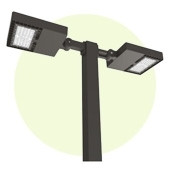
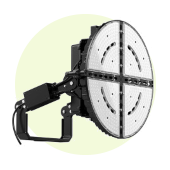
Perimeter lighting (fixtures at field edges rather than over the field) prevents shadows while reducing total fixture count. A typical full-size football field (100 x 50 yards plus end zones) uses 12 to 24 high-output fixtures positioned at corners and midfield sidelines, with additional fixtures required for broadcast-quality applications. Sports lighters and high-mast fixtures designed for field applications provide the output and beam control these installations need.
Light Poles for Parking Lots and Athletic Fields
1018
Browse all Light Poles and Accessories
Controls and Scheduling
Athletic fields operate seasonally or intermittently. Programmable controls tied to game schedules reduce waste: lights come on 30 minutes before events, dim during practice, and shut down immediately after. Many schools dim field lighting to 50% during practice, which can cut total field-lighting energy by roughly 30 to 40% over a full season while maintaining adequate visibility.
Walkway and Entrance Lighting
Safe pedestrian movement between parking, fields, and buildings is a critical liability concern. IES recommends 2 to 5 foot-candles for walkways and 5 to 10 foot-candles for building entrances and gathering areas. Consistent, uniform lighting reduces tripping hazards and deters unwanted activity.
Pathway and Entrance Design
Low-level pathway lighting (bollards, in-ground fixtures, or 8 to 12 foot pole-mounted lights) creates clear, defined routes and reduces shadows. Building entrances benefit from 10 to 20 foot-candles; overhead wall packs or pendant fixtures mounted 10 to 14 feet above grade work well. Mount fixtures at least 8 feet high to avoid direct glare.
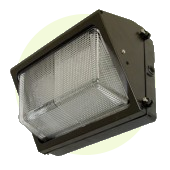
For a school with multiple entrance points, a mix of wall-mounted and pole-mounted fixtures provides flexibility. Wall packs rated for wet locations (IP65+) and corrosion-resistant finishes (aluminum or powder-coat steel) survive years of weather exposure.
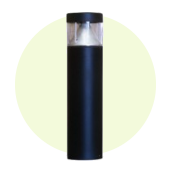
Bollard lighting lines pathways with short, robust fixtures that define safe routes. Modern LED bollards consume 5 to 10W and last 50,000 or more hours, making them economical for widespread pathway coverage.
Wall Packs for Building Perimeters
756
Browse all Wall Packs

Light Pollution and Dark Sky Compliance
Many communities now enforce dark sky ordinances limiting upward light and glare. Schools in environmentally sensitive areas or near residential neighborhoods face strict requirements. Compliance saves energy, protects wildlife, and demonstrates environmental stewardship.
Dark Sky Best Practices
Key strategies: use fully shielded fixtures such as full cutoff wall packs (zero upward spillage), choose warm color temperatures (3000K or below, with 2700K required by some jurisdictions) to reduce blue light, and limit lighting hours using timers or sensors. Asymmetric optics direct light downward; full-cutoff fixtures prevent light from spreading above horizontal. These design choices reduce light pollution by 40 to 60% compared to unshielded fixtures while improving visibility where it matters, on the ground.
DarkSky International (formerly the International Dark-Sky Association) and the IES have published detailed dark-sky compliance guidance. School districts should review local ordinances and consult DarkSky International's resources before finalizing designs.
Vandal-Resistant and Emergency Fixtures
School exterior lighting must withstand physical abuse. Facility managers reviewing retrofit options, and designers specifying new installations, typically look for fixtures that meet these requirements:
- Polycarbonate or tempered-glass lenses (acrylic cracks easily)
- Recessed or flush-mount designs that minimize protrusions
- Heavy-duty aluminum or stainless-steel housings
- Sealed optical chambers to prevent insect intrusion and fogging
- Anti-tamper hardware (tamper-proof fasteners, glued lenses)
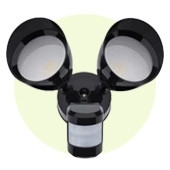
Pair vandal-resistant housings with dusk-to-dawn or motion-sensor security fixtures at entrances and loading areas where full-time area lighting isn't justified.
Emergency and Egress Lighting
NFPA 101 (Life Safety Code, Section 7.9) requires emergency lighting and exit signage on designated egress routes. Exterior areas that serve as emergency egress must have backup battery systems capable of 90-minute runtime averaging 1 foot-candle with a minimum of 0.1 foot-candle along the path of egress. Confirm the applicable occupancy classification for your building type and check local code amendments before specifying emergency systems. Self-contained emergency lights with integral batteries simplify compliance: each fixture includes a lead-acid or lithium battery that powers LED circuits if main power fails. Centralized emergency battery systems serve multiple fixtures and reduce overall fixture cost but require careful design and maintenance.
A typical school parking lot with emergency requirements uses 20 to 30% self-contained emergency fixtures distributed across the area. Testing and maintenance documentation is critical for code compliance and liability protection.
Photocell and Timer Controls
Automatic controls reduce energy waste and ensure consistent dusk-to-dawn operation. Photocell controls (light sensors) turn fixtures on when ambient light drops below a set threshold and off at sunrise. Timers provide schedule-based control for athletic fields and event-specific lighting. Combined controls maximize efficiency.
Control Technologies
Modern LED fixtures often include integral photocells (simple on/off) or networked controls (dimming, scheduling, remote management via software). For a school parking lot, a basic photocell reduces manual operation and saves 15 to 20% energy compared to fixed schedules (which cannot adapt to seasonal daylight changes). Smart controls, accessible via smartphone or building management system, let facility managers dim or turn off lights remotely, respond to events, or adjust based on occupancy.
Athletic field controls often use combination strategies: photocells for dusk/dawn transitions, timers for game schedules, and manual overrides. A varsity baseball field might run full brightness during scheduled games, dim to 30% during practice, and shut down 30 minutes after events end, saving 40 or more hours of full-power operation per month.
ROI for controls typically shows within 2 to 3 years through reduced energy and maintenance costs.
Design Guidelines and Considerations
School exterior lighting design must balance safety, compliance, and economics. Work with a lighting designer or consultant familiar with IES standards, local codes, and school operations. Consider utility rebate programs and bond financing options common in K-12 capital projects when building the project budget.
Key Design Steps
- Audit existing conditions. Measure current light levels, flag problem areas (glare, dark spots, vandalism targets), and log fixture age and condition. Facility managers can usually do this walk-through themselves with a light meter.
- Define the scope. Full renovation, energy retrofit, security upgrade, or compliance-driven work each carries a different budget and timeline.
- Get the layout designed or verified. A lighting designer, engineer, or your distributor's photometric service models fixture placement and count to hit the target foot-candle level before anything ships.
- Select fixtures. Once the spec is set (or open for substitution), choose the fixture types (area lights, wall packs, bollards) and technologies (wattage, color temperature, emergency capability) that meet it.
- Plan controls. Decide on photocells, timers, dimming, and remote access needs as part of the same design pass.
- Cost the project. Compare lifecycle cost (purchase plus 10-year energy and maintenance) across fixture options, and check utility rebates before the budget is finalized.
- Phase the work. Prioritize parking areas and main entrances; overflow lots and back pathways can wait for a later phase.
- Document and maintain. As-built drawings, fixture schedules, and maintenance logs save the next facilities hire a lot of guesswork.
A representative example: a 400-student suburban school with aging parking lot and field lighting runs 30 x 400W metal halide shoeboxes totaling 12 kW. An LED retrofit replaces them with 30 x 125W LED area lights on light poles totaling 3.75 kW. Over a typical 4,200 dusk-to-dawn hours per year at $0.12 per kWh, energy savings land around $4,150 per year, plus approximately $1,500 to $2,500 per year in avoided lamp and ballast replacements. Capital cost for fixtures and installation runs around $35,000, which puts simple payback at roughly 6 to 7 years before utility rebates (often 4 to 5 years after rebates). Confirm current utility rebate programs for your district; these vary by state and by year. After payback, the school realizes pure energy and maintenance savings for the remainder of the 15+ year fixture life.

Request a Quote for Your School's Exterior Lighting Project
Proper exterior lighting protects students and staff, reduces energy waste, and helps schools meet safety and code requirements. RelightDepot offers a full range of area lighting, light poles, wall packs, and bollards for K-12 applications. For photometric layouts or project quoting, contact our team for product recommendations and competitive pricing.
Contact us: