Converting your stadium from traditional HID (high-intensity discharge) lighting to LED is one of the highest-ROI infrastructure upgrades available to facility managers. This guide walks decision-makers through the financial case for LED conversion, including utility savings, rebate programs, maintenance cost elimination, and secondary benefits that compound your return on investment. For a broader view of lighting across sports venues, see our Sports Lighting application hub.
Overview: Why Stadium Operators Are Switching to LED
Stadium lighting is energy-intensive. A single 1,000-watt HID flood light running 12 hours per week costs roughly $300 to $400 annually in electricity alone. Many stadiums operate 50 to 100+ fixtures, creating annual bills in the $15,000 to $50,000 range just for lighting.
LED flood lights deliver the same or superior light output while consuming 40% to 60% less energy. Beyond electricity, LED eliminates warmup time (HID lamps take 10 to 15 minutes to reach full brightness), reduces maintenance labor and replacement parts, and upgrades light quality for broadcasts and spectator experience. The combination creates a payback period of 3 to 5 years for most facilities, with benefits extending over 50,000+ hours of lamp life.
The Business Case for LED Retrofit
Before diving into specific numbers, here are the three value drivers this business case runs on:
- Energy savings: LED floods use 400W to 600W to match a traditional 1,000W HID output. Over a 5-year period, this compounds into significant utility bill reduction.
- Maintenance elimination: HID lamps require scheduled replacement as they age past rated life. LED sports lighters last 50,000 to 100,000 hours with minimal maintenance, dramatically reducing labor costs and downtime.
- Operational upgrades: Instant-on capability, instant dimming, and improved color rendering enable better broadcast quality, faster event setup, and flexible lighting control. Together these benefits improve revenue and operational efficiency.

ROI Analysis: Real Numbers
Here is how ROI plays out in a typical mid-sized stadium retrofit scenario. The assumptions below (fixture count, hours of use, utility rate, rebate amount) are stated so you can swap in your own numbers, actual payback depends entirely on your facility's usage schedule and local rates.
Example Payback Calculation: 60-Fixture Multi-Use Sports Complex
| Current setup |
60 x 1,000W HID floods, approximately 2,000 hours/year (games, practices, and community events) |
| Annual electricity cost, HID |
60 fixtures x 1.0 kW x 2,000 hours x $0.12/kWh = $14,400/year |
| LED alternative |
60 x 500W LED floods, same schedule |
| Annual electricity cost, LED |
60 fixtures x 0.5 kW x 2,000 hours x $0.12/kWh = $7,200/year |
| Annual energy savings |
$7,200 |
| Equipment cost |
60 fixtures at $800 to $1,200/fixture installed = $48,000 to $72,000 |
| Less utility rebate |
$100 to $300/fixture for DLC-qualified equipment = $6,000 to $18,000 applied against equipment cost |
| Net equipment cost after rebate |
$30,000 (low cost, max rebate) to $66,000 (high cost, min rebate) |
| Payback period, energy only |
4.2 to 9.2 years |
| Add maintenance avoidance |
$1,500 to $4,500/year, combined annual savings $8,700 to $11,700 |
| Payback including maintenance |
approximately 2.6 to 7.6 years for most facilities |
| 5-year cumulative savings |
energy and maintenance combined, $43,500 to $58,500 |
Your actual numbers depend on your current fixtures, usage schedule, local electricity rates, and available rebates. In markets with aggressive rebate programs, payback can drop significantly. Even conservative assumptions show full cost recovery well within the fixture's rated life, with the retrofit delivering positive ROI for 10+ years thereafter.
Stadium Fixtures
791
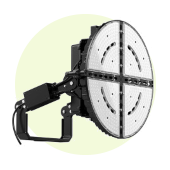
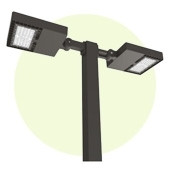
Browse all Sports Lighters and High Mast Lights
Utility Rebates and DLC Qualification
Many US utilities and regional efficiency programs (including large investor-owned utilities like PSEG, ComEd, PG&E, and Duke Energy, plus municipal cooperatives in other territories) offer rebates for LED flood light conversion, though availability and amounts vary by service territory and program year. The key requirement is DesignLights Consortium (DLC) certification, which ensures your fixtures meet efficiency and performance standards.
DLC-qualified LED floods commonly qualify for rebates in the $100 to $300 per fixture range on a prescriptive program, though custom or project-based programs for larger stadium retrofits can pay out differently based on total kWh reduction rather than a flat per-fixture amount. For a 60-fixture retrofit, a prescriptive rebate translates to roughly $6,000 to $18,000 in incentive funding that directly reduces your out-of-pocket equipment cost. Confirm your specific program's structure before budgeting a number.
2026 Note: DLC Qualification is Changing
DLC's older V5.1 listings are being delisted by December 15, 2026. After that date, most utility programs will require V6.0-listed fixtures for rebate eligibility. If you are budgeting a retrofit for later this year or next, confirm your fixture's DLC listing is V6.0-qualified before you lock in a quote, not after.
How to access rebates: Request DLC-certified fixtures from your supplier, confirm rebate eligibility with your utility's efficiency program (many have online lookup tools), and submit documentation (invoices, DLC certificates) after installation. Processing typically takes 4 to 8 weeks.
Some utilities also offer pre-rebate discounts through supplier partnerships, letting you claim the incentive at point of sale rather than filing a claim afterward. Ask your distributor whether they participate in your region's program.

Flood Lighting
740
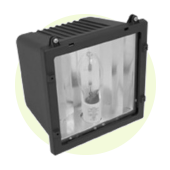
Browse all Flood Lighting
Performance Benefits Beyond Energy Savings
While kilowatt hours are the largest single ROI driver, secondary performance benefits create compounding value:
Instant-On Operation: HID floods take 10 to 15 minutes to reach full brightness and require cooldown time before restarting. LED floods turn on at full output in under 1 second. For sports facilities, this eliminates setup delays and enables last-minute event scheduling or fixture repositioning.
Dimmability and Control: LED floods can be dimmed down to about 10% output with minimal efficiency loss, while HID fixtures must run at full power or go dark. This enables energy savings during practices, reduced spillover light during off-events, and improved light quality control for broadcast production.
Maintenance Cost Reduction: Each HID failure on a high-mast pole requires a lift and electrician, typically $400 to $800 per service call. Facilities typically budget $1,500 to $4,500 annually for HID maintenance on a 60-fixture array as lamps approach end of rated life. LED fixtures require virtually no maintenance beyond occasional cleaning, eliminating this recurring cost entirely.
Broadcast Quality: Modern LED floods deliver improved color rendering (CRI 70 to 90+, depending on fixture tier) and flicker-free output. Broadcast-grade facilities specifying CRI 90 or higher fixtures see additional benefit in on-camera color accuracy and television production quality.
LED Retrofit Kits
828
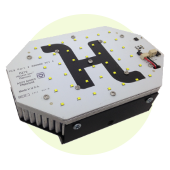
Browse all LED Retrofit Kits
Design Guidelines for Stadium LED Retrofits
Retrofit success depends on proper fixture selection and installation design. Key considerations:
Lumen Output Matching: LED floods are available in output ranges from 20,000 to 60,000+ lumens. Size your retrofit fixtures to match or exceed the light level of existing HID fixtures. A 1,000W HID metal halide typically produces 75,000 to 95,000 mean lumens; a 500W to 600W sports lighter or high-mast LED fixture produces comparable output. Consult photometric data to confirm.
Beam Angle Selection: Stadium floods require wide beam angles (60 to 120 degrees) to cover large field areas efficiently. Narrow-beam fixtures create hotspots and dark zones. Select beam angles that match your facility's layout and mounting heights.
Color Temperature: Stadium lighting typically uses 4,000K (cool white) or 5,000K (daylight) color temperatures. Broadcast-grade facilities often prefer 5,000K for on-camera clarity. Confirm preferences with your broadcast or event production team before ordering.
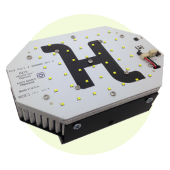
Mounting and Heat Management: LED floods generate minimal heat compared to HID fixtures, simplifying installation and reducing cooling load. Proper ventilation ensures long fixture life (50,000+ hours). Where a full fixture swap is not feasible, LED retrofit kits designed to reuse existing housings can reduce project cost. Install fixtures in well-ventilated locations and avoid enclosed fixture shrouds that trap heat.

Get a Custom ROI Estimate for Your Facility
Ready to evaluate LED retrofit economics for your stadium? RelightDepot offers DLC-certified LED flood lighting, high-mast fixtures and light poles for sports facilities nationwide. Our team can help you identify the right fixtures, confirm DLC qualification for available rebates, and put together a quote.
Contact us today:
Related Resources