Light Switch Grades: Residential, Commercial, and Spec Grade
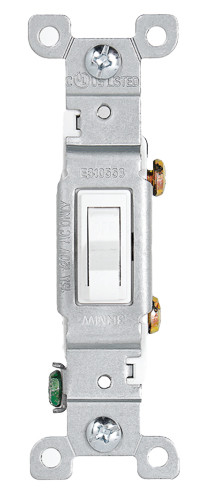
A light switch is not one product at three prices; it is three products. The grade stamped on the device determines contact material, cycle life, and how it terminates conductors, and choosing the wrong one is why budget switches fail early in classrooms and clinics. This is the comparison the big retail grids never surface.
| Grade | Typical Rating | Construction | Where It Belongs |
|---|
| Residential grade | 15A, 120/277V | Light duty contacts, side-wire terminals | Dwellings and light duty tenant spaces |
| Commercial grade | 15A or 20A, 120/277V | Heavier contacts and yoke, back-wire clamp plus side-wire | Offices, retail, schools, daily-cycle use |
| Specification grade | 20A, 120/277V | Highest cycle life, one-piece contact arms, impact resistant bodies | Institutional, healthcare, high abuse areas |
| Industrial motor rated | 20A to 30A, motor loads per HP rating | Rated for inductive and motor loads | Shops, pumps, equipment circuits |
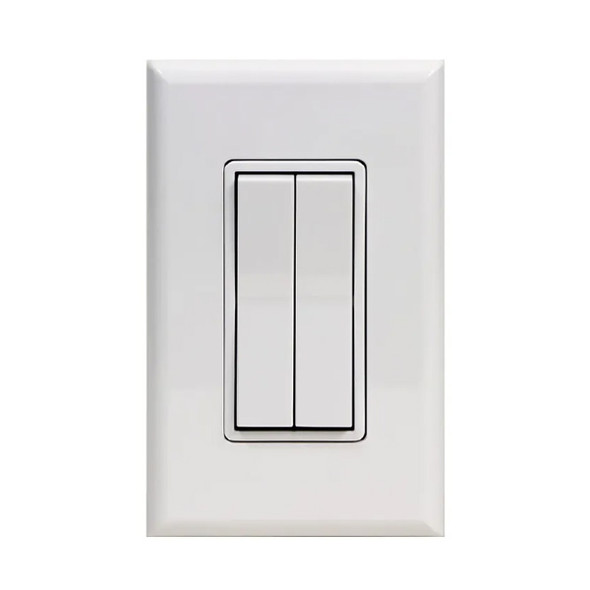
All switches here are UL listed and NEMA compliant, in single pole, 3-way, 4-way, and pilot light configurations. Form factor is a separate choice: toggle remains the institutional standard, decorator (rocker) styles dominate new commercial interiors and pair with decorator wall plates, and lighted handle versions mark switch locations in dark corridors and mechanical rooms. Standard finishes include white, ivory, light almond, gray, and black.
LED Dimmer Switch Compatibility: Protocol vs Load
Most dimmer complaints trace to a protocol mismatch, not a defective device. Match the dimmer switch to the load type it will control, and check the fixture's spec sheet for its tested dimmer list before ordering in quantity.
| Dimming Protocol | Load It Suits | Failure Modes When Mismatched |
|---|
| TRIAC (forward phase) | Line voltage LED lamps and fixtures marked TRIAC dimmable, incandescent | Flicker at low end, reduced range, buzzing |
| ELV (reverse phase) | Electronic low voltage drivers, many LED fixtures; usually needs a neutral | Pop-on at bottom of range if forward phase used instead |
| MLV (magnetic low voltage) | Magnetic transformer loads | Transformer hum and overheating with wrong protocol |
| 0-10V | Commercial LED fixtures and drivers with 0-10V leads | No control at all if the fixture lacks control leads |
Two gotchas cover most callbacks. First, minimum load: an LED dimmer switch rated for a 10 watt minimum can misbehave controlling a single 6 watt lamp, showing flicker or drop-out where the load never latches. Second, capacity derating: dimmer wattage ratings assume incandescent; most manufacturers publish a lower LED maximum, often around a tenth of the incandescent figure in lamp count terms. When a circuit dims poorly, the fix is almost always matching protocol and load, not replacing lamps.
3-Way and 4-Way Switching in One Paragraph
A 3-way pair controls one lighting load from two locations, using traveler conductors between the switches; there is no on/off marking because either switch can change the state. Add a 4-way switch between the two 3-ways for each additional control point. When replacing light switches in multi-entry rooms, count control locations first: two means a 3-way pair, three or more means 3-ways at the ends with 4-ways between.
Build the Full Device Package
Pair switches with Dimmers where light level control is wanted, Sensors where energy codes require automatic shutoff, and Outlets for the balance of the device schedule. Smart Wiring Devices add scheduling and app control on standard wiring, and Wall Plates finish every configuration in matching colors. Contractor pricing and bulk availability apply across the department.