Wall Plates by Device Type and Gang Count
Nobody agonizes over one wall plate. The friction shows up when a punch list calls for two hundred of them across mixed devices, and the order comes back with decorator plates for toggle switches. The fix is to count openings before finishes: identify each device type behind the wall, tally the gangs per box, then pick material and color once for the whole job. The finder table below is that first pass.
| Opening Type | Fits | Common Gang Counts | Ordering Notes |
|---|
| Toggle | Standard toggle switches | 1 to 6 gang | The legacy standard; still the majority in commercial back-of-house |
| Decorator | Decora-style switches, dimmers, fan controls, GFCI and decorator receptacles | 1 to 6 gang | One rectangular opening covers the widest range of modern devices |
| Duplex | Standard duplex outlets | 1 to 4 gang | The classic two-hole receptacle opening |
| Blank | Unused boxes | 1 to 2 gang | Code requires every box to be covered, abandoned or not |
| Combination | Mixed devices in one box: toggle plus duplex, decorator plus toggle, and similar pairings | 2 to 6 gang | Specify the opening sequence left to right when ordering |
Light Switch Covers
The switch wall breaks into two worlds. Toggle covers fit the traditional flip switch, and on multi-gang commercial banks a single 4, 5, or 6 gang toggle plate reads cleaner and installs faster than ganged singles. Decorator covers fit the rectangular Decora module, which is also the format nearly all dimmers, fan speed controls, timers, and sensor switches use; standardizing new work on decorator openings means one plate spec covers switching and controls alike. Screwless snap-on light switch covers add a finished, fastener-free face for hospitality, healthcare, and front-of-house retail where exposed screws read as unfinished.
Outlet Covers
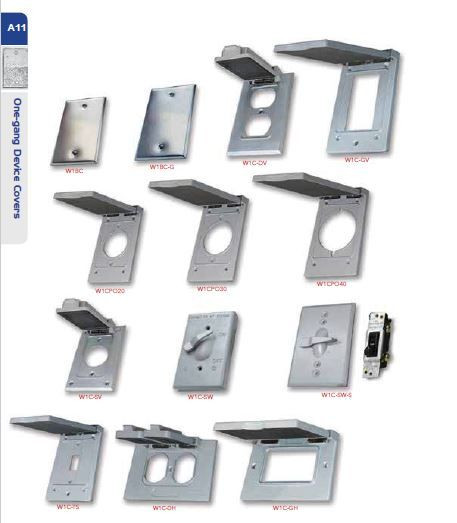
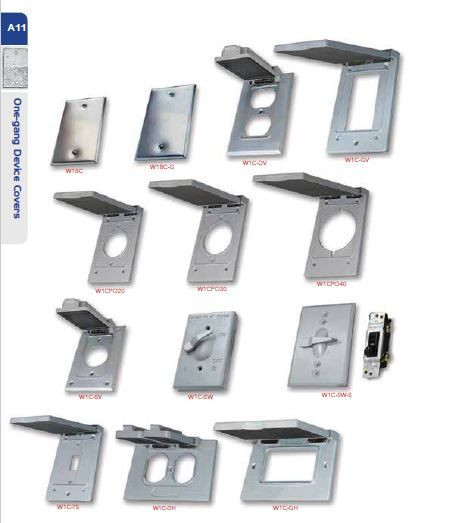
Match the cover to the receptacle face, not the box. Standard duplex receptacles take the two-opening duplex cover, while GFCI and decorator-style receptacles take a decorator opening; ordering duplex outlet covers for a GFCI-heavy job is the most common wall plate mistake on commercial punch lists. Blank covers close abandoned boxes, and combination plates handle the switch-plus-receptacle boxes common at kitchenettes and workstations. For receptacles outdoors or in wash-down areas, an ordinary cover does not satisfy code; use the in-use covers in Weatherproof Boxes and In-Use Covers.
Materials: Nylon, Stainless, or Painted Steel
Material selection is an abuse calculation. Nylon plates flex instead of cracking, which makes them the specification default for schools, healthcare corridors, and any wall that meets carts and equipment; standard thermoplastic costs less but shatters under the same impact. Stainless steel, in 302/304 grades, shrugs off impact, cleaning chemicals, and corrosion, earning its place in kitchens, labs, food processing, and coastal properties. Painted steel splits the difference for utility spaces where economy matters and finish matters less. Color logic is simpler: white, ivory, light almond, gray, and black should match the device behind the plate, and buying plates and devices from the same manufacturer keeps whites from mismatching across a floor.
Mid-Size and Jumbo Wall Plates for Drywall Gaps
When the wall opening was cut generous or the old plate outline shows in the paint, a larger plate is cheaper than a drywall repair. Standard single-gang plates measure roughly 2-3/4 by 4-1/2 inches; mid-size steps up to about 3-1/8 by 4-7/8, and jumbo runs near 3-1/2 by 5-1/4, with exact dimensions varying slightly by manufacturer. The extra margin covers ragged cuts, paint lines, and minor wall damage while satisfying the code requirement that the plate completely cover the box opening and seat flush against the wall surface. On repaint and retrofit work, ordering the whole job in mid-size is a standard trick that hides a multitude of old openings. Multi-gang, combination, and specialty configurations are available across every material and size in the category, with contractor pricing on case quantities and the rest of the device wall one aisle over in Controls and Devices.






 New!New!