FREE SHIPPING ON ORDERS OVER $1K
EXPERT LIGHTING ADVICE
VALUE ENGINEERED QUOTES
ROI ANALYSIS AND DESIGN SUPPORT
Lighting in healthcare environments is more than functional. It directly affects patient comfort, recovery outcomes, and staff performance. Proper design must balance visual clarity for medical staff with a calming atmosphere for patients. Modern healthcare facilities rely on a mix of general, task, and specialty lighting, with LEDs now the preferred choice for efficiency, durability, and precise color rendering. This guide covers lighting approaches for the key areas of hospitals, clinics, dental offices, veterinary centers, and other healthcare spaces.
Hospitals are complex environments containing many distinct spaces, each requiring tailored lighting solutions:
Upgrading to well-designed LED lighting in a healthcare setting pays dividends across clinical performance, patient experience, and facility operations. The key benefits include:
Each zone in a healthcare facility has distinct illumination requirements. The sections below outline the fixture types, light levels, and mounting strategies best suited to each space, along with product carousels featuring top-selling options available at RelightDepot.
Hospital patient rooms require layered lighting that accommodates both patient comfort and medical needs. Overhead recessed LED fixtures or surface-mounted luminaires provide general illumination, typically targeting 20 to 30 foot-candles across the room. Above the bed, wall-mounted overbed lights handle dual duty: softer light for reading or relaxation and brighter, exam-level illumination of 50 foot-candles or more when staff perform assessments. The Energetic E2BL series of hospital bed lights is a popular choice for patient room installations, offering separate up/down controls, a nightlight mode, and pull-chain convenience suited to clinical environments. Accent fixtures such as wall sconces may also be added to reduce glare and create a more residential feel, supporting patient satisfaction during longer stays.
Browse all Hospital Bed Lights
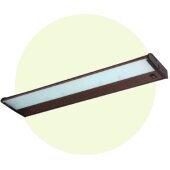
Nursing stations serve as critical work centers where staff document care, manage communications, and monitor patients. Lighting should be bright enough for detailed charting and computer work, yet comfortable enough to avoid glare and eye strain during long shifts. Light levels in these areas should typically reach 30 to 50 foot-candles. Recessed LED troffers, panel lights, or linear pendants are common choices for providing even illumination. Incorporating dimming controls or tunable white technology can help adapt the environment for day and night shifts, supporting staff alertness and circadian comfort. Under-cabinet LED strips along desk surfaces can also supplement overhead fixtures and reduce eye strain at workstation level.
Examination and procedure rooms demand lighting that supports accurate diagnostics while maintaining patient comfort. General illumination is typically 50 to 100 foot-candles, delivered by recessed LED troffers or surface-mounted luminaires with high color rendering (CRI 90+) to ensure accurate visibility of skin tones and tissues. Adjustable wall-mounted exam fixtures may be installed near procedure tables to provide additional task lighting when needed. Combining bright, accurate general lighting with localized exam lights creates an efficient environment for both staff and patients.
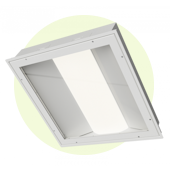
Browse all LED Panel Lights and Lay-In Troffers
Operating rooms require some of the brightest and most precise lighting in the hospital. Recessed LED surgical fixtures or sealed clean room lights provide broad, shadow-free illumination of 100 to 150 foot-candles, ensuring consistent brightness across the entire room. These fixtures are designed with sealed housings and smooth surfaces to meet infection control standards and withstand frequent cleaning. Procedure spotlights on ceiling-mounted arms deliver focused illumination to the surgical field, while recessed fixtures remain essential for staff navigation, equipment operation, and overall visibility.
Emergency departments require durable, high-output lighting systems that operate reliably 24/7. General illumination levels range from 50 to 100 foot-candles in treatment and triage areas, typically achieved using sealed LED troffers or clean room style fixtures. These lights reduce maintenance demands while supporting infection control through easy-to-clean housings. Backup emergency and exit lighting is especially critical in ER settings, ensuring continuous visibility during power disruptions. Supplemental task lights may also be positioned in trauma bays or critical treatment areas to support fast-paced medical interventions.
Browse all Exit and Emergency Lighting
Corridors, waiting areas, and lobbies influence both safety and the patient experience. Corridor lighting should provide 20 to 30 foot-candles of uniform illumination using linear LED fixtures, recessed troffers, or surface-mounted luminaires. Occupancy sensors in low-traffic corridors can reduce energy use without compromising safety, stepping light levels down during off-peak hours and restoring them instantly when motion is detected. In waiting rooms and lobbies, lighting design can be more inviting, combining overhead recessed fixtures with decorative wall sconces or pendant lights to create a welcoming atmosphere. Accent lighting may also highlight architectural features or improve wayfinding signage, reducing stress for patients and visitors.
Healthcare lighting design is guided by two primary authorities: the Facility Guidelines Institute and the Illuminating Engineering Society. The FGI Guidelines specify minimum foot-candle targets by room type and require emergency lighting continuity across all patient care areas. IES RP-29 (Lighting for Hospitals and Health Care Facilities) provides detailed recommendations on light levels, color rendering, and glare control tailored to clinical settings. Key design considerations include:
Lighting is an essential component of modern hospital design, influencing safety, accuracy, patient comfort, and operational efficiency. From patient room bed lights to surgical suite fixtures, RelightDepot.com carries a wide selection of healthcare lighting solutions built for the demands of clinical environments. Our team can help you identify the right fixtures, request a value-engineered quote, or work through a lighting layout for any space.
Reach out to get started on your healthcare lighting project:
If you don't see what you're looking for, don't hesitate to contact us to discuss your needs with one of our lighting experts. We would be happy to walk you through all of the design considerations and help you choose the best type of lighting for your application.