Landscape Lighting for Commercial Properties: 120V or Low Voltage?
Residential DIY advice dominates this product category, but the design questions on an HOA common area, a hotel entry sequence, or a campus quad are different: system voltage, transformer capacity, and maintainability across hundreds of linear feet of planting beds. The first call is voltage, and the table below frames it the way a property manager or landscape contractor should.
| Factor | Low Voltage (12V) | Line Voltage (120V) |
|---|
| Installation | Shallow burial cable; simpler trenching; verify local code for burial depth | Conduit, junction boxes, and a licensed electrician throughout |
| Safety in planted areas | Low shock risk where irrigation, digging, and mulching happen | Full line voltage in the landscape; more protection required |
| Reconfiguration | Easy to move fixtures as plantings mature | Fixture moves mean conduit work |
| Fixture selection | Widest range of path, well, and accent fixtures | Strongest for high-output floods and large-scale area coverage |
| Typical fit | Beds, walkways, uplighting, most commercial landscape work | Long throws, tall facades, and sites already trenched with conduit |
Low voltage landscape lighting is the default for most commercial planting areas for the same reasons it dominates residential work: safer cable in dirt that gets disturbed, and flexibility as the landscape grows. Line voltage earns its place where output demands exceed what 12V fixtures deliver economically.
Transformer Sizing: A Worked Example
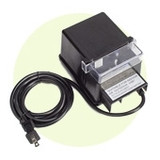
Size the transformer from the connected load, not from guesswork. Total the fixture wattage on the run: eighteen 4-watt path lights (72W) plus six 6-watt uplights (36W) is a 108-watt connected load. Add roughly 20 percent headroom, which brings the requirement to about 130 watts, and spec the next standard transformer size up, here a 150-watt multi-tap unit. The headroom protects the transformer and leaves room to add a fixture later without re-doing the layout.
Voltage drop is the second half of the sizing exercise. Long home runs lose voltage along the wire, which reads as dim, warm-shifted fixtures at the far end of the run. Counter it by splitting the load across multiple shorter home runs, stepping up to heavier gauge cable on long distances, and using the higher taps on a multi-tap transformer to compensate for the drop the run will see. Transformers with photocell and timer controls automate dusk-to-dawn or dusk-plus-hours operation, the standard operating pattern for hospitality and multifamily sites.
Aiming and Spacing Basics
Path lights are typically laid out 6 to 10 feet on center, a spacing range landscape lighting designers use to produce overlapping pools of light without a runway effect; tighter spacing suits lower-output fixtures and step areas, wider spacing suits brighter fixtures on open walks. For uplighting, place well lights or directional uplights to graze trunks and facades, lighting specimen trees from two sides where viewing angles demand it. Keep aimed fixtures shielded away from walkway sight lines and building windows, since glare complaints are the most common callback on commercial landscape lights.
Garden Lights, Materials, and What Lasts
Commercial sites punish fixtures with irrigation spray, fertilizer, and mower traffic, so material selection is a maintenance decision. Brass and copper fixtures cost more up front and outlast aluminum in corrosive or coastal conditions; powder-coated aluminum and composite garden lights keep budgets in line on protected sites. Whatever the material, specify fixtures with sealed, serviceable lamp compartments so ongoing maintenance does not mean replacement.
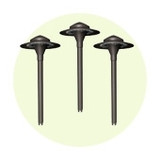
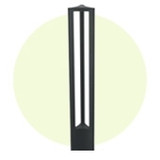
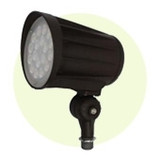
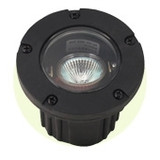
Browse the fixture families in this category: path lights, well lights, and landscape flood lights. For taller illuminated pathway markers, see bollard lights, and for building-mounted and area fixtures beyond the planting beds, the full outdoor lighting category.