
Vapor Tight High Bay Lighting for Tough Environments
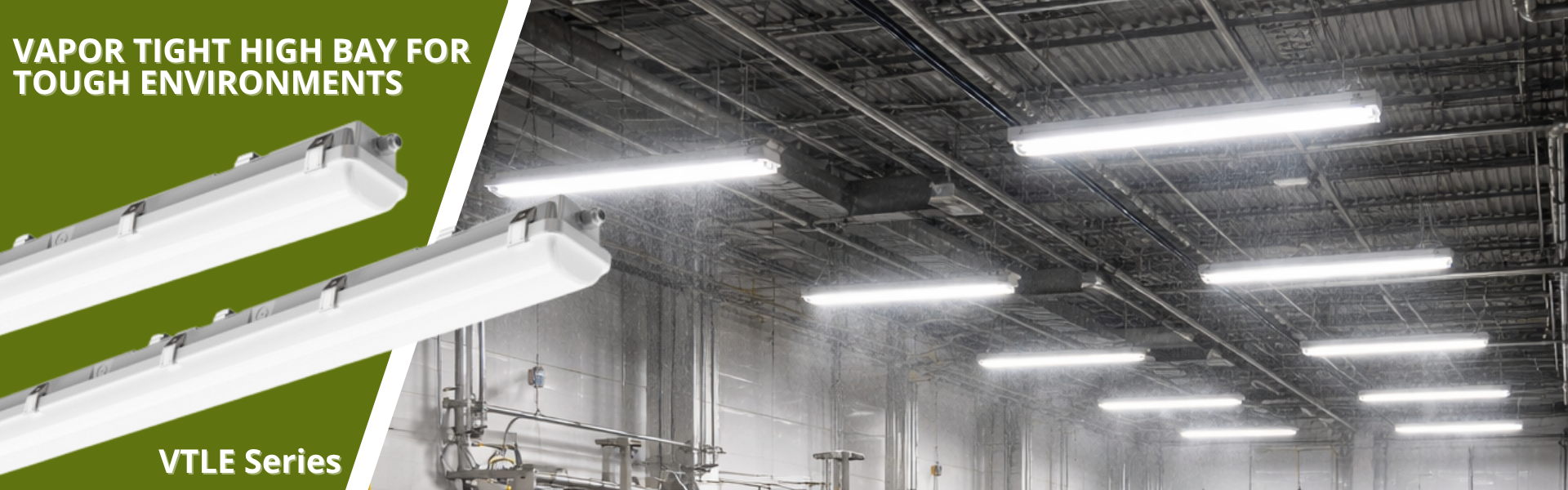
In warehouses, parking structures, and washdown areas, high bay lighting is selected based on how well it handles dust, moisture, and physical wear. Contractors are working within existing mounting points, conduit runs, and ceiling heights. The focus is on getting reliable light output without creating rework or delays.
Selectable wattage and color temperature come into play during submittals and value engineering. They allow teams to adjust light levels and match existing conditions without changing the fixture type. This keeps procurement simple, avoids fixture swaps late in the project, and helps maintain the schedule when availability becomes a factor.

Where Vapor Tight High Bay Fixtures Get Used on Jobsites
Vapor-tight high bay fixtures are typically specified in environments where standard high bays fail early or require frequent maintenance. This includes washdown areas, food processing zones, utility corridors, and parking structures where moisture, dust, or airborne debris are constant factors. In unconditioned industrial spaces, temperature swings and exposure conditions also drive the need for sealed, impact-resistant fixtures.
In many projects, these fixtures also replace older fluorescent or HID vapor-tight units during retrofits. Existing conduit runs, mounting points, and ceiling structure dictate placement. Fixture swaps often happen during limited shutdown windows, so install speed and compatibility take priority.
Why Contractors Switch to Selectable Vapor Tight Fixtures
These VTLE vapor tight high bays come up during submittals and procurement, not design. The fixture is already specified. The flexibility helps when site conditions do not line up cleanly with the plans.
Fewer SKUs reduce ordering mistakes and keep materials consistent across phases or buildings. That matters more in multi-site work or partial retrofits where existing conditions vary.
Selectable wattage helps crews stay within existing circuit limits without revisiting feeders or breaking up runs. It is a field adjustment, not a design change. CCT flexibility avoids delays during walkthrough when the owner wants a different look after energizing.
This is not about improving the lighting design. It is about keeping installs moving when conditions are inconsistent or not fully known upfront.
Key Specs That Matter in the Field
Specs only matter when something does not line up in the field. Most adjustments happen during install or punch, not at design.
Selectable wattage, 160/180/200W, is used to stay within circuit limits or pull output back where spacing is tighter than expected.
Lumen range, 20,800 to 26,000, gets adjusted based on mounting height and actual layout once fixtures are on.
CCT, 3500K to 5000K, is set during the walkthrough to keep areas consistent after finishing and equipment is in.
IP65 is driven by the spec where washdown or moisture is part of the scope. IK08 comes into play where impact risk is known up front.
120–277V and 0–10V dimming align with standard commercial circuits and controls already on the job.
Installation Reality in Harsh and Constrained Environments
In dusty or wet environments, IP65-rated high bay fixtures are specified to meet protection requirements, not as a preference. This level of sealing helps prevent early failure in washdown areas, parking garages, and industrial spaces where exposure is constant. Impact resistance also matters. Fixtures installed in active work zones need to handle occasional contact, which is where IK-rated housings become relevant.
From an installation standpoint, work is often scheduled during off-hours or shutdown periods, with limited time for adjustments. Lift access, ceiling height, and existing mounting structure all affect install speed. In many cases, contractors are working with existing junction boxes and conduit runs, so alignment and compatibility are critical to avoid delays or field modifications.

Code Requirements vs Field Expectations
Inspectors check the listing, location rating, and wiring. That usually means ETL, damp rating where required, and proper installation. They are not reviewing light levels or fixture performance.
IP ratings matter during submittals to match the environment. They are not something inspectors debate in the field if the fixture meets spec. 0–10V dimming is tied to the control design. Inspectors only confirm that controls operate, not how well they perform.
Long-Term Maintenance Reality
Facility teams look for consistency. One fixture type with a selectable output reduces what they need to stock and replace.
In wet environments, sealed housings matter. They reduce early failures that are common with open or standard fixtures. That directly impacts maintenance cycles.
In practice, teams prioritize what they can replace quickly. Matching exact output matters less than keeping the space operational with available stock.

Explore Vapor Tight High Bay Fixtures at RelightDepot
RelightDepot offers a range of vapor tight high bay used across warehouses, parking structures, and industrial facilities. Contractors typically review these during fixture scheduling and submittals, where mounting configuration, output levels, and environmental ratings are confirmed.
If you are planning a new installation or working through a retrofit, browse the vapor tight lighting collection or contact our team for support with fixture selection and project coordination.
Email [email protected] or call 888-548-6387 to speak with a lighting specialist.
Latest Blog Updates

Product Spotlight: Westgate LLVT 4ft LED Vapor Tight with Selectable Wattage and CCT
Most vapor tight jobs don't get much attention on the drawings, and they still end up causing proble...
MaxLite TRK Tunable White Troffer Retrofit Kits
Most commercial buildings still have a ceiling full of 2x4 and 2x2 lay-in troffers with sound housin...
EiKO HBX3 and BAYE3 Round High Bay Promo for Warehouse and Industrial Retrofits
Most high bay retrofits start with a fixture count, not a photometric plan. Someone walks the floor,...
Enerlites October Promo: Surge, TR Devices and Power Inlets Closes October 31
Enerlites has promo pricing on four devices most of us put in on every service upgrade and finish tr...
Specifying the LRS-O2 Wall Sconce for Entries, Breezeways, and Site Work
The LRS-O Series is Westgate's field-selectable up-and-down wall sconce platform, built for multifam...
MaxLite DSKL Series: Color-Selectable Disk Lights, One SKU for Five CCTs
MaxLite's DSKL Series Disk Light ships in two sizes on one platform: a 4 inch, 10W model and a 6 inc...