
Specifying the LRS-O2 Wall Sconce for Entries, Breezeways, and Site Work
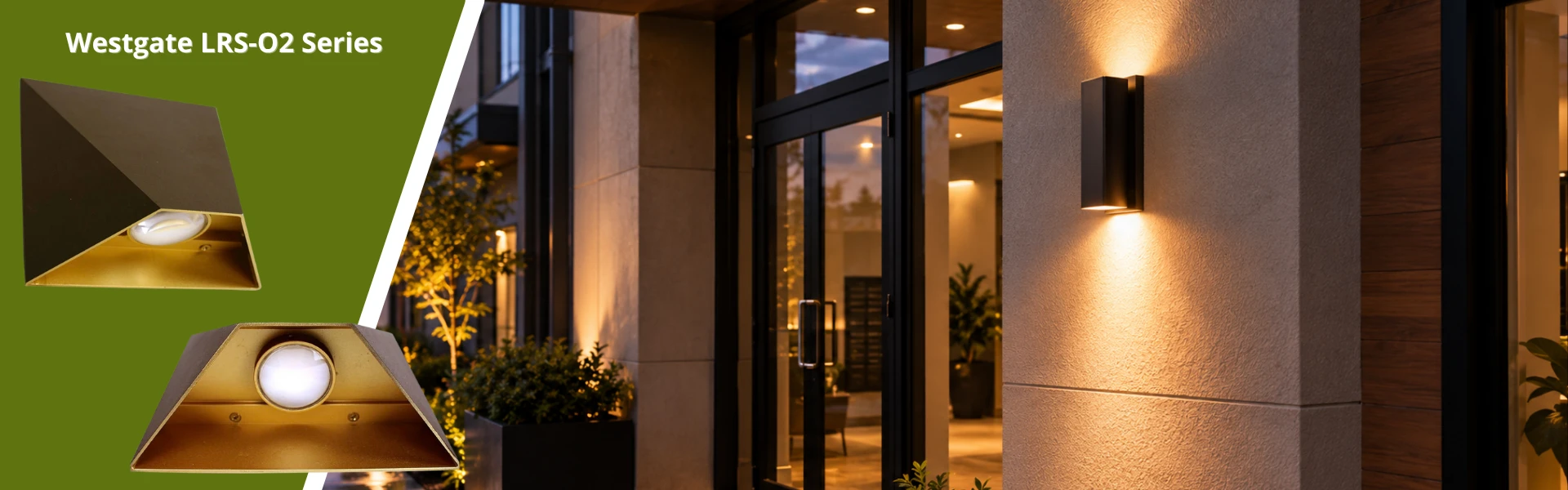
The LRS-O Series is Westgate's field-selectable up-and-down wall sconce platform, built for multifamily and commercial exteriors that need one architectural fixture to cover multiple output levels and CCT calls without a separate submittal for each wattage. Unlike single-wattage decorative sconces that need a distinct SKU for every output level and a separate part number for each color temperature, the LRS-O is built on one platform across all three tiers. One bronze die-cast body, one field-selectable 3000K/4000K/5000K driver from the 6W LRS-O1 to the 12W LRS-O3, the same 90° x 110° up-and-down beam, and a TRIAC-dimmable driver on every unit. Whether the elevation calls for a 6W accent at a side door or a 12W wash at the main entry, the CCT selection and the install logic are the same.
For multifamily entries, mixed-use lobby elevations, and hospitality or healthcare exterior renovations where the designer specifies one architectural sconce family across multiple wattage points, the LRS-O covers the full scope without requiring a separate cut sheet per wattage, a different SKU per CCT, or a new purchase order every time the CCT gets revised at submittal review.

What the LRS-O2 Actually Is
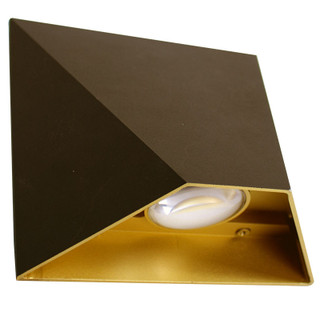
The LRS-O2 is a die-cast aluminum and steel wall sconce built for exterior mounting, with a powder-coated bronze finish and an acrylic diffuser that throws light both up and down off the same fixture body. It ships as one SKU with three field-selectable color temperatures, so the CCT gets set on site rather than locked in at the factory. Here is the full spec rundown:
| Spec | Value |
|---|---|
| Voltage | 120V AC, 60Hz |
| Wattage | 9W |
| Power Factor | >0.90 |
| Efficacy | 70 LPW |
| Lumen Output | 630 lumens |
| Color Temperature | 3000K / 4000K / 5000K, field-selectable |
| CRI | ≥80 |
| Beam Angle | 90° x 110° (up and down) |
| Housing | Die-cast aluminum and steel plate, powder-coated bronze finish |
| Ingress Rating | IP42 |
| Listing | ETL Listed, wet location |
| Dimming | TRIAC (forward-phase) |
| Rated Life | 70,000 hours |
| Warranty | 7-year |
| Operating Temperature | -4°F to 104°F (-20°C to 40°C) |
For a facility manager replacing failed sconces across a multifamily portfolio, the single-SKU, three-CCT design also cuts down on warehousing three separate part numbers or guessing which Kelvin the original job called for years ago.
Where This Fixture Actually Gets Specified
Fixture selection here sits with the architect or designer, not with you if you're the electrical contractor bidding the job. Your real question is whether the specified fixture is in stock, on budget, and installable on the schedule the general contractor is holding everyone to. Based on the output and the mounting method, this sconce fits a narrower set of applications than a straight read of the manufacturer's marketing copy would suggest:
- Multifamily and mixed-use building entries, where the design calls for a coordinated facade fixture at the primary entrance
- Exterior corridor and breezeway wall runs, where the sconce lights a wall-adjacent walkway rather than an open path
- Parking structure pedestrian entries and stairwell landings, not general lot illumination
- Facade accent lighting at secondary doorways where a pole or wall pack would look out of place
At 630 lumens, this fixture is not sized to carry open-lot foot-candle targets on its own, and for lit pathways in the open, that's usually a job for bollard lights or post lights, not a wall-mounted sconce. If a parking area's actual lighting level is in question, that's a foot-candle and uniformity calculation the designer or engineer runs, not something to infer from this fixture's output. If this sconce is what's on the print, here's what's currently in stock:
In-Stock Decorative Outdoor Wall Lights
Browse the LRS-O2 Series Wall Light

Installation and Sourcing Notes
Once the fixture is confirmed, these are the details that actually affect your install and your punch list.
Field-Selectable CCT at Rough-In
The 3000K/4000K/5000K switch means the CCT gets picked in the field, usually right before the fixture goes up, instead of stocking three separate part numbers or ordering the wrong Kelvin and finding out at final inspection. That also means a late change from the designer, say the spec moves from 4000K to 3000K to match interior finishes, doesn't require a return or a new purchase order. Set it during rough-in or trim-out and move on.
TRIAC Dimming at Low Wattage
The sconce is rated for TRIAC (forward-phase) dimming, but a 9W fixture is a light load for a lot of standard incandescent-rated TRIAC dimmers, which often carry a 40W to 60W minimum load to dim cleanly. Gang several of these sconces on one dimmer zone and you can still land under that minimum, especially on a small entry circuit.
Wet-Location Listing vs. IP42
The spec sheet lists the LRS-O2 as IP42 and suitable for wet location. Those are two different things worth separating before you put this on a submittal. IP42 covers protection against dripping water at a 15-degree tilt, which is a modest ingress rating for a fixture mounted on an exterior wall exposed to wind-driven rain. Wet-location listing is a separate UL/ETL test, and a fixture can carry that listing without a high IP number. The IP rating and the location listing don't always move together.
Wall Sconce vs. Wall Pack: Picking the Right Fixture for the Application
Not every exterior wall fixture on a job should be this one. When the goal is architectural glow at an entry, the LRS-O2 does that job well. When the goal is straight foot-candles on a building perimeter or a lot edge, a wall pack is usually the better tool and the better price per lumen.
A wall pack in the same general price range puts out several times the lumen output of this sconce, in a housing built for utility rather than a coordinated look. If the spec is open, or if a substitution is on the table for budget or lead-time reasons, that's the tradeoff you bring to the designer, the general contractor, or the building owner signing off on the budget: an architectural fixture at a lower output, or a utility fixture that hits the foot-candle number without the aesthetic detailing.

Explore the Full LRS-O Series
The LRS-O2 is the middle step in Westgate's LRS-O Series, three die-cast bronze up-and-down sconces built on the same platform with the same field-selectable 3000K/4000K/5000K CCT and the same 90° x 110° beam pattern. The LRS-O1 runs 6W at 420 lumens for lower-output accent work, the LRS-O2 runs 9W at 630 lumens for standard entry and facade applications, and the LRS-O3 steps up to 12W at 840 lumens where the elevation needs more output without changing the fixture's look. All three share the same 70,000-hour rated life and TRIAC dimming, so moving between wattage tiers on a job doesn't mean re-specifying a different fixture family. Bronze is currently the only finish offered across the series.
Our team works with electrical contractors, general contractors, and facility teams to confirm which wattage tier fits a given elevation, run takeoffs across the series, and answer stock and lead-time questions before it goes on a purchase order.
Email [email protected] or call 888-548-6387 to speak with a lighting specialist.
shop the series
Latest Blog Updates
Enerlites October Promo: Surge, TR Devices and Power Inlets Closes October 31
Enerlites has promo pricing on four devices most of us put in on every service upgrade and finish tr...
EiKO HBX3 and BAYE3 Round High Bay Promo for Warehouse and Industrial Retrofits
Most high bay retrofits start with a fixture count, not a photometric plan. Someone walks the floor,...
Specifying the LRS-O2 Wall Sconce for Entries, Breezeways, and Site Work
The LRS-O Series is Westgate's field-selectable up-and-down wall sconce platform, built for multifam...
MaxLite DSKL Series: Color-Selectable Disk Lights, One SKU for Five CCTs
MaxLite's DSKL Series Disk Light ships in two sizes on one platform: a 4 inch, 10W model and a 6 inc...
Westgate CMC-2Tone Series: One Ceiling Cylinder Platform, Three Sizes
A two-tone ceiling cylinder shows up on a bid set for a reason. The designer wanted a decorative dow...

High-Output Westgate SFP Series Pickleball and Padel Court Lights
Pickleball and padel courts are going in fast right now, on park district budgets, HOA amenity upgra...