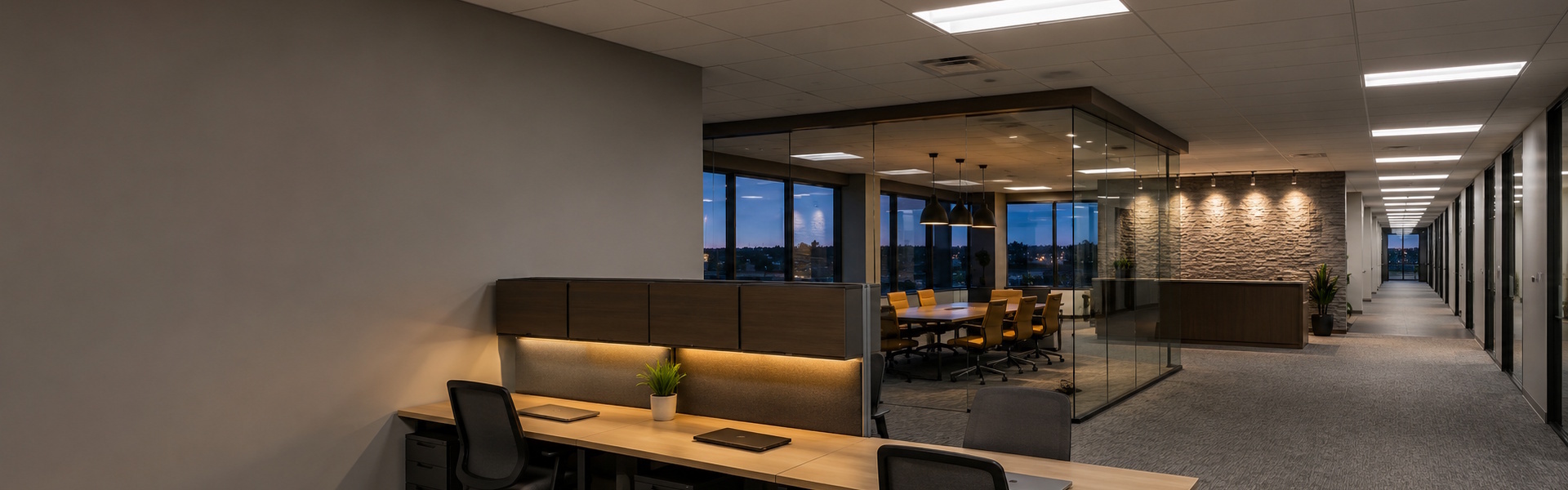
Lighting in a commercial space should be focused on helping employees get their jobs done in a comfortable and energizing atmosphere. Lighting also sets the mood and will affect how others perceive your company when they visit your office. Throughout these commercial lighting guide articles, we'll cover a number of different spaces that would normally be found in a typical commercial property and discuss what the requirements and recommendations are for getting those spaces lit properly.
Since there are many different types of commercial spaces, we'll try to cover each one in their own application guide. This article will cover common design criteria that applies to all commercial lighting applications.
A Layered Approach to Commercial Lighting
Any lighting project is enhanced by thinking of the overall lighting plan in terms of layers of light. There are four layers that should be considered in order to accomplish a successful lighting plan, and commercial lighting projects are no different. These four lighting types are:
- General or ambient lighting
- Task lighting
- Accent lighting
- Decorative lighting
General Lighting for Commercial Spaces
General lighting forms the foundation of the lighting plan and provides the main illumination for the overall space. This layer of light is used as the base layer upon which other layers will build on. The main use of this layer of light is to provide general orientation for occupants while not at specific task stations.
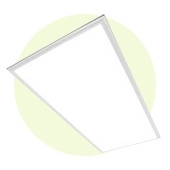
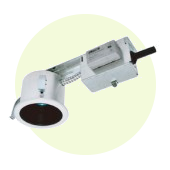
In commercial spaces, the fixtures used to provide general illumination will depend on the ceiling type in the space. For example, there are many millions of square feet of office space that have acoustic grid ceilings. This would dictate that the lighting fixtures that are used in these spaces have to be compatible with T-grid ceilings. Many of these offices use lay-in fixtures for their general lighting needs. Others may use recessed cans or recessed linear fixtures that are compatible with acoustic ceilings.
843
Browse all LED Panel Lights and Lay-In Troffers
Task Lighting for Employee Performance
While general lighting sets the base layer for a space, task lighting illuminates specific work surfaces. In a cubicle or open-office workstation, that usually means under-cabinet, under-shelf, or puck lighting aimed at the desk. Reception desks, service counters, and bar tops solve the same problem with focused commercial pendants or track lighting aimed down at the work area.
Task lighting should match the activity and run at a higher level than the surrounding ambient light. A 3:1 task-to-ambient ratio is the typical target for proper contrast.
735
Browse all Task and Accent Lighting
Accent Lighting for Interest
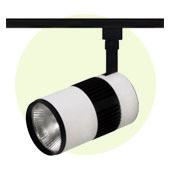
Accent lighting is used to highlight design features of the space that add interest and improve the overall aesthetics of the facility. This is usually accomplished with track fixtures or recessed housings that can be directed at a specific point of interest. This layer of light is more directional and uses point sources of light with narrow distribution focused on the intended accent piece.
The most common accent lighting might be a simple recessed gimbal fixture aimed at a frame on a wall, but surfaces with different textures or colors can also be focal points for accent lighting. Wall wash fixtures can also be used to highlight the perimeter of a space and provide vertical illumination. This practice helps the space feel bigger and more spacious.
If the designer has included a feature wall with a texture or relief to it, wall grazing fixtures can be used to great effect to add drama and bring out the texture of the fixture. These fixtures are placed close to the wall either in a cove above or shining up from the floor below. The light catches the edges of the texture and creates very dramatic shadows on the surface.
838
Browse all Track Lighting
Decorative Commercial Lighting
Decorative lighting fixtures can be thought of as additional furniture designed to complement the space. Think of table lamps or decorative wall sconces. This layer doesn't always contribute significantly to the illuminance of the space since the light sources may not put out a lot of lumens, but they are important nonetheless.
When used correctly, decorative lighting fixtures can serve dual purpose in commercial spaces. For example, commercial pendants can provide both task lighting and serve as a decorative design elements themselves. Many companies use their brand colors in what would otherwise be plain fixtures to reinforce their image and provide a decorative touch to their office areas.
Color Temperature for Commercial Spaces
While many people can't quite put their finger on what it is about a space that determines how they feel about it, most will agree that the lighting plays a big part in that decision. One of the easiest components of a lighting plan to quantify for non-lighting folks is the color temperature of the light sources that are used.
Color temperature, measured in degrees Kelvin, describes the perceived color of the light given off by a light source. We have an entire article dedicated to discussing color temperature in more depth and I encourage you to read it. For the purpose of this lighting guide, we'll say that color temperature plays a big part in the perceived mood or atmosphere of a space. For commercial spaces, the typical color temperature specified by designers is between 3000K and 4000K. The lower the number, the warmer or closer to yellow, the light appears.
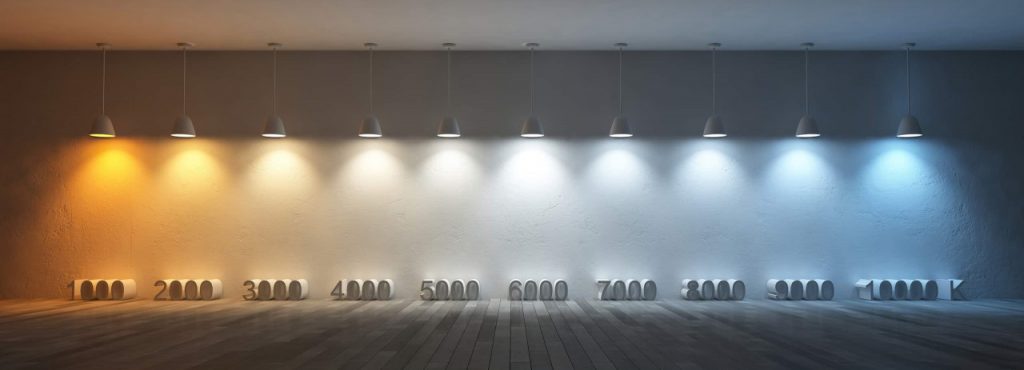
Certain types of offices can benefit from a warm color temperature, for instance, lawyers and psychologists offices. While a cooler temperature may be better for task work or to increase productivity.
Light Level Requirements for Commercial Buildings
The Illuminating Engineers Society publishes recommended light levels for many different types of spaces. These light levels are based on the type of activity performed in the space and can vary based on the age of the occupants. Generally speaking, the recommended light levels for a commercial office building are between 30 and 50 foot-candles (FC). In general, activities with low contrast, small items, or detailed tasks require more light than those with greater contrast, larger items, or less detail. The following table provides details for different spaces and activities that may be performed in commercial buildings.
| Room Type |
Light Level in foot-candles |
| Break Room or Cafeteria |
10-30 FC |
| Classroom or Training Room |
30-50 FC |
| Conference Room |
30-50 FC |
| Copy/Print Room |
10-30 FC |
| Corridors and Hallways |
5-10 FC |
| Exercise or Weight Room |
20-30 FC |
| Filing Room |
10-30 FC |
| Information Desk |
15-30 FC |
| Kitchen or Food Prep Area |
30-75 FC |
| Lobby or Reception |
20-30 FC |
| Locker Room |
10-30 FC |
| Mechanical Room |
20-50 FC |
| Office, Open Plan |
30-50 FC |
| Office, Private |
30-50 FC |
| Receiving or Loading Dock |
10-30 FC |
| Restroom |
10-30 FC |
| Stairway |
5-10 FC |
| Storage Room |
5-20 FC |
| Video Conferencing |
15-30 FC |
We'll discuss several of these space types in more detail below.
Lobby or Reception Areas
The lobby or reception area of a commercial space is crucial in making a positive first impression for your visitors. Use lighting in this space to convey the image you want to project. This area will usually require task lighting for the receptionist as well as general lighting for the waiting area.
Offices, Open or Private
Open plan office spaces pose many challenges for designers. These areas usually have many tasks being completed without clear differentiation of boundaries. Rather than over-light a general open plan office area, consider lower ambient light levels and rely on increased task lighting on the different work areas. This has the added benefit of lowering energy use but it must be balanced with providing a space that allows employees to be productive and stay alert.
Private offices have the benefit of individual control of the overhead general lighting fixtures. If an occupant finds the 30-50 FC light levels too bright, they are free to turn the general lighting fixtures off and supplement with task or decorative lighting fixtures that suit their needs.
Conference Rooms
Lighting in the conference room has to be very versatile. The fixtures that are usually used for general illumination throughout the entire facility may not be dimmable, but for conference rooms, that is a critical function. Everything from projectors to multimedia presentations will require dynamic control of the lighting in the conference room. It is not uncommon to have multiple fixture types to provide ambient lighting in a flexible manner in this space.
Hallways and Corridors
Hallways are the arteries that connect the different work areas of your commercial building. These should be lit appropriately to provide general orientation and not cause the eye to strain to adapt when travelling from one area to another.
Plan Your Commercial Lighting Project
Commercial lighting decisions usually span fixtures, controls, code compliance, and layout at the same time. The RelightDepot commercial lighting team can help you spec the right combination, model ROI against your utility rate, and surface DLC rebate options before you commit. We work with electrical contractors, facility managers, and building owners on projects of every size.
For the fastest quote, share your fixture counts (or square footage and ceiling type), the existing fixtures you're replacing, and your ZIP code so we can pull your local utility rebate options. Request a quote, call 888-548-6387, or email [email protected].