
Emergency-Ready T8 LED Lamps for Code Compliance and Simplified Retrofits
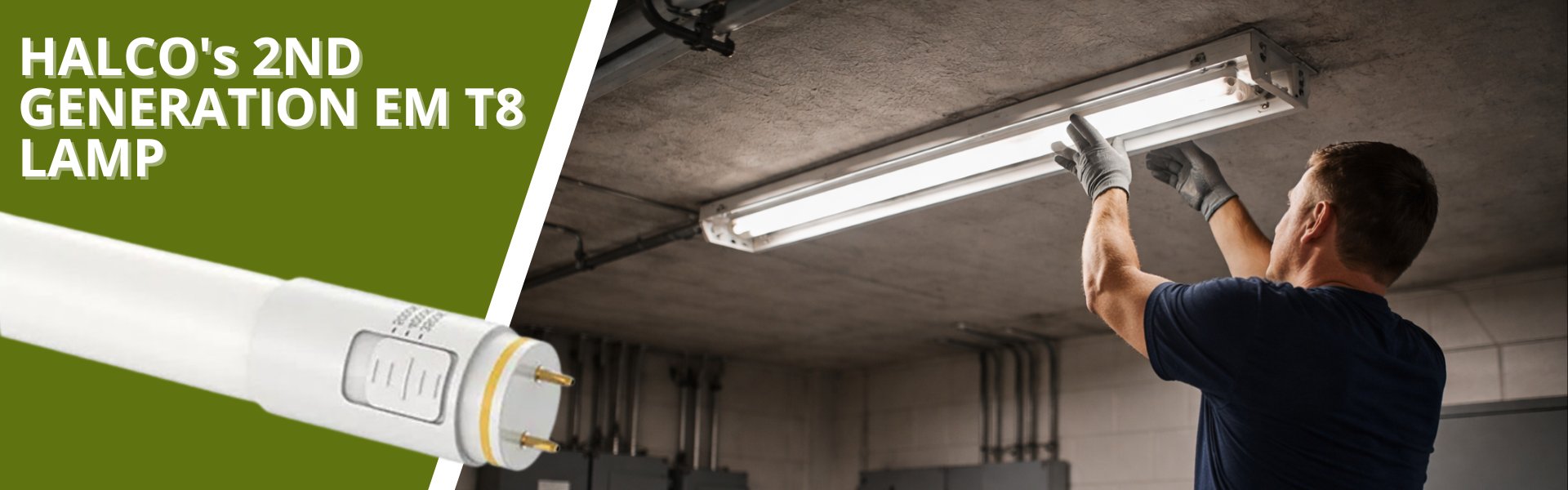
Emergency lighting issues tend to surface late. It usually comes up during inspection, turnover, or when a retrofit exposes gaps in the existing setup. This is common across commercial interiors, schools, healthcare, and tenant improvements, where fluorescent T8 systems are still in place.
Separating emergency drivers and battery packs adds steps during installation and creates more points to manage later. Emergency-ready T8 lamps simplify that. A ballast-bypass lamp with an integrated battery runs in both normal and emergency modes in a single unit, helping keep retrofits moving without adding extra components.

Where Emergency T8 Lamps Show Up on Real Projects
Emergency T8 lamps show up mostly on retrofit work. Existing fluorescent fixtures stay in place, and the goal is to bring the system into compliance without opening ceilings or adding new hardware. This is common in tenant improvements, school upgrades, and healthcare renovations, where emergency circuits already exist but the lighting is being converted to LED.
They also come up during maintenance when the original emergency setup is unclear or no longer supported. Instead of tracing drivers or replacing battery packs, crews look for a solution that works within the fixture that is already there. In these cases, the lamp is selected because it simplifies compliance within existing conditions.
How Emergency Compliance Decisions Actually Get Made
Emergency lighting issues typically surface during inspection, punch, or scope review. The electrical contractor identifies the issue, the GC coordinates correction, and the owner signs off when cost or schedule impact is involved.
Inspectors focus on operation, duration, and proper installation tied to UL 924 requirements. Requirements vary by jurisdiction and building type. The objective is minimum life safety compliance, not lighting performance or design intent.
Installation Reality: Ballast Bypass and Emergency Integration
Installation stays straightforward, but coordination still matters. These lamps run as Type B, so crews bypass the ballast and wire directly to line voltage. The integrated battery eliminates the need for a separate emergency driver or pack.
What helps is fewer components and a simpler wiring path. What slows installs down is verifying the emergency circuit, confirming constant power, and maintaining access for testing. Labeling and circuit identification still need to be correct, or they show up later as inspection comments.
Configuration That Actually Matters in the Field
Configuration only matters when it supports install completion without rework. Most decisions happen during installation or turnover.
CCT, from 3000K to 6500K, is set based on how the space reads once energized. Lumen and wattage settings are adjusted to match existing light levels or circuit limits, especially in retrofit conditions. Fixture length follows the existing layout; 2-foot or 4-foot is dictated by what is already installed.
Emergency performance is where inspection risk sits. The 500-lumen output aligns with typical egress expectations, but local requirements still apply. The 90-minute runtime aligns with UL 924 expectations used during inspection testing.
Specs only matter when they support retrofit constraints and pass inspection. Everything else is typically set in the field.

Code Compliance vs Field Use
Inspection scope stays limited. Inspectors verify listing, operation, duration, and correct wiring tied to emergency requirements. This includes UL 924 compliance and confirmation that the lamp switches to battery during power loss. Requirements vary by jurisdiction.
They do not evaluate CCT, normal output, or visual consistency. Those decisions are made in the field by the contractor and owner during installation and walkthroughs.
Most inspection comments relate to wiring, labeling, or failure to switch into emergency mode.
Long-Term Use: What Facility Teams Actually Care About
After turnover, the focus shifts to maintenance. Facility teams prioritize simple replacements without tracking separate emergency components across buildings.
A single lamp type reduces stocking complexity and keeps the emergency function tied to the lamp itself. This reduces troubleshooting during outages and lowers service calls tied to failed components inside fixtures.
Over time, fewer parts mean fewer failure points once the job is closed.

Explore Emergency T8 LED Lamps at RelightDepot
RelightDepot supplies emergency T8 LED lamps designed for retrofit projects where fixtures remain in place, and compliance must still be met. Integrated emergency operation reduces the need for separate drivers or battery packs.
We support contractors, electricians, and facility teams with product comparisons, compliance guidance, and project takeoffs for multi-site work.
Email [email protected] or call 888-548-6387 to speak with a lighting specialist.


Latest Blog Updates

Product Spotlight: Westgate LLVT 4ft LED Vapor Tight with Selectable Wattage and CCT
Most vapor tight jobs don't get much attention on the drawings, and they still end up causing proble...
MaxLite TRK Tunable White Troffer Retrofit Kits
Most commercial buildings still have a ceiling full of 2x4 and 2x2 lay-in troffers with sound housin...
EiKO HBX3 and BAYE3 Round High Bay Promo for Warehouse and Industrial Retrofits
Most high bay retrofits start with a fixture count, not a photometric plan. Someone walks the floor,...
Enerlites October Promo: Surge, TR Devices and Power Inlets Closes October 31
Enerlites has promo pricing on four devices most of us put in on every service upgrade and finish tr...

Specifying the LRS-O2 Wall Sconce for Entries, Breezeways, and Site Work
The LRS-O Series is Westgate's field-selectable up-and-down wall sconce platform, built for multifam...
MaxLite DSKL Series: Color-Selectable Disk Lights, One SKU for Five CCTs
MaxLite's DSKL Series Disk Light ships in two sizes on one platform: a 4 inch, 10W model and a 6 inc...