
Westgate SLE-EL Step Lights: Voltage, Finish, and CCT Guide
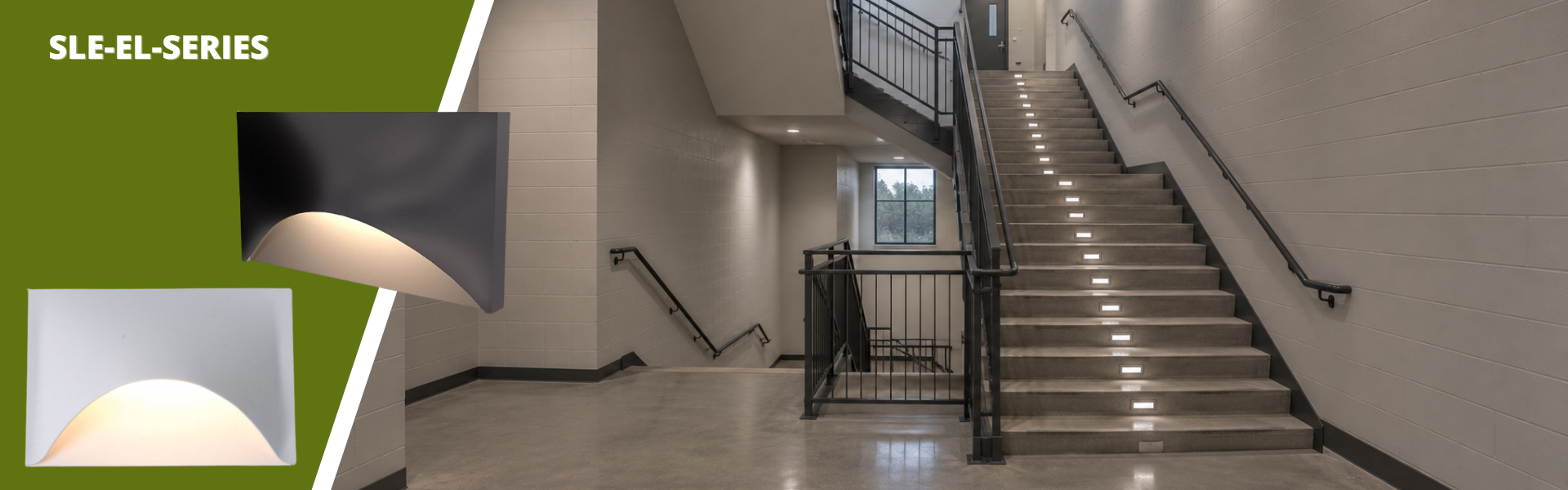
The SLE-EL step light ships as five fixtures in one box. Set the field-select switch to 2700K, 3000K, 3500K, 4000K, or 5000K on install day, on the same 3W integrated LED module, IP65 wet-location polycarbonate housing, and 120-degree beam that every SKU in the line shares. Get the CCT wrong on a building, and fixing it is a two-second flip of a switch, not a return authorization.
Two kinds of orders keep this series moving: a facility team standardizing stair lighting across a multifamily portfolio where every building was built to a slightly different CCT, and an electrical contractor bidding new construction that needs a 12V transformer circuit for the exterior breezeways and a 120V branch circuit for the interior egress stairs, both off the same submittal. The SLE-EL Step Light Series covers both voltage platforms, ships in white (90 lumens) or oil-rubbed bronze (50 lumens), and carries a 50,000-hour rating across a -40°F to 104°F range.

One platform, two voltage options
The four SKUs in this series aren't four different products; they're one platform split two ways: voltage (12V or 120V) and finish (white or oil-rubbed bronze). The housing, the driver, the lens, and the CCT range stay identical across all four, so one cut sheet and one submittal cover a project that mixes both voltage types, instead of running a second product through approval.
Because the LED module is integrated rather than a replaceable lamp in a socket, there's no relamping cycle to plan for. When a fixture reaches end of life or takes physical damage from a plow, a dropped tool, or road salt working into a seam over a few winters, the whole unit gets swapped, not just an emitter. That's worth flagging to whoever owns the maintenance budget: fewer parts to stock and no lamp inventory to manage, but the unit cost of a failure is the full fixture, not a low-cost replacement lamp.
Pro Tip
Field-selectable CCT means one SKU covers five color temperatures. That's fewer part numbers on the truck and one less way to end up with a callback because half the risers came in at 3000K and half at 4000K. Set the dial to match the adjacent fixture schedule on site, not what shipped from the warehouse.
The range
All four SKUs run the same 3W output and 120-degree beam. Voltage and finish are the two variables that actually change the spec.
| SKU | Voltage | Finish | Lumens | CCT (field-select) | Wattage | IP Rating |
|---|---|---|---|---|---|---|
| SLE-EL-12V-MCT5-WH | 12V | White | 90 | 2700K to 5000K | 3W | IP65 |
| SLE-EL-12V-MCT5-ORB | 12V | Oil-Rubbed Bronze | 50 | 2700K to 5000K | 3W | IP65 |
| SLE-EL-120V-MCT5-WH | 120V | White | 90 | 2700K to 5000K | 3W | IP65 |
| SLE-EL-120V-MCT5-ORB | 120V | Oil-Rubbed Bronze | 50 | 2700K to 5000K | 3W | IP65 |
The full family, along with the rest of RelightDepot's step and riser lighting, is stocked and ready to quote.
Browse all Westgate SLE-EL series
Matching voltage and finish to the job
The 12V versus 120V call usually isn't made on the fly; it comes out of what's already feeding the stair. If the project already runs a low-voltage transformer for landscape or step lighting, which is common on multifamily exterior stairs, parking structure egress stairs, and hospitality hardscape, the 12V SLE-EL series taps into that existing circuit and Class 2 wiring. If there's no low-voltage infrastructure and the run is going straight into a standard branch circuit with local switching, the 120V version is the simpler path. On new construction, that call sits with the electrical designer or engineer during the spec phase. On a retrofit or MRO job, it usually falls to the contractor or facility manager to look at what conduit and conductor are already in the wall and decide from there.
Finish is a designer or owner decision, not a field call, but it carries a real spec consequence worth flagging before the order goes in: the white housing outputs 90 lumens and the oil-rubbed bronze outputs 50. That's not a rounding difference. If bronze is specified for a dark stair run, check the fixture spacing against the lower lumen package before assuming the white-finish layout carries over. A layout that works at one fixture every other riser in white may need tighter spacing in bronze to hold the same light levels.
Housing material is worth a second thought too, even though it rarely gets called out separately in the spec. Polycarbonate resists the pitting and finish failure that die-cast aluminum step lights can pick up in coastal air or heavy deicer-salt exposure, which is one reason polycarbonate and composite housings show up alongside die-cast aluminum across a lot of the step light category. The trade-off worth asking the manufacturer rep about on a long-life installation with heavy southern or high-altitude sun exposure is whether the resin is UV-stabilized. Unstabilized polycarbonate can yellow and haze over years of direct UV, which shows up as a maintenance complaint long after the install crew has moved on.

Real-world applications
Where a series like this actually gets specified and bought tends to fall into a handful of recurring scenarios, and each one points toward a different configuration:
- Garden-style and mid-rise multifamily exterior stairs and breezeways. This is almost always the retrofit case. An existing low-voltage landscape transformer already feeds path lights and step lights around the property, so the 12V SLE-EL slots into that same circuit without adding branch circuits or panel capacity.
- Parking structure egress stairwells. Interior precast concrete stairs in a parking garage are commonly on a 120V lighting panel already, switched or on a photocell and timer with the rest of the garage lighting, which points toward the 120V SKU and a straightforward branch circuit tie-in.
- Hospitality exterior stairs and courtyard steps. Owners and designers on hospitality work tend to care more about finish, since bronze reads better against certain facades, and they're often willing to accept the lower 50-lumen output if the layout is designed around it from the start rather than value-engineered in after the fact.
- Interior commercial and office building stairs, particularly secondary or feature stairs that aren't the primary code-mandated egress path. These commonly run 120V off the building's house panel, and the finish and CCT match to the rest of the interior fixture package is usually the designer's or architect's call. The contractor's piece is confirming the specified configuration is an in-stock SKU before it goes into the bid.
Installation considerations
The low-profile integrated design is built to sit inside a step riser or wall perimeter without a deep back box, which is the main reason this series works on retrofit jobs where riser depth is fixed and non-negotiable. A few things to check before rough-in on either platform:
- Confirm riser or wall depth against the fixture's housing before the concrete pour or before cutting into an existing masonry riser. There's no fixing a depth problem after the form is set.
- Confirm whether the unit is a single integrated housing that sets directly into a cored or cut opening, or whether Westgate offers a separate rough-in bracket for new-pour installs. The spec sheet for this series doesn't break out a two-piece rough-in-and-trim system the way some step light lines do, so get that confirmed with the rep before the concrete crew sets forms.
- On 12V runs, account for voltage drop over the length of the stair. A long run off one transformer tap can leave the fixtures at the far end noticeably dimmer than the ones closest to the source. Size the conductor or split the run across taps accordingly.
- On 120V runs, verify whether the branch circuit needs GFCI protection for the wet-location application. That call depends on which edition of the National Electrical Code and which local amendment is in effect, so treat it as a field verification with the inspector or engineer of record, not an assumption carried over from the last job.
- Place the transformer for 12V circuits somewhere serviceable, and check mounting and wiring hardware compatibility before ordering. A transformer buried behind finished masonry or landscaping turns a five-minute troubleshooting call into a demo job.
- Operating range is rated -40°F to 104°F, which covers most U.S. climates without a special cold-weather spec. Worth a second look if the stair run sits somewhere with prolonged sub-zero winters or sustained desert summer heat.
- In coastal or high-deicer-use climates, plan on the frosted lens picking up salt film and road grime faster than an interior fixture would. IP65 keeps water out; it doesn't keep the lens clean.
Pro Tip
Measure the actual riser or wall cavity depth on site before finalizing the order, especially on a retrofit into existing masonry. The low-profile housing is designed for tight cavities, but "low-profile" still has a real dimension, and a field measurement beats a guess off the plan set.
Sourcing across the line
All four SKUs are cataloged as standard stock items, not special-order configurations, which keeps lead time predictable across a multi-building rollout. Westgate has also updated Season 2 pricing on the 12V line, so if you're carrying this series on a current bid or a repeat retrofit order, it's worth checking current published pricing with your RelightDepot contact before locking numbers into a proposal.
Because the CCT is field-selectable rather than fixed, you're also managing four part numbers instead of twenty across the CCT range, which simplifies inventory on a job with mixed voltage requirements across buildings or phases. On the rebate side, this series isn't showing a DLC listing on the spec sheet referenced here, which is consistent with its low wattage; accent and step lighting at this wattage isn't commonly seen on DLC's qualified product lists, though it's worth confirming directly rather than assuming either way. If a specific project has a utility rebate requirement built into the budget, confirm DLC status with Westgate before counting on incentive dollars in a proposal.

Explore the SLE-EL Step Light Series at RelightDepot
The SLE-EL Step Light Series is available through RelightDepot in 12V and 120V, with field-selectable 2700K, 3000K, 3500K, 4000K, and 5000K color temperature on every model, in white or oil-rubbed bronze finishes. The 12V models tie into a standard low-voltage transformer and Class 2 wiring, and the 120V models wire into a standard branch circuit, so whichever platform the existing conditions call for is in stock and ready to configure by finish and CCT. Log into your Hotsheet for current pricing.
Our team works with electrical contractors and facility teams to support takeoffs, voltage and finish configuration questions, and lead-time questions for step and stair lighting packages.
Email [email protected] or call 888-548-6387 to speak with a lighting specialist.
Related Categories
Frequently asked questions
Stuck on something? We're here to help with all your questions and answers in one place.
Latest Blog Updates

Product Spotlight: Westgate LLVT 4ft LED Vapor Tight with Selectable Wattage and CCT
Most vapor tight jobs don't get much attention on the drawings, and they still end up causing proble...

MaxLite TRK Tunable White Troffer Retrofit Kits
Most commercial buildings still have a ceiling full of 2x4 and 2x2 lay-in troffers with sound housin...

EiKO HBX3 and BAYE3 Round High Bay Promo for Warehouse and Industrial Retrofits
Most high bay retrofits start with a fixture count, not a photometric plan. Someone walks the floor,...

Enerlites October Promo: Surge, TR Devices and Power Inlets Closes October 31
Enerlites has promo pricing on four devices most of us put in on every service upgrade and finish tr...
Specifying the LRS-O2 Wall Sconce for Entries, Breezeways, and Site Work
The LRS-O Series is Westgate's field-selectable up-and-down wall sconce platform, built for multifam...

MaxLite DSKL Series: Color-Selectable Disk Lights, One SKU for Five CCTs
MaxLite's DSKL Series Disk Light ships in two sizes on one platform: a 4 inch, 10W model and a 6 inc...