
HURON G4 Linear Fixtures
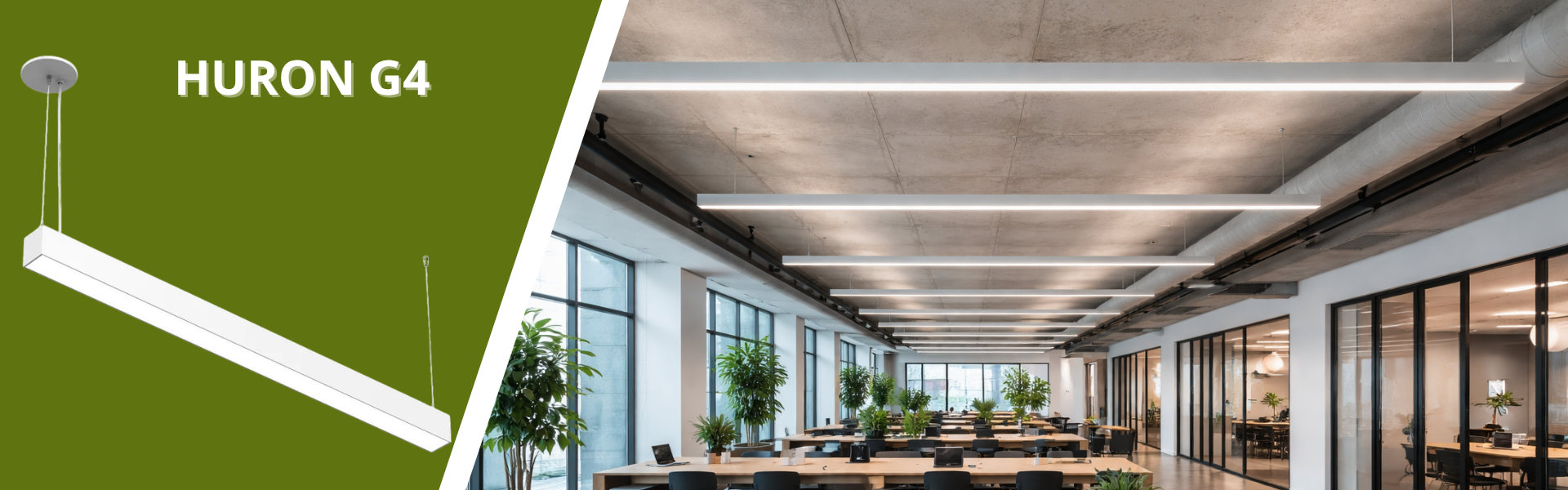
HURON G4 linear fixtures appear on projects where continuous runs are already defined in the lighting plans. Installation centers on maintaining run alignment, managing junction box locations, and tying the system into the planned circuits and controls.
The Huron G4 update matters mainly during submittals, value engineering, or replacement of earlier HURON installations. The changes focus on installing practicality. The wider integrated uplight strip and tool-free removal simplify access when crews need to service or adjust the fixture without disturbing the full run.

Where HURON Linear Systems Get Installed in Practice
HURON linear systems typically appear in commercial interiors where the lighting plan calls for uninterrupted runs across large areas. Offices, corridors, open ceilings, and tenant improvement projects are common installations.
Run length, suspension points, and junction box placement drive the installation. Continuous systems often span multiple fixture sections, so alignment and connection tolerances matter more than individual fixture placement. In open ceilings, conduit routing and suspension hardware control final positioning. In finished ceilings, grid layout and box locations determine how cleanly runs align.
The field task is straightforward: install the runs as drawn and resolve minor alignment issues where building conditions differ from the plans.
What Actually Changed from G3 to G4
The move from HURON G3 to Huron G4 focuses on installation access and maintenance, not a change in layout or lighting design. The fixture role in the plans stays the same. The differences show up during installation, punch, and service work.
The G4 uses a wider integrated uplight strip. Earlier G3 versions used a more segmented uplight configuration. The wider strip simplifies the internal layout and provides a more continuous uplight source across the fixture.
Service access also improved. On the G4, the uplight strip removes without tools. Crews can access internal components faster when troubleshooting or servicing the fixture. Earlier G3 versions usually required additional steps to reach the same area.
Adjustment flexibility is broader on the G4. The fixture supports independent up and down lighting control with selectable settings. Earlier G3 configurations offered fewer adjustment options depending on the model installed.
Continuous runs remain part of the system concept. The G4 improves how sections connect across longer runs. That reduces alignment adjustments during install and helps crews maintain consistent spacing across multiple fixtures.
These changes matter during installation, punch walkthroughs, and maintenance. Contractors benefit from faster access and fewer adjustments. Facility teams benefit from simpler service when components need attention.
Why Adjustable Up and Down Lighting Gets Used on Site
Independent control of uplight and downlight becomes relevant after the system is energized. The fixture and layout are already defined in the plans. Final adjustment happens during commissioning or the project walkthrough.
Separate control allows crews to adjust uplight and downlight levels without replacing fixtures or changing wiring. The adjustment is usually small. It helps balance the space once ceilings, finishes, and furniture are in place.
Electrical contractors typically handle these adjustments while confirming control operation. Owners or project managers may review the space during the walkthrough and request minor changes.
This is not a design change. It is a field adjustment used to close out the job and align the lighting with the finished space.

Field-Driven Specs That Influence Installation
Specifications only matter when they help crews resolve installation constraints or avoid coordination issues.
Selectable wattage from 25W to 50W allows crews to stay within circuit limits while maintaining consistent output across a run. Selectable CCT, from 3000K to 6500K, is usually finalized during the walkthrough to keep adjacent spaces visually consistent.
The fixture operates on standard 120 to 277 volt input and supports 0–10V dimming. Both match common commercial branch circuits and lighting control systems used in most buildings.
Continuous run capability affects installation more than lighting performance. Long runs require consistent spacing and clean alignment across fixture sections. Systems designed for continuous assembly reduce time spent correcting joints during installation.
Inspectors verify listing, wiring, and installation compliance. Wattage selection, CCT adjustments, and dimming setup are field decisions made during installation and commissioning.
Installation Coordination for Continuous Linear Runs
Continuous linear runs require layout control during installation. The challenge is not wiring. The challenge is keeping long runs straight and consistent across multiple sections.
Crews focus on alignment, joint spacing, and suspension placement. Small deviations show once the system is energized. That is why layout marks and suspension spacing are checked during installation.
Ceiling type also affects installation. Open ceilings depend on suspension points and conduit routing. Grid ceilings depend on junction box placement and grid alignment.
Most corrections appear during the walkthrough, when the full run is visible across the space.
Inspection Scope vs Field Adjustments
Inspectors focus on electrical compliance. The typical review covers fixture listing, labeling, wiring methods, and mounting.
They do not evaluate uplight and downlight balance. They do not check CCT selection, wattage settings, or visual uniformity across runs. Those items fall outside the normal inspection scope.
Field teams handle the final adjustments. Electrical contractors confirm dimming operation and control response. Minor alignment corrections may happen during the walkthrough once the system is energized.
Inspection comments usually relate to wiring, mounting, or labeling. Requirements can vary by jurisdiction.

Explore HURON Linear Fixtures at RelightDepot
RelightDepot provides linear lighting systems used on commercial projects that require continuous runs across offices, corridors, and tenant improvement spaces. The HURON G4 series supports field coordination with tool-less uplight access, selectable output, and independent up and down control.
Contractors typically review these fixtures during submittals when confirming run lengths, mounting approach, and control compatibility.
For availability, project sourcing, or specification questions, contact [email protected] or call 888-548-6387.
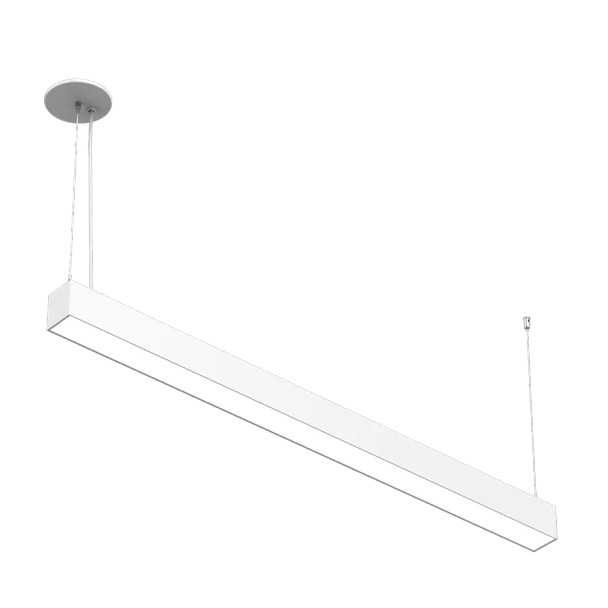
ATG Electronics Huron G4 LIFI 4FT, 50W/40W/35W/30W/25W Selectable, CCT/Power/Distribution Selectable, Indirect Light, Gen 4
- SKU: ATG-LIFI4-50-P1U-G4
- MPN: LIFI4-50-P1U-G4
Quick Overview
The ATG Electronics Huron G4 LIFI4-50-P1U-G4 is a 4-foot, tri-selectable architectural linear fixture designed for ultimate flexibility in commercial and retail lighting. With selectable wattage, color temperature, and light distribution, this fixture adapts to any environment,...
Latest Blog Updates

Product Spotlight: Westgate LLVT 4ft LED Vapor Tight with Selectable Wattage and CCT
Most vapor tight jobs don't get much attention on the drawings, and they still end up causing proble...
MaxLite TRK Tunable White Troffer Retrofit Kits
Most commercial buildings still have a ceiling full of 2x4 and 2x2 lay-in troffers with sound housin...

EiKO HBX3 and BAYE3 Round High Bay Promo for Warehouse and Industrial Retrofits
Most high bay retrofits start with a fixture count, not a photometric plan. Someone walks the floor,...

Enerlites October Promo: Surge, TR Devices and Power Inlets Closes October 31
Enerlites has promo pricing on four devices most of us put in on every service upgrade and finish tr...

Specifying the LRS-O2 Wall Sconce for Entries, Breezeways, and Site Work
The LRS-O Series is Westgate's field-selectable up-and-down wall sconce platform, built for multifam...
MaxLite DSKL Series: Color-Selectable Disk Lights, One SKU for Five CCTs
MaxLite's DSKL Series Disk Light ships in two sizes on one platform: a 4 inch, 10W model and a 6 inc...