
Surface Mount Disk Fixtures with PIR Motion Sensors for Commercial Projects
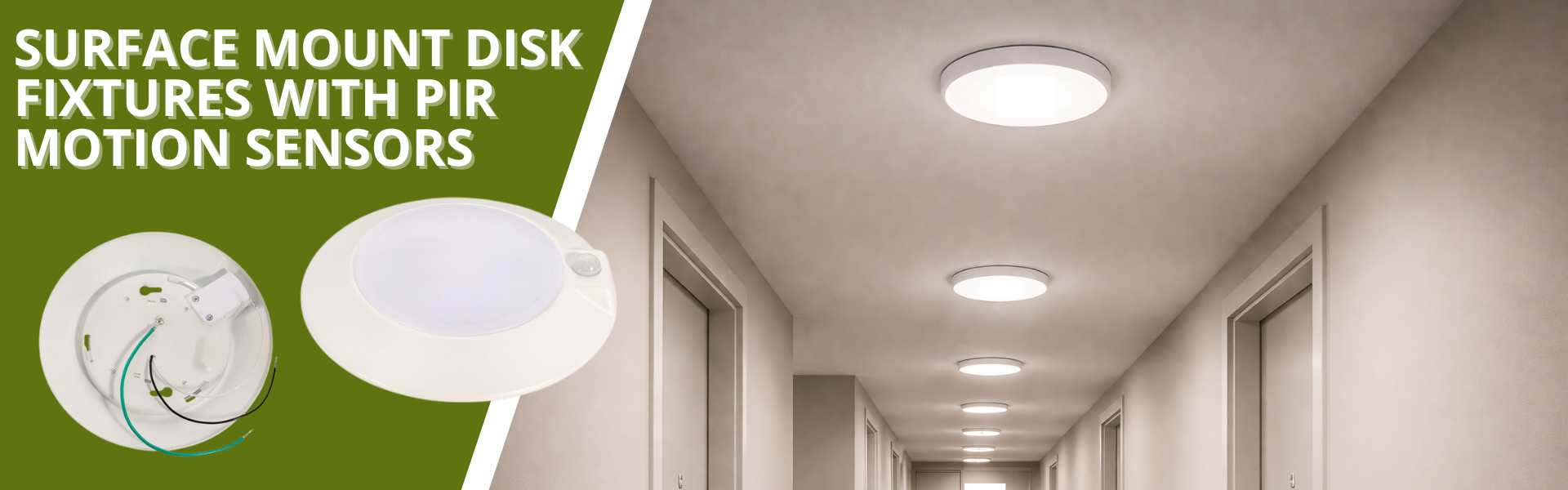
In many commercial projects, lighting layout is already constrained before installation begins. Junction box locations, ceiling types, and corridor configurations often dictate what can be installed without rework. In these conditions, surface-mounted disk fixtures with integrated PIR sensors are used to simplify both installation and basic occupancy control.
From a field standpoint, the priority is predictable performance. Contractors evaluate mounting conditions, line of sight, and how the space will actually be used. If one fixture can mount cleanly to an existing box and provide a consistent response without creating nuisance switching, it reduces both install time and post-turnover adjustments.
Where Low-Profile Ceiling Fixtures with Sensors Make Sense
These fixtures are typically used where adding separate controls does not justify the extra coordination. Multifamily corridors and unit entries are common examples, where teams look to handle both illumination and occupancy response from a single location.
They also fit in storage, utility, and back-of-house spaces where layout simplicity matters more than layered control strategies. In these areas, reducing device count and maintaining consistent installation across repeat spaces often drives the decision.
Substitutions usually happen during value engineering or late coordination. When recessed or larger fixtures require more field work than the space justifies, low-profile surface options are used to stay on schedule and within budget. Standardizing across these spaces also improves install pace and simplifies future maintenance.

PIR Sensor Behavior in Real Spaces
PIR performance depends on line of sight. In straight corridors or open layouts, response is generally consistent. At turns, intersections, or segmented paths, coverage drops and lights may shut off sooner than expected.
Obstructions such as doors, partial walls, and shelves introduce additional gaps. These conditions are not always obvious on drawings, but show up after occupancy when movement patterns become clear.
PIR is typically a design or energy choice, not a code requirement. Inspectors verify switching function where required, but they do not evaluate detection coverage or response quality. Any performance issues are addressed in the field after installation.
Installation Considerations in New Work vs Retrofit
In new construction, fixture placement is part of early coordination. Junction boxes are set during rough-in, and ceiling layouts are aligned with other trades before installation starts. That allows sensor-integrated fixtures to be positioned for coverage, not just power. The installation is more predictable when the layout and mounting conditions are resolved upfront.
In retrofit and tenant improvement work, existing junction boxes usually dictate placement. Relocating boxes adds cost and ceiling repair, so it is often avoided. Surface-mounted disks are used to work within those constraints, but coverage depends on where the box is. If placement is not ideal, contractors either accept limited detection or add fixtures to compensate.
Across both scenarios, the decision comes down to labor and disruption. New work allows coordination before installation. Retrofit work requires working around what is already there. The same fixture can be used in both, but performance depends on how much control the project has over layout.
Fixture Selection: What Actually Gets Reviewed During Submittals
Contractors and engineers confirm fixture size relative to ceiling height and corridor width, choosing from 5.5", 7", 9", or 12" disks to balance coverage. CCT choices follow project spec or field preference. Sensor hold times are set to match occupancy patterns and corridor length, avoiding nuisance switching. Lumen output is checked against ceiling height and spacing for consistent illumination without over-lighting.
Decisions happen during submittals or value engineering. Contractors verify installation practicality, facility managers confirm maintenance access, and owners balance performance and energy efficiency. This collaboration ensures the selected fixtures meet project requirements and minimize rework.

Avoiding Common Field Issues with Sensor-Integrated Fixtures
Lights may switch off too quickly if hold times are mismatched to traffic patterns. Segmented corridors or rooms with partitions can create dead zones. Relying on a single fixture for a large space may produce uneven coverage or nuisance switching.
Contractors mitigate these issues by confirming line-of-sight coverage, adjusting hold times, and pre-testing in mock-ups or temporarily powered circuits. Clear mounting locations and junction box access help minimize post-install corrections and callbacks.
Using a Single Fixture Type Across Multiple Spaces
Standardizing on a single disk fixture across corridors, storage areas, and classrooms simplifies coordination. It reduces SKUs, ensures consistent installation, and eases maintenance. Replacements and adjustments are faster when the same fixture type is used throughout the building.
This approach supports multiple fixture sizes and selectable CCTs. Integrated sensors remain practical because placement and hold times are reviewed once and applied consistently, minimizing variability. Planning with one fixture type enhances reliability and simplifies facility operations.

Explore Surface Mount Disk Fixtures at RelightDepot
RelightDepot offers surface-mount disk fixtures with integrated PIR sensors for corridors, multifamily units, storage areas, and retrofit ceilings. Contractors can compare sizes, CCTs, and sensor settings while building fixture schedules and planning layouts.
Centralizing these fixtures simplifies line-of-sight planning, mounting decisions, and long-term maintenance. It also helps coordinate multiple spaces efficiently and reduces adjustments once ceilings are installed.
Browse the Surface Mount Disk collection or contact our team for assistance.
Email support at [email protected] or 888-548-6387 to speak with a lighting specialist.
Shop the Series
-
-
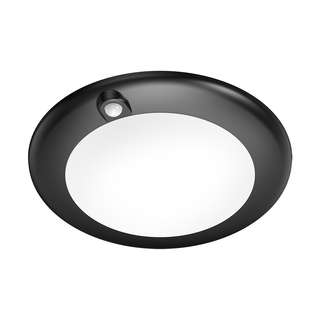
6" Round Surface Mount Fixture, PIR Sensor, 15W, 5CCT, CRI 90+
LLL-DL205S-6-15W-5CCT-R90-0082-BK
$23.15 -
-
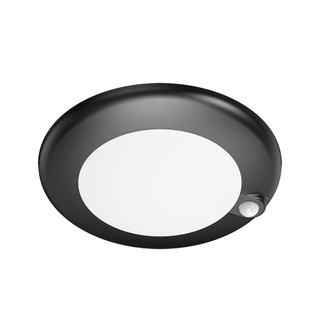
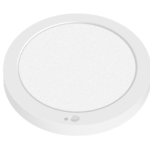
4" Round Surface Mount Fixture with PIR Sensor, Black Trim, 10W, 5CCT, CRI 90+
LLL-DL205S-4-10W-5CCT-R90-0082-BK
$19.60
Latest Blog Updates
Westgate UCLB Series: 120V Direct-Wire Undercabinet Lighting
Undercabinet lighting on a commercial job usually comes down to one call made early in the rough-in:...

Westgate RLB Series Low Bay: One Fixture, Selectable Wattage and CCT
One switch on top sets wattage and CCT on the RLB Series, Westgate's new selectable low bay. Pick 80...

FDLO Series Oval Flush Mount
The FDLO Series ships as a 32.5-inch oval double-ring flush mount with a field-select switch that se...
EiKO AAL1 and VERT Light Clearance: 17 SKUs In Stock Now
RelightDepot is running an EiKO sale on AAL1 area lights and VERT site lights, with select SKUs mark...

MaxLite MLFP Series: FlatMax G6 Flat Panels
MaxLite's FlatMax G6 turns three separate flat panel SKUs into one line item on a takeoff: 1x4, 2x2,...
Enerlites Trade Pricing This August: GFCI, Sensor, and USB Receptacles
Enerlites has trade pricing live on devices RelightDepot customers reorder often: a self-test GFCI r...