
Westgate BKR Bulkhead: One Outdoor SKU for Three Wattages, Three CCTs, and a Built-In Photocell
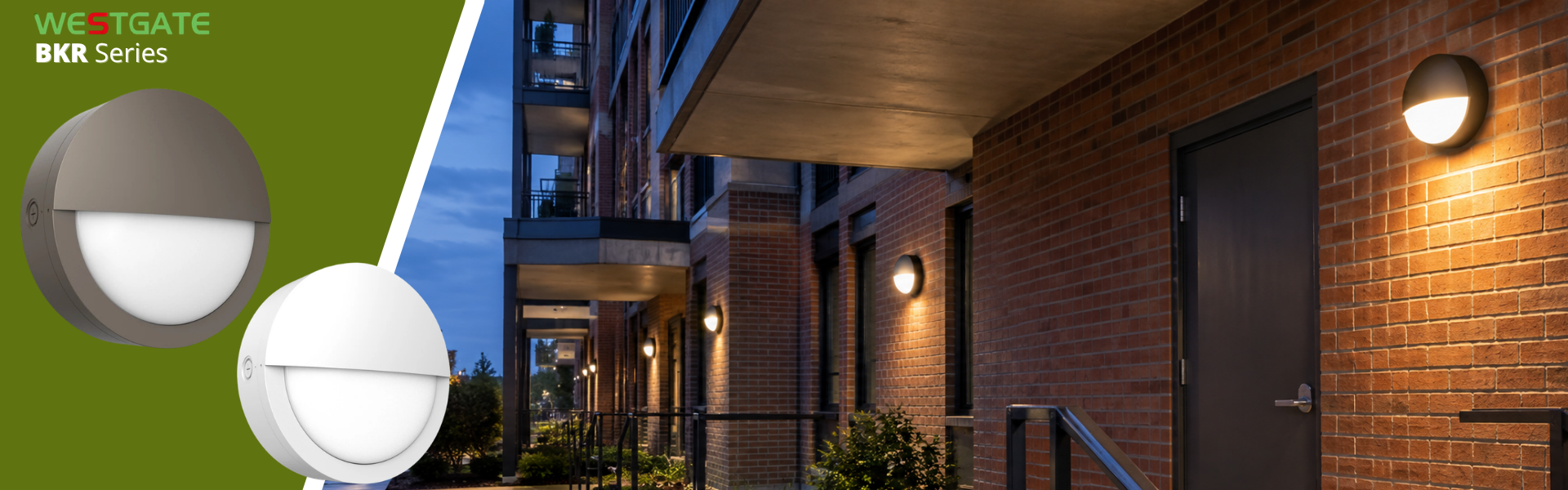
Pull the fixture schedule on almost any garden-style apartment complex, medical office building, or light industrial shell, and you will find the same problem near the bottom of the page. Exterior doors, stairs, breezeways, and service entrances get split across three or four bulkhead types. One is 3000K for the residential entries. One is 4000K for the back-of-house doors. A higher-output version goes on the dock wall. Each one is its own line on the submittal, its own carton count, and its own chance for the wrong unit to end up over the wrong door.
The Westgate BKR Round Flat Bulkhead is built to collapse those lines into one part number. Output and color temperature are set in the field, the photocell is already in the fixture, and the trim can change after the fixture is on the wall. Here is where it fits, how it gets configured, and what to watch for on install.

Why Selectable Bulkheads Took Over This Category
Exterior wall fixtures under about 60W used to be ordered the same way as everything else: one catalog number per wattage, per CCT, per finish. That made sense when the light source was a lamp and ballast. With LED drivers that can be tapped down in the field, manufacturers moved most of this category to selectable platforms, and distributors followed because it cuts the number of SKUs they have to stock.
The benefit shows up in three places on a real job. The EC orders one fixture type in bulk instead of chasing short counts on three. A punch-list change from 4000K to 3000K at the clubhouse entry becomes a switch flip instead of a return and reorder. And once the property turns over, the maintenance team keeps one replacement unit on the shelf instead of five.
The tradeoff is that someone has to set every fixture correctly before it goes up. That step moves from the factory to the jobsite, and it needs to be treated like any other item on the install checklist.
Westgate BKR Round Flat Bulkhead at a Glance
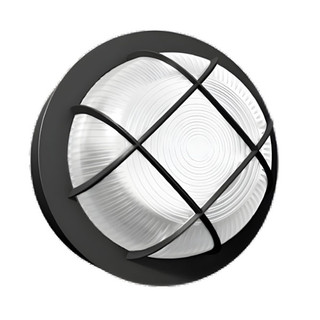
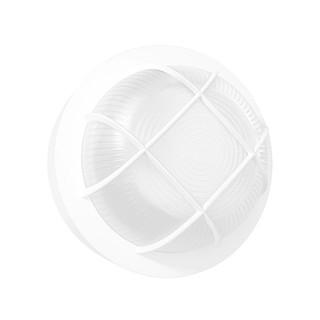
The BKR is a round, surface-mount LED bulkhead with a cast aluminum housing and a frosted polycarbonate lens. The headline specs from Westgate are below.
| Spec | Westgate BKR-36W |
|---|---|
| Wattage | 36W / 48W / 60W, field selectable |
| Lumen output | Up to 7,182 lm |
| CCT | 3000K / 4000K / 5000K, field selectable |
| Input voltage | 120 to 277VAC |
| Dimming | 0-10V |
| Controls | Built-in photocell with ON/OFF DIP switch, 12V AUX output |
| Rating | IP65, wet location |
| Housing and lens | Cast aluminum housing, frosted PC lens |
| Rated life | 70,000 hours |
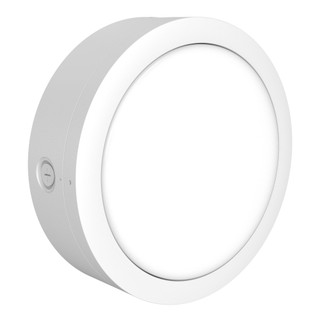
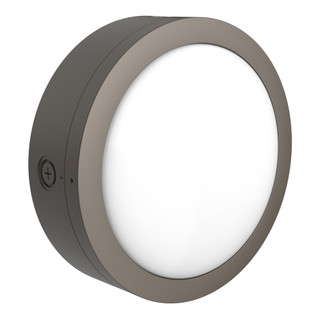
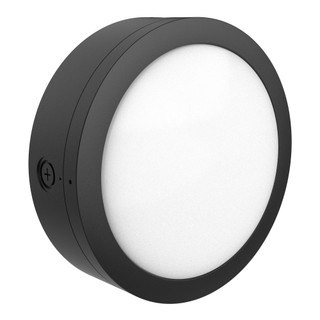
| Finishes | Black, Bronze, White |
| Trims | Flat, Cross, Eyelid, Cage (field replaceable) |
| Warranty | 7 years (confirm terms on the Westgate spec sheet) |
The frosted lens matters more than it looks on paper. Bulkheads usually sit at door height, right in the line of sight of anyone walking toward the entry. A diffused lens spreads the source out and keeps the fixture from reading as a bare point of glare, which is the most common complaint about clear-lens wall packs installed too low.
Configuration Options and Who Sets Them
On new construction, the engineer or lighting designer sets the target wattage and CCT in the fixture schedule. On retrofit work, the facility manager or owner usually makes that call. Either way, the EC is the one setting the switches, so the configuration needs to be clear before the fixtures leave the gang box. The three settings below are where most of the field questions come from.
Wattage and CCT Selection
Three wattages and three color temperatures give you nine combinations from one fixture. In practice, most multifamily and commercial jobs land on two or three of them. The 36W setting covers typical entry doors and breezeways. The 48W setting suits wider landings and longer walkway spacing. The 60W setting, at up to 7,182 lumens, is a lot of light for a bulkhead. It belongs on higher mounts such as dock man doors, garage stair towers, and two-story facades, not on an 8 ft porch where it will wash out the entry and bother the unit above.
If the schedule calls for one CCT across the site, set it once and move on. If the residential entries are 3000K and the service side is 4000K, mark the cartons as they come off the pallet so the right fixtures go to the right elevation.
Photocell, DIP Switch, and 0-10V Dimming
The built-in photocell handles dusk-to-dawn operation without a separate control, which is why this fixture works well on circuits that feed only a few doors. When the building already runs exterior lighting from a timeclock, a BAS, or a central lighting control panel, disable the photocell with the DIP switch so the two controls do not fight each other.
The 0-10V input gives the engineer a way to meet after-hours reduction requirements through a central system. ASHRAE 90.1 and the IECC both require automatic daylight shutoff for exterior lighting, and recent editions add an after-hours reduction requirement with specific exceptions. Which edition your jurisdiction has adopted, and how the entrance and safety exceptions apply, decides whether the photocell alone is enough. That is a question for the engineer of record and the plan reviewer, not something to settle in the field.
Field-Replaceable Trims
The BKR ships as a standard flat face, and three optional trims change the look: a Cross trim with a crossbar detail, an Eyelid trim that shades the top of the lens, and a Cage trim for an industrial guard look. All three come in Black, Bronze, and White. The architect or owner picks the style. The practical benefit is downstream: a property manager who wants to update the look of a complex in five years can swap trims without pulling a single fixture or opening a junction box. Treat the Cage trim as a visual and light-guard option. If the location needs a tested impact or vandal rating, confirm that against the spec sheet before you quote it that way.
Where the BKR Fits on Real Projects
The vendor lists a wide range of applications. On commercial and multifamily work, these are the ones where this fixture actually gets ordered:
- Multifamily entries and breezeways: Dusk-to-dawn operation, one SKU across every building, and finishes that match the elevation.
- Exterior stairs and stair towers: Garden-style apartment stairs and parking garage stair towers. See our stairwell lighting guide for code and rebate notes.
- Covered walkways and soffits: Lower wattage settings work well under canopies and overhangs.
- Man doors and service entrances: Back-of-house doors on retail, office, and light industrial buildings.
- Loading dock personnel doors: This is where the 60W setting and higher mounting heights make sense.
- Utility, mechanical, and trash enclosures: The Cage trim fits the setting, and the photocell removes the need for a separate switch.
- Portfolio MRO stocking: Property managers who need one replacement fixture for mixed-wattage bulkheads across several sites.
For parking structures, the BKR covers stair towers and pedestrian doors, while the decks themselves are a separate fixture type. Our parking garage lighting section covers those.
Best-Selling Bulkhead Lights
Shop the full bulkhead lighting lineup

Installation Notes for Electrical Contractors
None of this is complicated, but most callbacks on exterior bulkheads come from the same few misses. These are the items worth a second look before the lift comes off site.
Set and Record the Configuration First
Set wattage, CCT, and photocell mode on the ground before mounting. Once the fixture is sealed to a brick wall at 7 ft, nobody wants to pull it to check a switch.
Mounting, Boxes, and Sealing
Confirm junction box compatibility and the mounting footprint on the Westgate spec sheet before rough-in, especially on masonry, where moving a box later means coring block. On brick, block, or EIFS, seal the top and sides of the fixture to the wall and leave the bottom edge open so any water that gets behind it can drain out. A fully caulked base traps water, and that is how a wet-location fixture ends up with a corroded splice.
Wet Location Listing and Voltage
Westgate rates the BKR IP65 for wet locations. Your inspector will look for the UL or ETL wet location marking on the fixture label, not the IP number, so check the label when the cartons arrive. The 120 to 277V input covers nearly every commercial and multifamily exterior circuit. Buildings with 347V or 480V lighting distribution need a different fixture or a step-down transformer.
Photocell Placement and Commissioning
An integral photocell reads the light where the fixture sits. Under a deep canopy or a covered breezeway, the sensor may see low light all day and keep the fixture on through the afternoon. Where that is a risk, disable the photocell and put those fixtures on a timeclock or the building control system. Walk the site at dusk before the final punch to confirm everything comes on as expected.
Emergency and AUX Considerations
If the door is a required exit and the plans call for exterior egress lighting, confirm with Westgate whether the BKR offers an emergency battery option, or plan a separate emergency fixture. The 12V AUX output typically powers a low-voltage accessory, such as a sensor. Confirm which accessories Westgate supports before you design around it.
Retrofit and Substitution Angle
On existing buildings, facility managers and owners usually scope bulkhead replacements as part of a broader exterior LED upgrade. The old fixtures are often 70W HPS, 42W CFL, or a mix of both from different maintenance cycles. One selectable fixture lets the replacement crew match the light level of whatever is coming down without tracking which wattage goes where.
Check the footprint of the old fixture before you order. A smaller backplate can leave an unpainted outline on stucco or siding, and that becomes a paint touch-up nobody budgeted for.
On new construction, when the spec allows an approved equal, the BKR can cover several bulkhead types on a single submittal line. That simplifies the order, reduces short-count risk, and gives the owner one replacement SKU at turnover. The engineer of record still has to approve the substitution, so send the spec sheet with the configuration you plan to use for each fixture type.
For higher mounts and wider throws where a bulkhead runs out of reach, a wall pack is usually the better fit.

Explore the Westgate BKR Round Bulkhead on RelightDepot
The Westgate BKR Round Flat Bulkhead is now available through RelightDepot as a new arrival in the Westgate outdoor lineup. One SKU covers field-selectable 36W, 48W, and 60W output (up to 7,182 lumens) and 3000K, 4000K, and 5000K CCT on a 120 to 277V, 0-10V dimmable platform. The fixture is IP65 wet location rated, with a cast aluminum housing, a frosted polycarbonate lens, and a built-in photocell you can turn off with a DIP switch when the building runs exterior lighting from a timeclock or BAS. Field-replaceable Flat, Cross, Eyelid, and Cage trims come in Black, Bronze, and White, so the look can change after install without pulling the fixture. Because it's one part number, a single stock order can cover the entries, stairwells, breezeways, and dock doors, and you can match the final light level and CCT on site without reordering. Our team works with electrical contractors and facility teams on takeoffs, wattage and CCT configuration, substitution requests, and lead-time questions across the bulkhead and outdoor wall light lines.
Email [email protected] or call 888-548-6387 to speak with a lighting specialist.
shop the series
Latest Blog Updates
Westgate BKR Bulkhead: One Outdoor SKU for Three Wattages, Three CCTs, and a Built-In Photocell
Pull the fixture schedule on almost any garden-style apartment complex, medical office building, or...

Product Spotlight: Westgate LLVT 4ft LED Vapor Tight with Selectable Wattage and CCT
Most vapor tight jobs don't get much attention on the drawings, and they still end up causing proble...

MaxLite TRK Tunable White Troffer Retrofit Kits
Most commercial buildings still have a ceiling full of 2x4 and 2x2 lay-in troffers with sound housin...

EiKO HBX3 and BAYE3 Round High Bay Promo for Warehouse and Industrial Retrofits
Most high bay retrofits start with a fixture count, not a photometric plan. Someone walks the floor,...
Enerlites October Promo: Surge, TR Devices and Power Inlets Closes October 31
Enerlites has promo pricing on four devices most of us put in on every service upgrade and finish tr...
Specifying the LRS-O2 Wall Sconce for Entries, Breezeways, and Site Work
The LRS-O Series is Westgate's field-selectable up-and-down wall sconce platform, built for multifam...