
Westgate LIH Series: Indirect LED High Bays for Natatoriums and Corrosive High-Ceiling Spaces
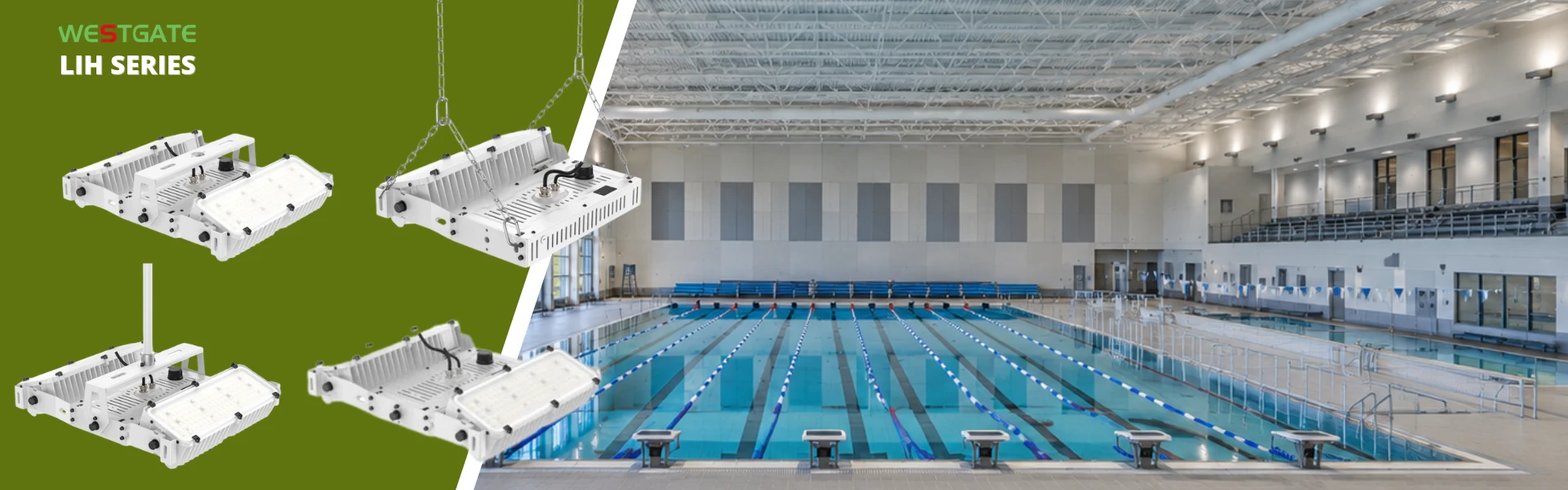
Every aquatics job has a fixture count nobody wants to talk about: the fixtures over the water. Servicing them means scaffolding a drained basin, floating a work platform, or closing the pool while a crew works off a lift the deck was never designed to carry. Meanwhile, the pool air is eating every piece of exposed metal in the room, and the light fixtures are usually the first thing to show it.
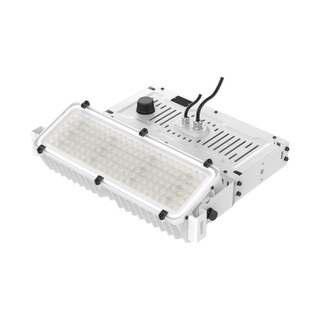
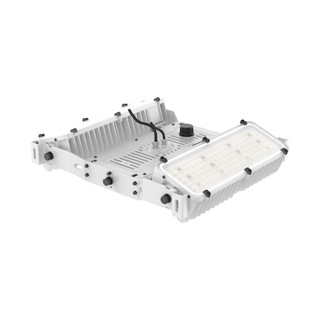
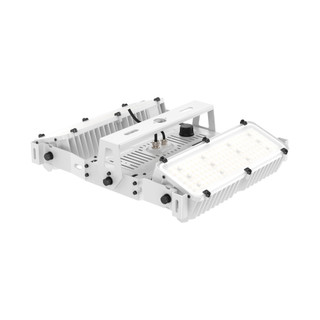
That is why most natatorium designers keep fixtures out of the water's footprint and light the space indirectly. The Westgate LIH Series Natatorium Indirect LED High Bay is built for that approach, with aimable heads, an etched frosted glass optic, IP65 and IK08 ratings, and C4 corrosion-tested construction. Here is where it fits, how to configure it, and what to watch for on install.
Why Natatoriums Wear Out Standard High Bays
A natatorium is one of the harshest indoor environments a light fixture will see. Design targets typically hold relative humidity around 50 to 60 percent, and the air carries chloramines off the water surface around the clock. When the dehumidification unit trips or goes down for service, that moisture condenses on the coldest surfaces in the room, including the roof deck and anything hanging from it.
Standard high bays fail here in predictable ways. Powder coat blisters, then the metal underneath pits. Mounting brackets and fasteners rust before the housing does. Gaskets harden, and moisture works its way into the driver compartment. On older buildings, it is common to find metal halide fixtures on corroded hanger hardware that nobody wants to touch, because the ceiling sits 30 ft above the water.
The cost lands on the facility side. The facility manager or aquatics director carries the maintenance headache, and the owner absorbs lost lesson, program, and swim meet revenue every time the pool closes for overhead work. With many pools operating 16 or more hours a day, the energy bill adds up just as fast.

How Indirect High Bay Lighting Works in a Pool Hall
In an indirect layout, the fixtures sit along the perimeter, typically high on the side walls or near the deck edge, and aim up into the ceiling. The ceiling acts as the reflector and spreads light back down across the water. Designers choose this layout for two practical reasons:
- Maintenance access. Perimeter fixtures can be serviced from the deck with a lift instead of over open water.
- Lifeguard sightlines. Direct fixtures over the pool throw bright reflections off the water surface, which makes the pool bottom harder to see. The Model Aquatic Health Code and most state health codes address both the light level at the water surface and bottom visibility.
Indirect lighting has trade-offs that experienced designers plan for. It only performs as well as the ceiling it bounces off. A white acoustic deck returns far more light than an exposed, rusted, or dark-painted structure. It also takes more raw lumens per fixture than a direct layout, which is why natatorium indirect fixtures come in large lumen packages. Ceiling condition changes over time, so a good design carries margin for it.
On new construction and major renovations, the engineer or lighting designer sets the layout, the target light levels, and the fixture type in the spec. On retrofits, the facility manager usually scopes the job, and the electrical contractor replaces the existing metal halide uplights one for one. A photometric check from the distributor or manufacturer confirms the swap still hits the required levels.
Westgate LIH Series Specs at a Glance
The LIH Series comes in single-head and dual-head versions on the same platform. Both run on 120 to 277VAC with a constant-current driver and 0-10V dimming, and both are UL and DLC listed. The table below compares them using Westgate's published data.
| Specification | Single-Head | Dual-Head |
|---|---|---|
| Field-selectable wattage (100% / 75% / 50%) | 300W / 225W / 150W | 600W / 450W / 300W |
| Maximum lumen output | 46,070 lm | 88,320 lm |
| Efficacy | Up to 165 lm/W | Up to 166 lm/W |
| CCT / CRI | 5000K / 80 CRI | |
| Beam and head adjustment | 43° symmetrical beam, heads rotate up to 180° | |
| Optic | Etched frosted glass | |
| Voltage and dimming | 120 to 277VAC, 50/60 Hz, 0-10V dimming | |
| Power quality | PF >0.90, THD <20% at 277VAC, flicker <1%, 6kV surge protection | |
| Environmental ratings | IP65, IK08, C4 corrosion resistance, 1,000-hour salt spray tested | |
| Housing and finish | Modular aluminum-alloy housing and heatsink, white RAL 9016 powder coat | |
| Listings | UL, DLC | |
Two limits matter before you submit it. First, the LIH is 5000K and CRI 80 only. If the spec calls for 4000K or 90 CRI, it is not a match without the engineer's sign-off. Second, C4 (the high corrosivity category in the ISO classification system) and salt spray testing are industry proxies for harsh atmospheres. They are a strong indicator, but pool chemistry is its own environment, so include the corrosion test documentation in the submittal and let the engineer review it.
Shop the Westgate LIH Series
Browse the full LIH Series lineup

Configuring the LIH: Wattage, Heads, and Aiming
Most of the LIH's value on a project comes from settings made in the field. Get them right on the ground before the fixture goes up, because every adjustment after that means another lift over the pool deck. These are the four decisions to make on each fixture.
Single-Head or Dual-Head
Match the head configuration to the fixture being replaced and the ceiling height, then confirm it with photometrics. The dual-head, at up to 88,320 lumens, is sized for large competition natatoriums and existing high-wattage metal halide uplights. The single-head, at up to 46,070 lumens, suits recreation pools, warm-up pools, and lower ceilings where a dual-head would overlight the room.
Field-Selectable Wattage
The single-head sets to 150W, 225W, or 300W, and the dual-head sets to 300W, 450W, or 600W. Those settings correspond to 50%, 75%, and 100% output. On a multi-pool facility, that lets one part number per head style cover the competition pool, the diving well, and the teaching pool. It also lets the installer turn fixtures down where the photometric layout shows more light than the target requires.
Set wattage before mounting, and record each setting on the fixture schedule. If utility rebates are in the owner's budget, confirm which wattage settings the DLC listing covers before anyone quotes a rebate amount.
Adjustable Heads and the 43° Beam
The heads rotate up to 180°, and the 43° symmetrical beam is tight enough to place light on a specific section of ceiling. Aim from the lift during installation, then mark or record the final positions so maintenance can match them after a service call. Keep the beam off spectator glass, clerestory windows, and scoreboard faces, where a hot spot will show.
Controls
The 0-10V dimming lets the owner run lower levels for lap swim and open hours, then bring the room up for meets and events. It also supports the lighting control requirements in ASHRAE 90.1 or the locally adopted energy code. Confirm the wall or system lighting controls on the job are 0-10V compatible before rough-in, and give the low-voltage dimming wiring the same corrosion protection as the power wiring.
Installation Considerations for Electrical Contractors
Most natatorium installation problems come from the environment and from access, not from the fixture itself. Cover these items in the bid and at the preconstruction meeting:
- NEC Article 680 clearances. Section 680.22(B) sets minimum mounting heights for luminaires over the pool or within 5 ft horizontally of the water's edge, with a reduced height permitted indoors when GFCI conditions are met. Perimeter indirect fixtures often land inside that 5-ft zone, so check heights against the plans early.
- Corrosive environment wiring. Starting with the 2020 edition, NEC 680.14 treats pool chemical storage, pump rooms, and similar areas as corrosive environments and limits the wiring methods allowed there. Many engineers carry the same methods, such as PVC or RTRC conduit, into the pool hall. Confirm the NEC edition your AHJ enforces and what the spec calls for.
- Mounting hardware and entries. Check the spec sheet for what mounting hardware ships with the fixture and what it is made of. Use stainless or coated fasteners, seal every conduit entry, and avoid low points where condensate can track into a box.
- Deck access and scheduling. Check lift weight against the deck structure and drain covers, and lay protection mats over tile. Pool closures drive the schedule, so lock in work windows with the aquatics director early. Keep dehumidification running during construction.
- Submittal package. Include IES files, the spec sheet, the DLC listing, and the corrosion and salt spray test documentation. Engineers on aquatic projects ask for all of it, and a complete package keeps an approved-equal request from stalling.
Where the LIH Fits Best
The LIH is a specialty fixture. It earns its cost where corrosion and overhead access are the main problems, and it is more fixture than an ordinary dry space needs, where standard LED high bays do the job for less. Here is how the applications break down:
- Competition and school natatoriums. High schools, colleges, and municipal aquatic centers have tall ceilings, practical perimeter mounting, and the strictest glare and visibility demands. This is the core application.
- Recreation center, YMCA, and municipal pools. These are the most common retrofits: aging metal halide uplights, corroded hardware, and a facility manager driving the replacement.
- Indoor water parks and leisure pools. The air is just as aggressive, and slides and play structures make overhead access even harder.
- Gymnasiums and field houses. Indirect light reduces glare for players looking up during volleyball and basketball. The corrosion rating is a bonus here, not the reason to buy. Our school gymnasium lighting guide covers direct alternatives.
- Road salt storage buildings. Municipal salt barns are tall, highly corrosive spaces where C4 construction pays off. Compare against a direct vapor tight high bay on cost, since glare control matters less.
- Ice rinks and hotel pools (verify first). Rinks fit the humidity profile, but confirm the operating temperature range on the spec sheet. Hotel pools often have ceilings too low for a dual-head, so run photometrics on the single-head at reduced wattage.
The LIH is not the right fixture for classified hazardous locations or washdown areas that require IP69K. It carries an IP65 rating and no hazardous location listing.
The same project usually includes pump rooms, chemical storage, and locker rooms. Those spaces need sealed linear vapor proof fixtures rather than high bays.

Explore the Westgate LIH Series on RelightDepot
The Westgate LIH Series Natatorium Indirect LED High Bay is now available through RelightDepot in single-head and dual-head versions. The single-head offers field-selectable 150W, 225W, and 300W, up to 46,070 lumens. The dual-head offers 300W, 450W, and 600W, up to 88,320 lumens. Both run at 5000K and CRI 80 on a 120 to 277V, 0-10V dimmable platform. The housing is IP65 and IK08 rated, with C4 corrosion-tested construction backed by 1,000 hours of salt spray testing. Because wattage is set in the field, one part number per head style can cover the competition pool, the warm-up pool, and the diving well, and you can tune light levels to the photometric target without reordering. Our team works with electrical contractors and facility teams on takeoffs, approved-equal submittals, metal halide replacement counts, wattage configuration, and lead-time questions across the high bay line.
Email [email protected] or call 888-548-6387 to speak with a lighting specialist.
shop the series


Latest Blog Updates
Westgate LIH Series: Indirect LED High Bays for Natatoriums and Corrosive High-Ceiling Spaces
Every aquatics job has a fixture count nobody wants to talk about: the fixtures over the water. Serv...
Westgate BKR Bulkhead: One Outdoor SKU for Three Wattages, Three CCTs, and a Built-In Photocell
Pull the fixture schedule on almost any garden-style apartment complex, medical office building, or...

Product Spotlight: Westgate LLVT 4ft LED Vapor Tight with Selectable Wattage and CCT
Most vapor tight jobs don't get much attention on the drawings, and they still end up causing proble...

MaxLite TRK Tunable White Troffer Retrofit Kits
Most commercial buildings still have a ceiling full of 2x4 and 2x2 lay-in troffers with sound housin...

EiKO HBX3 and BAYE3 Round High Bay Promo for Warehouse and Industrial Retrofits
Most high bay retrofits start with a fixture count, not a photometric plan. Someone walks the floor,...
Enerlites October Promo: Surge, TR Devices and Power Inlets Closes October 31
Enerlites has promo pricing on four devices most of us put in on every service upgrade and finish tr...