
Portor Lighting PT-RHBE-2C3P UFO High Bay: Specs, Install Notes, and Best Fits

Most high bay work that crosses a contractor's desk isn't a design competition. It's a warehouse still running 400W metal halide, a school gym with a few dead fixtures and a summer shutdown window, or a distribution center where the owner wants the rebate and the lowest installed cost per fixture. The spec is often open or written around performance, and the job comes down to price, lead time, and how fast the crew can hang fixtures off a lift.
The PT-RHBE-2C3P Series is built for that kind of job. It comes in two round high bay housings: one covers 85W to 150W and the other covers 180W to 240W. Each has field-selectable wattage and a 4000K or 5000K setting. That means two catalog numbers cover six lumen packages and both common color temperatures. You get a shorter submittal, fewer SKUs on the truck, and room to adjust output at the fixture when the room doesn't match the drawings.

Where an Economy High Bay Makes Sense on a Project
An economy round high bay makes sense where the spec is driven by delivered lumens, efficacy, and rebate eligibility rather than optical control or finish. That covers most open warehouse floors, gyms, and big-box sales floors. It does not cover every high ceiling space, which is why RelightDepot carries a wider range of high bay lighting for the jobs it doesn't fit.
Who makes the call depends on the project. On new construction, the engineer or lighting designer sets the fixture type, lumen target, and CCT, and the electrical contractor bids it or submits an approved equal. On retrofit and MRO work, the facility manager or owner usually scopes the job, often with the contractor's input on fixture count and wattage. In both cases, the decision usually happens at bid or at scoping. Price, availability, and whether the fixture qualifies for the local utility rebate drive it. The GC's stake is narrower: the fixture has to clear submittal, land before the lift rental starts, and not hold up the trades working overhead.
Be straight with yourself about the fit before you submit it. This series ships with a single 90° lens and an 80 CRI. If the spec calls for a narrow aisle optic over tall racking, or 90 CRI for a merchandising floor, this isn't the approved equal. Submitting it anyway just earns a rejected submittal and a lost week.
What the Whole PT-RHBE-2C3P Platform Shares
Both housings run on the same platform. Once your crew has installed one, they know how to install the rest, and one data sheet covers the whole submittal. The details below come straight from the manufacturer's spec sheet.
Housing and Thermal
The fixture uses a die-cast aluminum heat sink with an IP65 wet location rating and an operating range of -40°F to 122°F ambient. The low end covers unheated warehouses and most cold storage. Pay attention to the high end in unconditioned buildings across the South and Southwest, where summer air at the roof deck can get close to that limit. If the fixture will hang a few feet off a hot metal deck with no air movement, raise it with the owner before install.
Electrical
Input is universal 120V to 277V at 50/60 Hz, with power factor above 0.9 and THD at or below 20%. Continuous 0-10V dimming is standard, and the driver has 6kV surge protection built in. There is no 347V or 480V option. In plants where lighting runs on 480V, you'll need step-down transformers or a different fixture, so catch that at takeoff, not at rough-in.
Optics, Listings, and Warranty
The lens is a 90° polycarbonate optic, and color rendering is 80 CRI. The series is UL Listed and DLC Premium listed per the spec sheet, which matters for most utility rebate programs. Confirm the specific DLC product ID with the utility before you promise the owner a rebate number. The fixture carries an L70 rating of 150,000 hours and a 5-year limited warranty, with 7-year and 10-year options available at order. Treat the L70 figure as a data point, not a selling point. If the owner's engineer wants to see how it was derived, ask for the LM-80 and TM-21 documentation.
PT-RHBE-150 vs. PT-RHBE-240: The Range at a Glance
The table below lists delivered lumens and efficacy for each wattage setting from the manufacturer's IES-based lumen packages. The figures are at 4000K. The 5000K figures run within about 2% of these.
| Housing | Size (Dia. x Height) | Wattage Setting | Delivered Lumens (4000K) | Efficacy (lm/W) |
|---|---|---|---|---|
| PT-RHBE-150-2C3P | 10.24" x 6" | 85W | 14,433 | 169 |
| 120W | 18,794 | 156 | ||
| 150W | 21,817 | 145 | ||
| PT-RHBE-240-2C3P | 13.4" x 6.5" | 180W | 27,406 | 152 |
| 200W | 29,339 | 146 | ||
| 240W | 34,984 | 145 |
One thing worth noticing: efficacy goes up as you turn the wattage down. The 150 housing at 85W runs 169 lm/W, while the same fixture at 150W runs 145 lm/W. If a layout works at a lower setting, the owner gets more light per watt, and the driver runs cooler too.
Shop the Portor PT-RHBE-2C3P Series
See every Portor Lighting RHBE-2C3P configuration

How to Choose the Housing, Wattage, and CCT
On spec work, the engineer's foot-candle target and photometric layout decide the lumen package. Your job is to match it or show an equal that does. On a retrofit, the facility manager usually sets the expectation, and the practical question is which housing and setting replace what's hanging there now without leaving the floor darker than it was.
As a starting point, the 150 housing at its 150W setting (21,817 delivered lumens) is in the range commonly compared against 400W metal halide and 4-lamp T5HO high bays. The 240 housing (27,406 to 34,984 delivered lumens) is the one to look at for 6-lamp T5HO replacements and higher mounting heights. If you would rather compare other options at the same output, browse our LED high bay fixtures. That comparison is only a starting point. Mounting height, spacing, rack layout, and surface reflectance all move the result, so run the IES files through a layout before you commit on a one-for-one swap.
Color temperature is set in the spec when there is one. Where it's open, 5000K is common in gyms and warehouses and 4000K is common in retail and mixed-use spaces. On a retrofit, that's the owner's call. Because both CCTs ship in the same box, you don't have to stock two versions.
Controls, Emergency, and Accessories to Put on the Takeoff
The controls and add-ons for this series are sold separately. Anything missed at takeoff turns into a second shipment and a return trip up the lift. Your local energy code, typically the adopted edition of IECC or ASHRAE 90.1, drives occupancy and daylight control requirements in most warehouse and commercial spaces. The engineer or the AHJ settles what's required on a given job.
These are the separately sold options listed on the spec sheet:
- Sensors: a 3-pin PIR motion sensor and a 3-pin microwave motion sensor, both with daylight harvesting. Microwave sensors generally handle higher mounting heights and detection down rack aisles better than PIR, which needs line of sight.
- Wireless controls: the TEELIO Bluetooth power pack (PT-BTC-6), a Bluetooth PIR sensor with daylight harvesting (PT-MS-35-BT, which requires the ADP-35-SP adapter), and a Lutron Athena wireless node (AWN-RF) for sites already on Lutron.
- Emergency: the PT-EMU3-40W 40W AC emergency battery pack. The spec sheet pairs it with the PT-SDT-RHB-325 325VA step-down transformer, so confirm the voltage requirement before you price emergency fixtures on 277V circuits.
- Protection and mounting: wire guards sized to each housing (WG-RHBE-150 and WG-RHBE-240), plus the UB-RHBE U-bracket for surface or yoke mounting.
Plan to buy the matching emergency battery backup products and occupancy sensors on the same order, so the fixtures, batteries, and sensors arrive together.
Installation Notes for Electrical Contractors
Each fixture ships one per carton with a J-hook, a 3 ft safety cable, and the installation sheet. The housing also has a 1/2" threaded opening for pendant mounting. For most open-floor retrofits, that means the fixture can hang from the existing hook location or go on a pendant without extra hardware.
The fixture comes with a 3 ft AC cord and a 1 ft DC lead for the sensor or controls. Before you plan to hang it on the cord, confirm with the AHJ how the connection will be inspected. NEC 410.62(C) sets the conditions for cord-connected luminaires, and local interpretation varies. Some inspectors want it hardwired to the box, and you want to know that before the lift rental starts.
A few more field notes:
- Route 0-10V low-voltage wiring per the controls plan. Keep it separate from line voltage where your local code requires it.
- Hang the safety cable from the structure on every fixture, not from the conduit or the fixture's own support.
- Set the wattage and CCT on the ground. Changing settings 30 feet up wastes lift time.
- Check the fixture weight on the spec sheet against what you're hanging it from, especially when you reuse old HID hooks.
Best-Fit Applications for the PT-RHBE-2C3P Series
These are the spaces where the series' combination of price, output range, and wet location rating fits what owners and specifiers ask for. Each one comes with a caveat to check before you submit.
Warehouses and Distribution Centers
This is the series' home turf: open floors, bulk floor stacking, and staging areas where uniform light and rebate eligibility matter more than precise optics. Over tall, narrow rack aisles, the single 90° lens may not deliver the vertical light the layout calls for, so check the photometrics or look at linear high bays with aisle optics. For more on lighting these spaces, see our warehouse lighting guide and loading dock and shipping area lighting guide.
School and Recreation Center Gyms
Wet location rating, 0-10V dimming, and housing-specific wire guards make this a practical gym retrofit option. If the spec calls for ball impact protection, add the WG-RHBE guard to every fixture on the takeoff. Our school gymnasium lighting guide covers the rest of the space.
Big-Box and Warehouse Retail
Hardware stores, home improvement stores, and wholesale clubs with open ceilings fit well, provided the spec allows 80 CRI. Apparel and grocery merchandising floors often call for higher CRI, so read the spec before quoting.
Light Manufacturing, Fleet Maintenance, and Service Bays
IP65 handles dust and washdown spray, and 6kV surge protection helps on plant power. For the rest of the plant floor, see our industrial lighting guide. Check mounting heights against crane and vehicle lift clearances, and confirm the lighting voltage, since 480V circuits need a step-down.
Convention, Exhibit, and Multipurpose Halls
The 240 housing covers higher ceilings, and 0-10V or Lutron wireless control lets the owner set levels by event. Work out controls zoning with the engineer early, because it's the part that slips on these jobs.
More Round High Bay Options
Compare every round high bay we carry

Explore the Portor Lighting PT-RHBE-2C3P Economy UFO High Bay on RelightDepot
The PT-RHBE-2C3P economy UFO high bay is available through RelightDepot alongside the rest of our LED high bay lighting lineup. Two housings cover 85W, 120W, or 150W and 180W, 200W, or 240W, with 4000K or 5000K set at the fixture, on a 120 to 277VAC input with 0 to 10V dimming, so two catalog numbers can cover most of the high bay types on a warehouse or gym schedule. The die-cast aluminum housing carries an IP65 wet location rating, 6kV surge protection, UL listing, and DLC Premium qualification, with delivered output from 14,433 to 34,984 lumens across the range. Sensors, Bluetooth and Lutron wireless controls, emergency battery packs, wire guards, and U-brackets are ordered as separate line items, so putting them on the takeoff with the fixtures means the job ships complete. Our team works with electrical contractors, GCs managing warehouse lighting and gym retrofit scopes, and facility teams on takeoffs, wattage and CCT confirmation, approved-equal submittals, DLC listing checks for rebates, and lead-time questions.
Email [email protected] or call 888-548-6387 to speak with a lighting specialist.
shop this series
-
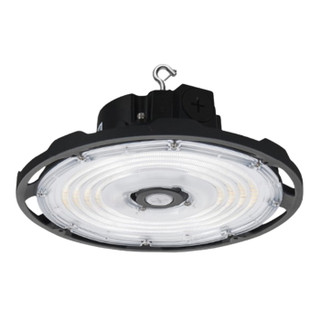
Portor PT-RHBE Economy Round High Bay, 150W, 4000K/5000K, 120-277V, 0-10V Dimming, IP65
PI-PT-RHBE-150-2C3P
$106.10 -
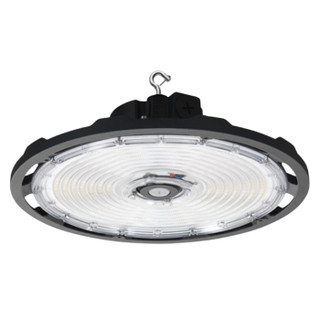
Portor PT-RHBE-240-2C3P Economy Round High Bay, 240W, 4000K/5000K, 120-277V, 0-10V Dimming, IP65
PI-PT-RHBE-240-2C3P
$146.80
Latest Blog Updates

Portor Lighting PT-RHBE-2C3P UFO High Bay: Specs, Install Notes, and Best Fits
Most high bay work that crosses a contractor's desk isn't a design competition. It's a warehouse sti...

Westgate LVTF 4FT Fiberglass LED Vapor Tight for Washdown, Garage, and Egress Work
Walk any food plant, car wash, or parking deck that went LED eight or ten years ago, and you will fi...

RelightDepot Black Friday Sale: Up to 73% Off
Our Black Friday Sale is on now, and it's the biggest one we run all year: up to 73% off contractor-...
Westgate DPL Filament Lamps and DSP Socket Pendants
Exposed-lamp pendants rarely show up on the original drawings with a model number attached. On resta...
Westgate LIH Series: Indirect LED High Bays for Natatoriums and Corrosive High-Ceiling Spaces
Every aquatics job has a fixture count nobody wants to talk about: the fixtures over the water. Serv...
Westgate BKR Bulkhead: One Outdoor SKU for Three Wattages, Three CCTs, and a Built-In Photocell
Pull the fixture schedule on almost any garden-style apartment complex, medical office building, or...